
Privacy film for windows is a thin layer you apply to glass to block the view in while still letting light through. Frosted, etched, and textured films give privacy day and night. One-way mirror film only works during the day, because at night, when your lights are on, people outside can see in. Most DIY films go on with soapy water, most rolls cost about $7 to $40, and static cling films peel off later.
Most pages that rank for privacy film for windows are store listings with hundreds of products and almost no advice. This guide explains which film to choose for each room, what to check before you put film on your glass, and how to install, clean, and remove it without damage.
Types of Privacy Window Film
| Film type | Privacy by day | Privacy at night | Light | Best for |
|---|---|---|---|---|
| Frosted or etched | High | High | Soft, diffused | Bathrooms, front doors, sidelights |
| Textured (reeded, rain, ripple) | Medium to high | Medium to high | Bright, with pattern | Doors, kitchens, offices |
| Decorative or stained glass look | Medium | Medium | Colored or patterned | Entryways, accent windows |
| One-way mirror (reflective) | High from outside | Low with lights on inside | Tinted | Street-facing rooms, daytime privacy |
| Blackout | Total | Total | None | Bedrooms for day sleepers, media rooms |
| Smart (switchable) | On demand | On demand | Clear or frosted at a switch | High-end remodels, offices |
On store pages we checked in November 2026, most static cling films at Walmart cost about $7 to $20. Larger or name-brand rolls shown at The Home Depot ran about $25 to $100. Smart switchable film costs far more and usually needs a professional installer.
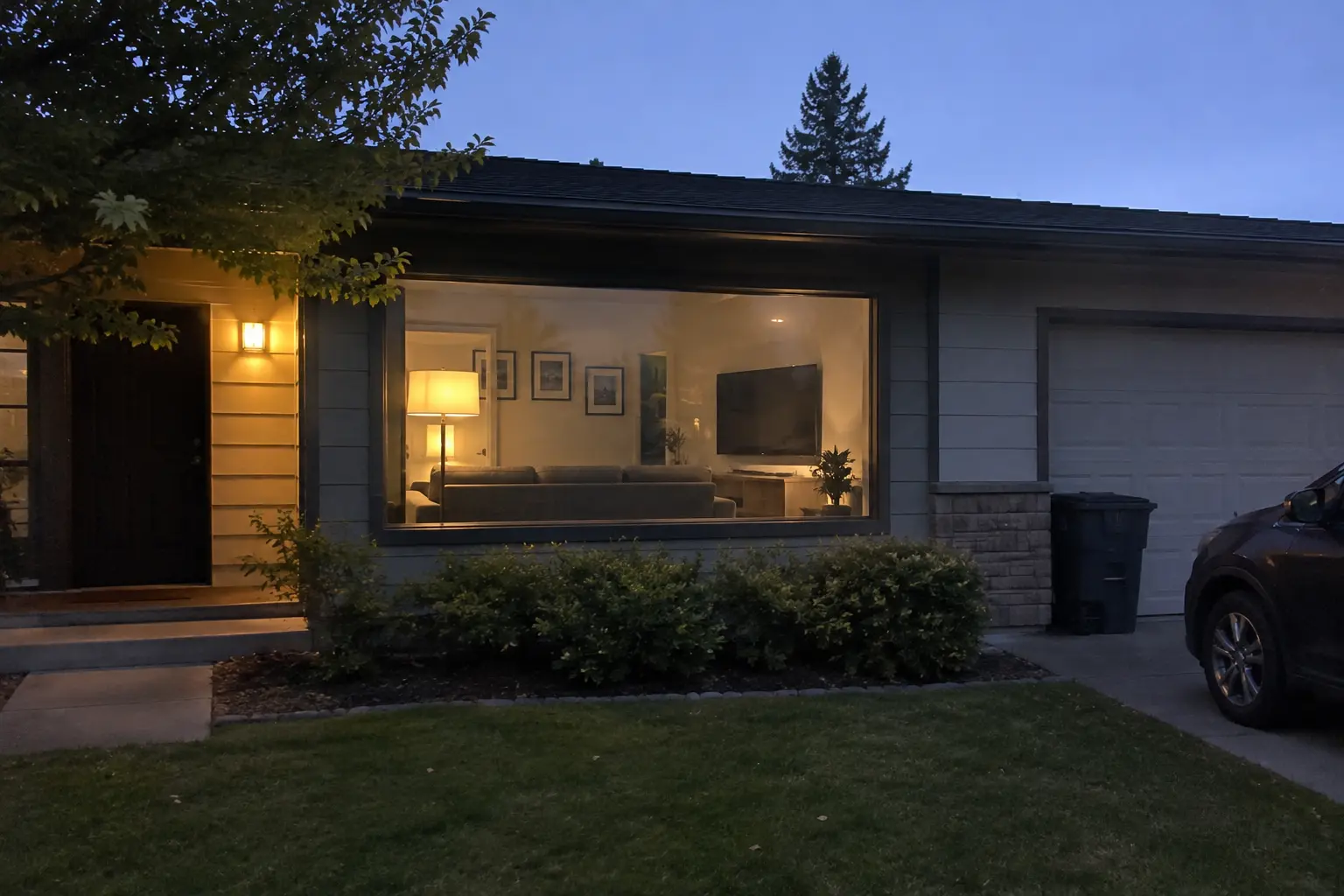
Why One-Way Mirror Film Fails at Night
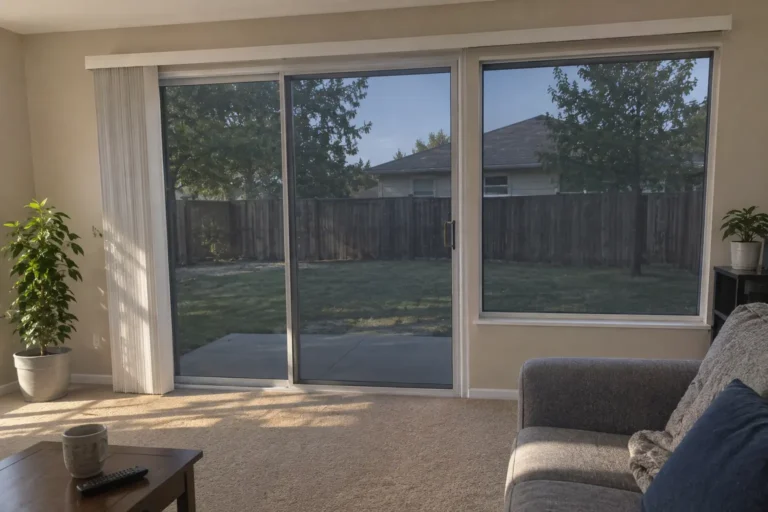
Mirror film works by reflecting light. Whichever side is brighter sees a mirror, and the darker side sees through. During the day, the outside is brighter, so people outside see a reflection while you see out. Our guide to one way glass explains the lighting rules in more detail.
After dark, that flips. With your lights on inside, your room is the brighter side, so people outside can see in and you see your own reflection. Several film sellers, including Walmart and Window Film World, say the same in their buying notes.
For privacy around the clock, choose frosted, etched, or textured film. If you want mirror film for its daytime view and heat control, add blinds or curtains for the evening. If you’d rather use blinds, shades, or curtains, our guide to what is a window treatment compares every type.
Static Cling vs Adhesive Film
| Static cling | Adhesive | |
|---|---|---|
| How it sticks | Water and static, no glue | A glue layer activated with water |
| Removal | Peels off, often reusable | Takes more work to remove |
| Renters | Good choice | Check your lease first |
| Hold over time | Can lift at the edges | Stronger and longer lasting |
| Typical use | Privacy and decorative films | Solar, safety, and some privacy films |
If you are not sure you will keep the film, start with static cling. Get a sample first and hold it up on the actual window. Privacy looks different on the glass than on a website. For a basement or shower window that never needs to open, our guide to glass block windows covers a more permanent option.
Choosing Privacy Film for Windows by Room
- Bathroom: frosted or a dense textured film for full privacy day and night. If you are updating the rest of the bathroom too, our guide on how to use a bidet covers the main bidet types.
- Front door and sidelights: frosted, reeded, or a decorative pattern that still lets light into the entry.
- Street-facing bedroom or living room: frosted film on the lower half of the window keeps privacy while leaving the top clear for light and sky.
- Home office on a video call: a light frosted film cuts glare and hides what’s outside.
- Garage or basement: frosted or blackout, depending on how much light you want.
Not sure what kind of windows you have? Our guide to the types of windows explains each style and how to clean it.
Check Your Glass Before You Buy
Not every window is a good fit for film. Gila, one of the most common DIY brands, says in its installation instructions not to apply film to glass that is cracked, deeply scratched, frosted, etched, or leaded, or to glass more than 40 years old. It also says to apply film only when the glass is between 45°F and 90°F, and not below freezing (Gila installation instructions).
Safety note: Film can raise the risk of thermal stress cracks in some glass. 3M explains that glass cracks when the sunny center of a pane heats up much more than its shaded edges. It lists tinted glass, damaged edges, partial shade from overhangs, tight-fitting blinds or drapes, and heating vents aimed at the glass as factors that add stress (3M thermal stress bulletin). Many film makers publish a film-to-glass chart that shows which of their films are safe on which glass, so check it for your window type, especially on large double-pane windows.
Check your window warranty too. Window warranties vary, and some are voided by aftermarket film. Window film dealers quoted by Angie’s List advise reading your window warranty first and using a film dealer that will match it (Angie’s List via Valley News). DIY film makers often do not cover glass breakage or seal failure. Concord Window Films, for example, says it does not offer a thermal shock or seal failure warranty (Concord support).
How to Install Privacy Film
These steps follow Gila’s instructions for water-applied film. Always use the steps that came with your film.
1. Clean the glass completely
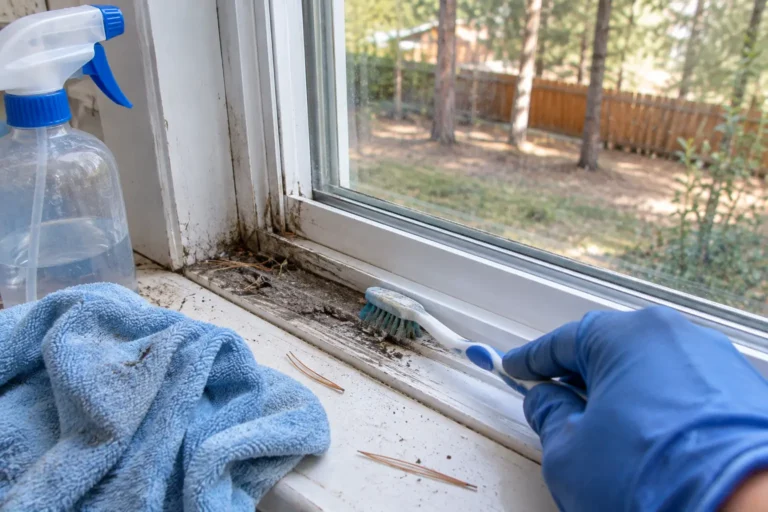
Any dust, hair, or paint speck under the film will show as a bump. Clean the inside of the glass with soapy water and a squeegee, and wipe the edges where dirt collects. Gila says not to use household glass cleaner, vinegar, or ammonia right before you apply film, since they can leave residue.
2. Measure and cut
Cut the film at least an inch larger than the glass on every side. You will trim it to fit once it is on the window.
3. Peel and spray
Peel off the backing while the film lies flat. Spray the glass and both sides of the film with the application solution from your kit, or the mild soap and water mix your film maker suggests. The wet surface lets you slide the film into place.
4. Apply from the top
Lay the film onto the wet glass starting at the top. Slide it until it overlaps evenly on all sides.
5. Squeegee out the water
Spray the front of the film so the squeegee glides. Work from the center outward, top to bottom, to push out water and air bubbles.
6. Trim and finish
Trim the edges with a sharp blade, using the window frame as a guide and leaving a tiny gap at the edge. Squeegee once more to press the edges down.
Gila notes that a light haze is normal at first and that full drying can take one to two weeks. Warm, dry weather speeds it up.
How to Clean Window Film
Film is softer than glass, and the wrong tool scratches it for good. This is the step where most film damage happens.
- Wait before you clean. Gila says to wait at least 3 days, and 3M says not to wash newly installed film for 30 days so the adhesive can bond. Go by your film maker’s instructions.
- Use soft tools. 3M recommends a clean, soft cloth or microfiber cloth, or good quality paper towels (3M care and cleaning guide).
- Use gentle cleaners. 3M lists water with a few drops of dish soap, a regular glass cleaner, or rubbing alcohol diluted with water.
- Never use blades or scrubbers. 3M warns against knives, scrapers, brushes, and abrasive cleaners on filmed glass.
- Tell your window cleaner. Pros often use scrapers on bare glass. If your windows have interior film, let them know before they start.
The outside of the glass can be cleaned as usual. Our guide on the best way to clean windows covers the squeegee method step by step.
How to Remove Privacy Film
Static cling film peels off. Lift a corner with your fingernail and pull slowly. You can roll it onto its backing paper and reuse it later.
Adhesive film takes more care. Follow the film maker’s removal steps, use a plastic tool rather than a metal scraper near the window frame, and clean off leftover adhesive with the product the maker recommends.
Does Privacy Film Block UV?
Some do, but not all. The Skin Cancer Foundation says window glass blocks most UVB rays, but UVA rays pass through windows. It says UV window film can block more than 99% of both, and its Seal of Recommendation requires proof of at least 99% UV blocking (Skin Cancer Foundation). Many cheap decorative films don’t list a UV rating at all, so check the box for a tested number if fading or skin protection matters to you. Our guide to house window tint compares UV and heat-control films.
Frequently Asked Questions
Can people see through privacy film at night?
It depends on the type. Frosted, etched, and textured films block the view day and night. One-way mirror film does not, because with your lights on inside, people outside can see in. Pair mirror film with blinds or curtains for night privacy. If you add curtains for nighttime privacy, our guide on how to measure for curtains helps you get the size right.
Can you put privacy film on double-pane windows?
Often, yes, but check first. Large double-pane units, tinted glass, and films that absorb a lot of heat carry a higher risk of heat stress. Check the film maker’s glass chart, read your window warranty, and consider a professional installer who offers a warranty for the glass.
Is privacy window film removable?
Static cling film is removable and often reusable, which makes it a good choice for renters. Adhesive film can be removed too, but it takes more time and care. Follow the maker’s removal instructions.
Does privacy film let light in?
Yes, except for blackout film. Frosted and textured films soften the light rather than block it, so rooms stay bright. Mirror film darkens the room slightly, and blackout film blocks light completely.
The Bottom Line
When you shop for privacy film for windows, choose frosted, etched, or textured film if you want privacy all day and night. Use mirror film only for daytime privacy, and add blinds for the evening. Check your glass and window warranty before you buy, install on clean glass between 45°F and 90°F, and clean the film with soft cloths and no blades. If you live in Central Oregon, our residential window cleaning crew can clean filmed glass safely, inside and out.

5 Comments
Comments are closed.