
To use a bidet, start the way you always do: use the toilet, then stay seated. Wipe once with a little toilet paper if you like, then turn the water on at the lowest pressure and a lukewarm setting. Aim the spray so it runs front to back, and slowly raise the pressure until it feels clean, usually 15 seconds to a minute. Turn the water off, then pat dry with toilet paper, a clean towel, or the bidet’s warm air dryer. A bidet is for the outside of your body only, so never aim the stream inside. Wash your hands with soap afterward, just as you would without a bidet.
Most guides come from bidet brands selling one model. This guide covers all four main types, the settings, and the health and cleaning advice sales pages skip.
The 4 Main Types of Bidets
| Type | How it works | Needs an outlet? | Best for |
|---|---|---|---|
| Non-electric attachment | Thin unit fits under your toilet seat; a side knob controls a cold-water spray | No | Low cost, renters, first-time users |
| Electric bidet seat | Replaces your toilet seat; has warm water, a heated seat, a dryer, and a remote or side panel | Yes | Comfort, cold bathrooms, seniors |
| Integrated smart toilet | Toilet and bidet built into one unit, often with auto flush and a self-cleaning nozzle | Yes | Remodels and new bathrooms |
| Handheld sprayer | Hose and spray head clipped beside the toilet, used by hand | No | Full control, people who also want to rinse diapers |
The traditional standalone bidet, a separate low basin next to the toilet, is still common in Italy, France, and other parts of Europe and South America. Home Depot’s buying guide covers the add-on types sold in U.S. stores (Home Depot bidet guide).
How to Use a Bidet Seat or Attachment
These steps work for both non-electric attachments and electric seats.
- Use the toilet as normal. Sit fully back on the seat. The nozzle is placed for a seated person, so sitting forward or to the side throws off the aim.
- Wipe once, if you want. Many people do a quick wipe first. It’s not required, but it means less work for the water.
- Set the pressure low. Turn the knob or press the button for the lowest setting before you start. On an electric seat, also check the water temperature.
- Start the spray. Choose “rear” for your bottom or “front” (often called feminine wash) for the front.
- Adjust slowly. Raise the pressure a little at a time. On many electric seats you can also move the nozzle forward and back, or switch on an oscillating mode that moves the spray for you.
- Rinse for 15 seconds to a minute. Shift your hips slightly to move the spray if needed.
- Turn it off. Stop the water before you stand up, or it will spray the bathroom.
- Dry off. Pat with toilet paper or a dedicated towel, or use the air dryer on an electric seat for a minute or two.
- Wash your hands. Cleveland Clinic says you still need to wash your hands with soap and water for 30 seconds (Cleveland Clinic on bidets).
Bidet buttons explained
| Button or setting | What it does |
|---|---|
| Rear or posterior wash | Cleans your bottom |
| Front or feminine wash | A softer, wider spray for the front |
| Pressure | Controls how strong the water feels |
| Position | Moves the nozzle forward or back |
| Oscillate or massage | Moves or pulses the spray for a wider clean |
| Water temperature | Sets warm water on electric models |
| Dryer | Blows warm air to dry you off |
| Nozzle clean | Rinses the nozzle without spraying you |
How to Use a Handheld Bidet Sprayer
A handheld sprayer gives you the most control, but it takes a little practice.
- Turn on the water supply valve at the wall, if your model has one. Some setups need it opened before each use.
- Point the sprayer into the toilet bowl and squeeze gently to test the pressure.
- Lean forward slightly, reach behind or between your legs, and aim the spray at the area you want to clean. Keep the sprayer pointed down into the bowl.
- Spray in short bursts, front to back.
- Release the trigger, hang the sprayer back on its clip, and close the supply valve if you opened it.
- Pat dry and wash your hands.
If your manual says to shut the supply valve after each use, do it. A hose left under pressure can burst and flood the floor. The same shut-off-first habit applies to other bathroom repairs, like replacing a shower cartridge.
How to Use a Standalone Bidet
If you travel to Europe, you may find a low basin with a faucet next to the toilet. It’s used after the toilet, not instead of it.
- Use the toilet and wipe first.
- Move to the bidet. Most people sit facing the faucet so they can reach the controls, but either way works.
- Turn on the water and check the temperature with your hand.
- Wash with your hand and a little mild soap if you like, then rinse well.
- Dry with the small towel that’s set out for the bidet, not the hand towel.
- Rinse the basin before you leave.
Tips for Your First Few Times
- Start lower than you think. The first spray often feels like a surprise. Low pressure and lukewarm water are the easiest way to get used to it.
- Go front to back. Cleveland Clinic says the water should flow front to back, the same way you would wipe. This is most important for people with a vagina, since moving bacteria forward can cause a urinary tract infection.
- Keep it outside. Cleveland Clinic gastroenterologist Christine Lee says a bidet is meant to clean the outside of your body, not the inside. Strong water aimed at the wrong angle can push water into the vagina and raise the risk of infection.
- Don’t touch the nozzle. The nozzle tip shouldn’t touch your body, and you shouldn’t use your hand to steer it.
- Give it a few days. It can feel odd at first, and that usually passes with use.
Water temperature warning: Cleveland Clinic notes that a broken heater or setting can deliver scalding hot or very cold water. On an electric seat, test the spray with your hand the first time and after any setting change, and keep the temperature low for children, older adults, and anyone with reduced feeling in their skin.
Is Using a Bidet Healthy?
Bidets are generally considered safe for most people, but the research is limited. Here’s what experts say.
Possible benefits
Cleveland Clinic lists several. Water is gentler on the skin than dry paper, which can cause chafing and tiny cuts. It may be more comfortable for people with hemorrhoids or anal fissures. It can also help people with arthritis or limited mobility who have trouble reaching to wipe, which is why many seniors and caregivers like them. Using less paper can also mean fewer clogs. If one does happen, our guide on how to unclog a toilet without a plunger walks through safe fixes.
Possible risks
Too much use of warm water may not be good for everyone. A study of Japanese women published in the journal Sexually Transmitted Infections found that habitual users of warm-water toilet bidets were more likely to have fewer of the healthy Lactobacillus bacteria in the vagina and more fecal bacteria (PubMed study on warm-water toilets). Using the front wash briefly and at low pressure, rather than many times a day, is a sensible middle ground.
Shared bidets can also spread germs if the nozzle isn’t kept clean. A review in the Journal of Hospital Infection looked at bacteria on electric bidet nozzles in hospitals and raised concerns about shared use by patients with weak immune systems (PubMed hospital bidet study).
See a doctor if you have pain, bleeding, or itching that doesn’t go away, rather than spraying more often to treat it.
Bidet vs. Toilet Paper Only: Pros and Cons
| Pros | Cons |
|---|---|
| Gentler on sore or sensitive skin | Takes a few days to get used to |
| Helps people with limited reach clean themselves | Electric models need an outlet near the toilet |
| Uses much less toilet paper | Overuse of the front wash may upset vaginal bacteria |
| Fewer clogs from wads of paper | Nozzles need regular cleaning |
How to Clean a Bidet Nozzle
A dirty nozzle is the main hygiene risk, so clean it on a schedule.
- Extend the nozzle. Many electric seats have a “nozzle clean” button that slides it out without spraying. On attachments, there’s often a lever or knob position for this.
- Wipe it gently. Use a soft cloth or an old soft toothbrush with mild soap and water. Avoid harsh scrubbers, which scratch the plastic and give germs a place to hide.
- Check your manual before using cleaners. Many makers warn against bleach and strong chemicals on the nozzle and seat.
- Rinse and retract. Run the self-clean cycle or a short spray into the bowl.
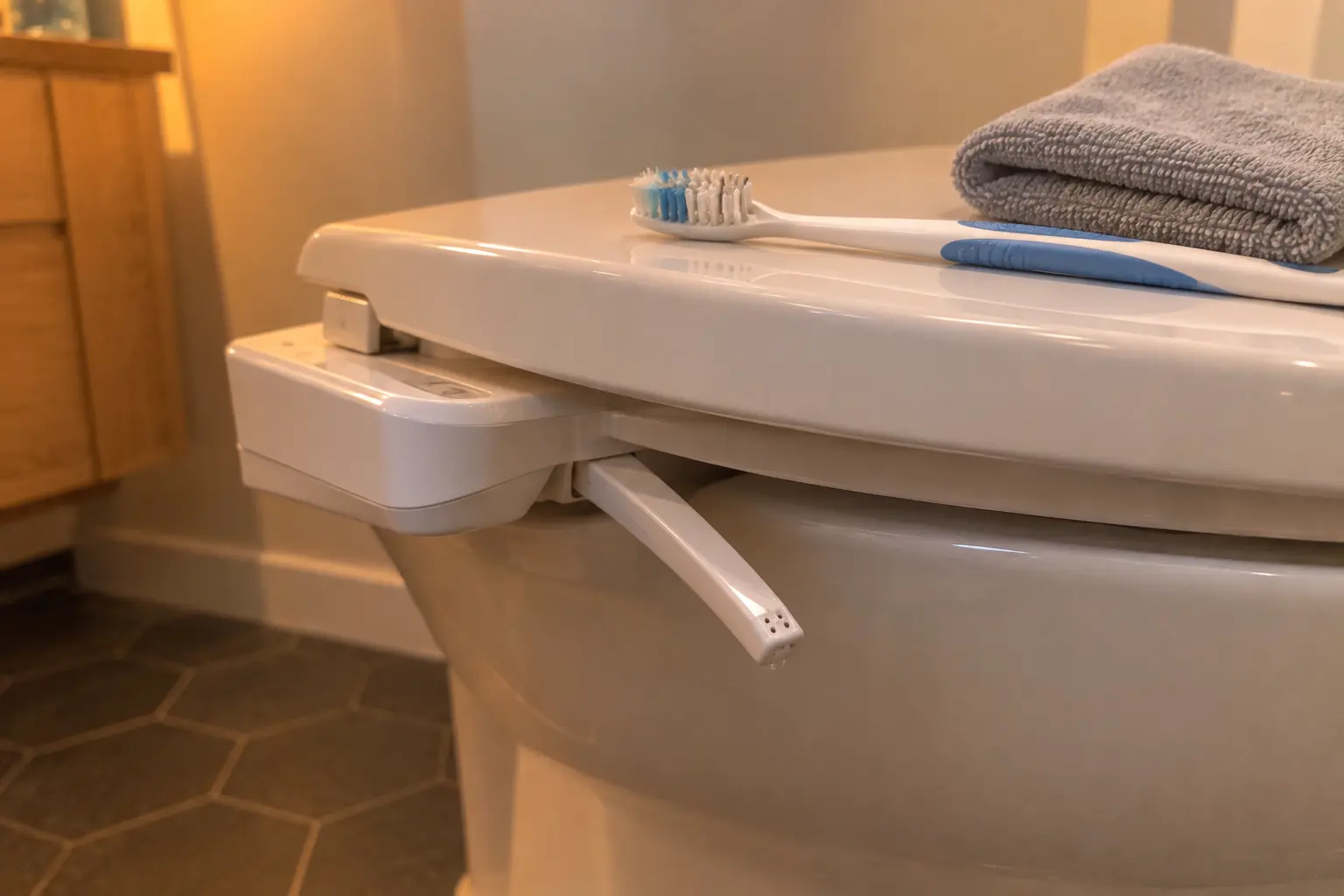
Clean the nozzle every few weeks, or weekly in a busy family bathroom. Self-cleaning nozzles rinse themselves before and after each use, but they still need a hand wipe now and then.
Hard water can also leave white mineral crust on the nozzle tip and clog the spray holes. Check your manual before soaking the tip in vinegar. If scale keeps coming back, our guide to water softener system costs can help you decide whether softening is worth it. Splashes on a wood vanity can leave white rings too, and our guide on how to remove water stains from wood shows how to fix them. If you live in Central Oregon, our hard water stain removal service clears mineral buildup from shower doors and bathroom glass.
Before You Install One
- Check your outlet. Electric seats and smart toilets need a power outlet within reach of the cord. Bathroom outlets should be GFCI protected, the kind with test and reset buttons. Don’t use an extension cord unless the maker allows it.
- Check your toilet shape. Seats come in round and elongated sizes. Measure from the seat bolts to the front of the bowl before you buy.
- Check your water line. Most attachments connect to the toilet’s fill valve with a T-valve, so you’ll need room behind the toilet.
While you’re working in the bathroom, look at the window too. Our guide on how to reseal windows helps stop the drafts and moisture that bathroom windows often get, and our guide to privacy film for windows covers ways to block the view without losing daylight. For the bedroom, our guide on how to clean a mattress covers sweat, urine, and odor stains.
Frequently Asked Questions
Do you wipe before or after using a bidet?
Both are fine. Many people wipe once before to remove most of the mess, then use the bidet, then pat dry after. Others skip the first wipe and just dry at the end.
How long should you spray with a bidet?
Usually 15 seconds to a minute is enough. Start at low pressure and stop once you feel clean. Spraying longer doesn’t make you cleaner.
Can men use a bidet?
Yes. Men use the rear wash the same way. Some men lean slightly forward or adjust the nozzle position so the spray hits the right spot. The front wash is designed mainly for people with a vagina.
Is a bidet sanitary to share?
It can be, if the nozzle is cleaned regularly and never touches anyone’s body. Clean it more often in a shared or family bathroom. People with weak immune systems should ask their doctor.
The Bottom Line
Using a bidet is simple: finish on the toilet, start the spray at low pressure and a comfortable temperature, rinse front to back for 15 seconds to a minute, then pat dry and wash your hands. Keep the water on the outside of your body, test the temperature on electric models, and clean the nozzle every few weeks. Most people feel used to it within a few days.


One Comment
Comments are closed.