
A casement window is a window hinged on one side that swings outward like a door, usually opened with a small crank at the bottom of the frame. The whole sash opens, so it lets in more air than a sliding or hung window of the same size, and there’s no rail across the middle to block the view. When you close it, the sash presses against the weatherstripping on all sides, which is why casements usually leak less air than sliders. The main trade-offs are that the open sash needs clear space outside, and the crank and hinges need a little care each year.
Most pages on this topic come from window brands selling their own line. This guide explains the parts, types, sizes, egress rules, and costs, plus how to clean and care for casements so they keep working for decades.
How a Casement Window Works
Turn the crank and a geared operator arm pushes the sash out on its hinges. Turn it back and the arm pulls the sash tight against the frame, where one or more locks squeeze it against the seals. Because the sash swings out, the screen sits on the inside.
Many casements have a hinge that slides toward the middle as the sash opens. That leaves a gap on the hinge side, so on many models you can reach the outside of the glass from indoors.
Parts of a casement window
| Part | What it does |
|---|---|
| Sash | The frame that holds the glass and swings open |
| Hinges | Track and arm that let the sash swing and slide |
| Operator and crank | Gear box and handle that open and close the sash |
| Lock or locks | Pull the sash tight against the seals |
| Weatherstripping | Seals the gap between sash and frame |
| Interior screen | Keeps bugs out while the sash is open |
| Jambs and sill | The sides and bottom of the main frame |
Window makers label which side is hinged as seen from outside the house. A left-hand casement has its hinges on the left when you stand outside looking at it, so check the maker’s chart before you order a replacement.
Types of Casement Windows
- Single casement: One sash with one crank. The most common type.
- Double or French casement: Two sashes that open from the center, with no post between them on some models.
- Push-out casement: Opened by turning a handle and pushing the sash, with no crank. Common on older-style and European-look windows.
- In-swing casement: Opens into the room. Common in Europe, often as part of a tilt-turn window.
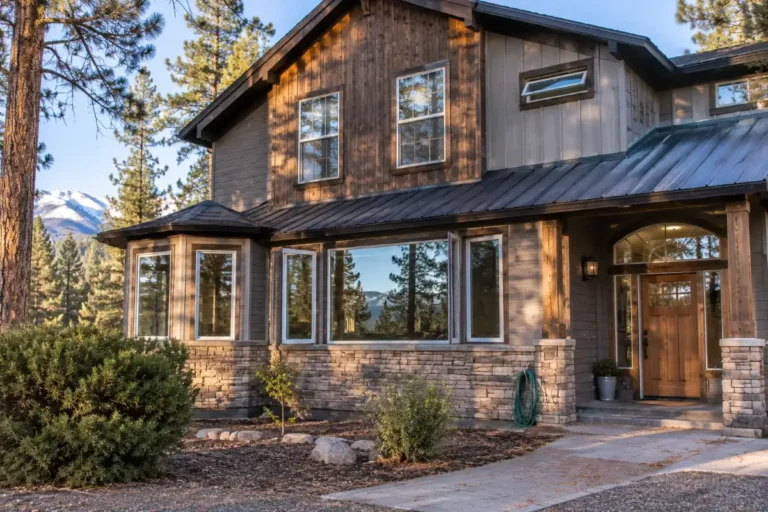
- Casement combinations: Casements on either side of a fixed picture window, or as part of a bay or bow window.
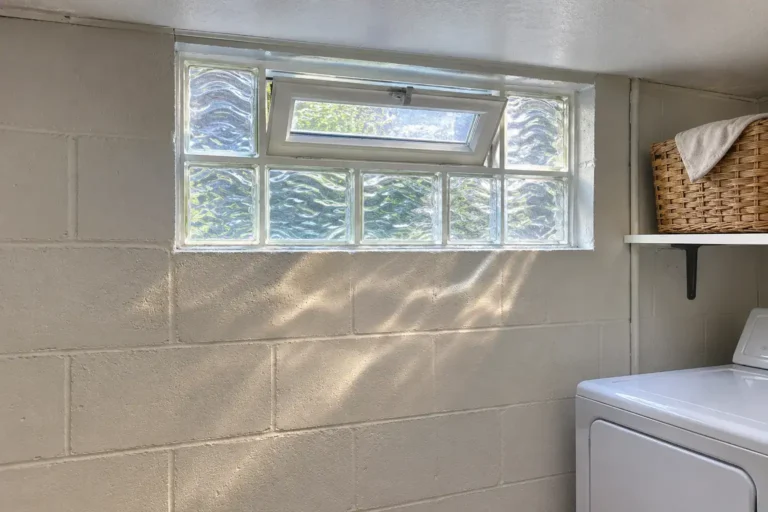
An awning window is a close cousin. It is hinged at the top instead of the side, so it can stay open in light rain. A hopper is hinged at the bottom and tilts in.
Casement vs. Other Window Types
| Feature | Casement | Double-hung | Sliding |
|---|---|---|---|
| How it opens | Cranks out on a side hinge | Two sashes slide up and down | One sash slides sideways |
| Air flow | Full opening | About half the opening | About half the opening |
| Air leakage | Typically tight | Typically medium | Typically medium |
| View | No center rail | Rail across the middle | Frame down the middle |
| Outside clearance | Needs room to swing | None | None |
| Easy cleaning from inside | Yes, on many models | Yes, with tilt-in sashes | Often, if sashes lift out |
| Window air conditioner | Usually can’t fit one | Fits | Fits some types |
A weatherization guide hosted by Oak Ridge National Laboratory rates single-sash casement, awning, and hopper windows as typically tight, and sliding windows as typically medium (ORNL window leakiness guide). The reason is simple: a casement presses into its seals when it closes, while a slider has to glide past them. The glass and frame still matter more for heat loss, so compare the U-factor on the NFRC label. For the full lineup of styles, see our guide to the types of windows.
Pros and Cons of Casement Windows
| Pros | Cons |
|---|---|
| Opens fully for maximum air flow | Needs clear space outside to swing open |
| Seals tighter than most sliders | Cranks, hinges, and operators wear over time |
| Clear view with no center rail | A window air conditioner usually won’t fit |
| Easy to reach over sinks and counters | An open sash can catch strong wind |
| Many can be cleaned from inside | Width is limited compared with sliders |
Where Casement Windows Work Best
- Over a kitchen sink or counter, where lifting a sash is awkward but turning a crank is easy. Andersen points to casements for hard-to-reach spots (Andersen casement windows).
- Next to a picture window, to add air without blocking the view.
- In rooms that catch a side breeze. The open sash can scoop wind into the room.
- In cold or windy areas, where a tight seal helps comfort.
Skip casements where the open sash would swing into a walkway, deck, or patio, or where shrubs block the swing.
Sizes and Egress Rules
Casements are usually taller than they are wide, since the hinges carry the sash weight. Size limits vary by brand. Andersen lists its A-Series casement at up to 4 feet wide and 8 feet tall, while many standard lines stop around 3 feet wide.
Bedrooms and basements with sleeping rooms need an emergency escape opening. Under the International Residential Code, as summarized by the City of Boise, the opening needs:
- At least 5.7 square feet of clear opening (5 square feet on a ground floor)
- At least 24 inches of clear height
- At least 20 inches of clear width
- A sill no higher than 44 inches above the floor
(City of Boise egress window handout). Casements often meet these rules in smaller sizes than hung windows, because the whole sash opens. Hinge and operator hardware can cut into the clear width, though, so check the maker’s egress chart. Below-grade egress windows also need a window well, and our guide to window well covers explains how to keep one safe and clear.
Child safety warning: An open casement on an upper floor is a fall risk. Many codes require fall protection when a sill is low to the floor and high above the ground outside. Use the maker’s opening-limit hardware or window guards that a child can’t open but an adult can release fast in an emergency, and keep furniture away from windows.
How Much Do Casement Windows Cost?
The Home Depot’s cost guide puts an installed vinyl casement at about $589 to $2,993, and a wood casement at about $833 to $3,220, including installation, permit, and tax. Casements often cost a bit more than double-hung windows of the same size because of the crank and hinge hardware. Our guide to the cost to replace windows explains why quotes vary so much.
How to Clean and Care for Casement Windows
Cleaning the glass
- Remove the interior screen.
- Crank the sash fully open.
- Wash the outside of the glass through the gap on the hinge side, if your model leaves one. Work top to bottom and dry with a squeegee or lint-free cloth.
- Close the sash and clean the inside.
- Vacuum dirt and bugs from the sill and the hinge tracks.
Don’t lean out or stand on a chair to reach the far edge. If you can’t reach the glass from inside, clean it from outside on a ladder or call a pro. Our guide on the best way to clean windows covers the squeegee method.
Caring for the hardware
Andersen’s care guide says to clean the operator, hinges, and locks once or twice a year with a soft, dry cloth, and more often near the coast or farms (Andersen hardware care guide). It recommends:
- Tighten loose hinge screws, since wind can loosen them over time.
- Spray hinges and moving parts with a dry silicone lubricant.
- Avoid oil-based lubricants, liquid sprays, and sprays that contain acetone.
- Skip harsh abrasive cleaners on hardware.
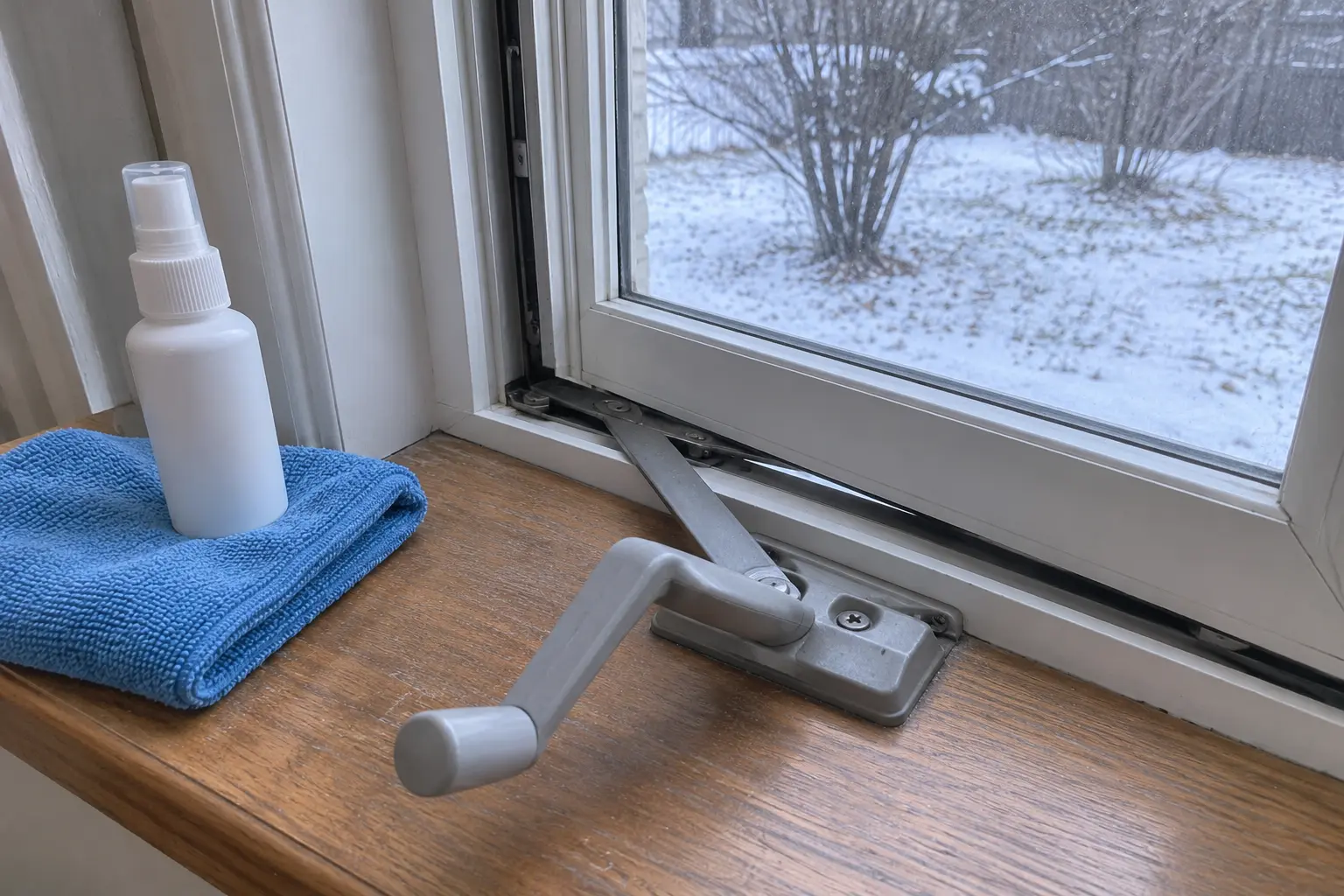
Also check that the weatherstripping is soft and touches the sash all the way around. A stiff crank, a sash that won’t close tight, or a stripped operator usually means a worn part. Most operators and hinges can be replaced without replacing the whole window.
If you manage a vacation rental in Central Oregon, our vacation rental window cleaning service cleans casements inside and out between guest seasons.
Frequently Asked Questions
What is a casement window used for?
Casements are used where you want lots of fresh air, a clear view, and a tight seal. They work well over kitchen sinks, beside picture windows, and in bedrooms where a full opening helps meet egress rules.
What is the difference between a casement and an awning window?
A casement is hinged on the side and opens like a door. An awning window is hinged at the top and opens from the bottom, so it can stay open in light rain.
Are casement windows more energy efficient?
They usually leak less air than sliding windows because the sash presses into the seals when closed. Overall efficiency still depends on the glass, frame, and installation, so compare the U-factor on each window’s NFRC label.
Can you clean the outside of a casement window from inside?
Often, yes. Many casements open far enough to leave a gap on the hinge side so you can reach the outside glass. Fixed casements and some narrow units still need to be cleaned from outside.
The Bottom Line
A casement window is a side-hinged window that cranks outward like a door. It gives you a full opening for air, a clear view, and a tighter seal than most sliders, but it needs room to swing and a little hardware care. Clean and lubricate the hinges and crank once or twice a year with dry silicone, check the seals, and confirm egress sizes before you put one in a bedroom.

2 Comments
Comments are closed.