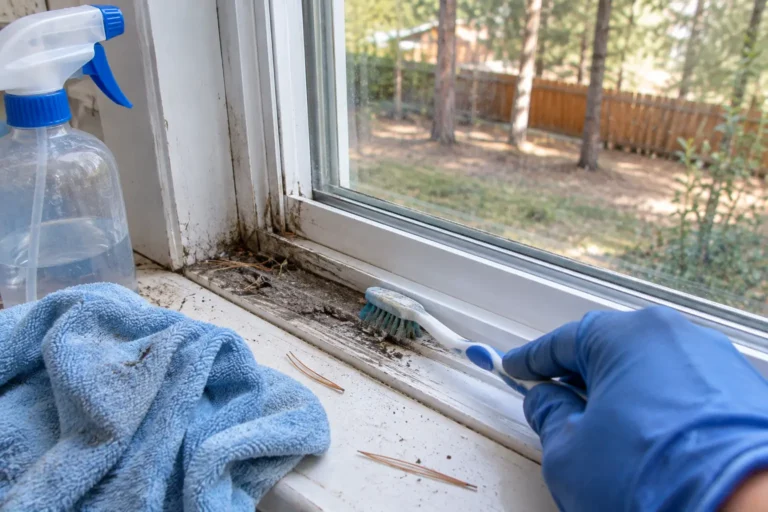
A glass block window is a panel of thick, hollow glass blocks set in mortar or silicone, usually in a basement or bathroom. It lets in light while blurring the view, and it’s harder to break through than a standard window. Most blocks are 6 or 8 inches square and 3 or 4 inches thick. Prefabricated basement units sold online run about $180 to $340 before installation. A solid panel doesn’t open, so add a hopper vent for fresh air or a dryer vent if needed, and never use a fixed panel as the only way out of a bedroom. To clean it, wipe the glass with a soft, damp cloth and skip abrasive pads.
Most pages about these windows are store listings or installer ads. This guide covers the sizes and code limits from Pittsburgh Corning’s installation guide, the egress rules for Oregon homes, real prices, and how to clean glass block without scratching it.
How Glass Block Panels Are Built
The diagram below shows the parts of a typical panel.
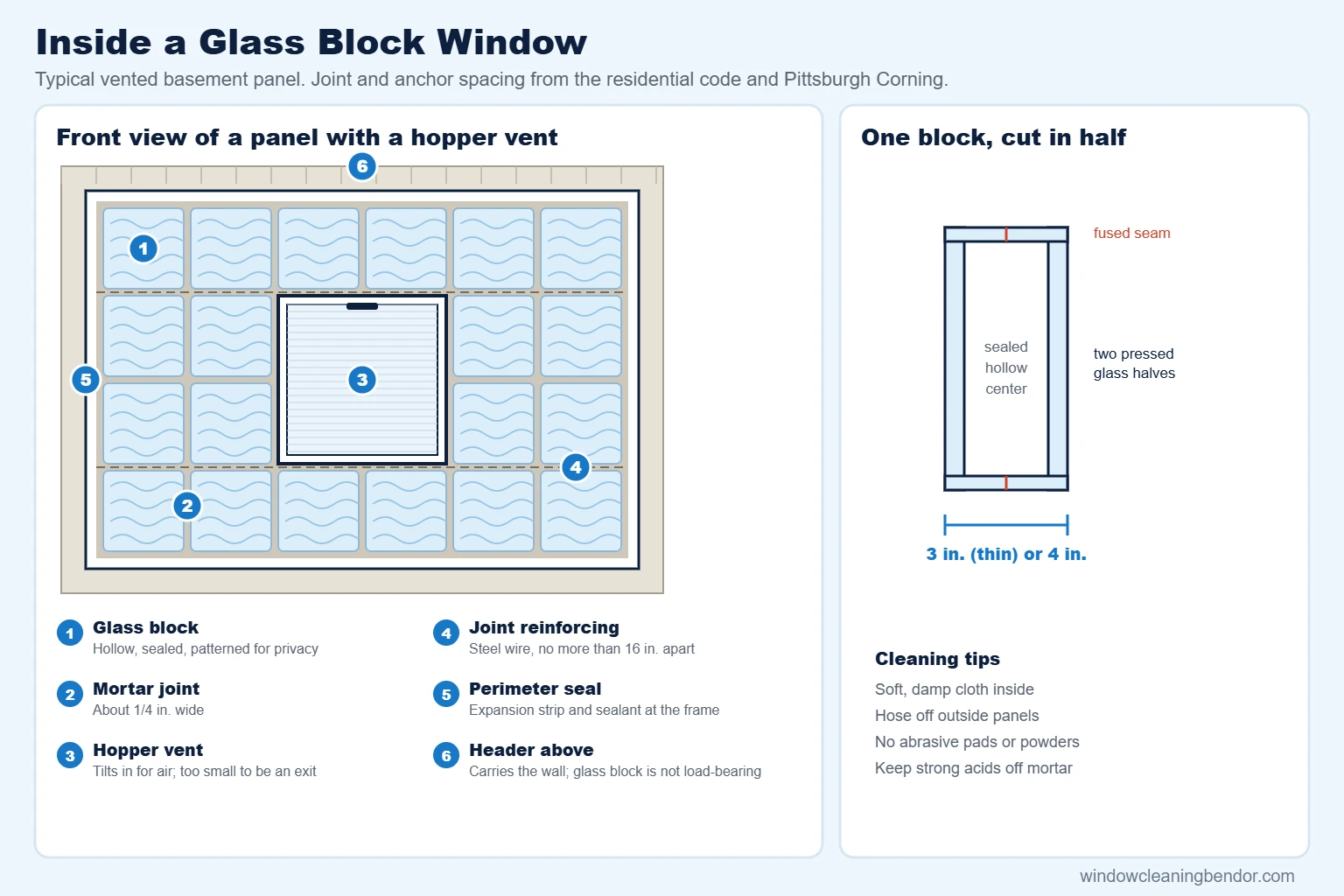
Glass blocks are two pressed glass halves fused together with a sealed hollow center. Masonry Magazine notes that standard units are 4 inches thick and common in commercial work, while thin units are 3 inches thick and often used for interior panels. Common nominal sizes are listed below (Masonry Magazine on glass block). Nominal sizes include the 1/4-inch mortar joint, so the block itself is a little smaller.
| Nominal block size | Thickness options |
|---|---|
| 4 x 8 in. | 3 or 4 in. |
| 6 x 6 in. | 3 or 4 in. |
| 6 x 8 in. | 3 or 4 in. |
| 8 x 8 in. | 3 or 4 in. |
| 12 x 12 in. | 4 in. only |
The thickness options come from Pittsburgh Corning’s installation guide, which lists the 12 x 12 size for its 4-inch Premiere line only.
There are three common ways to build a panel:
- Mortared: Blocks set in Type S or N mortar with metal reinforcing, the traditional method.
- Mortarless: Blocks set in a perimeter channel with plastic spacers and silicone, then grouted.
- Prefabricated: A panel built in a shop, often wrapped in a vinyl frame, then set into the opening. This is the usual choice for basement window replacements.
Glass block is never load-bearing. The header or lintel above the opening has to carry the wall’s weight.
Panel Size Limits
Pittsburgh Corning, a major U.S. glass block maker, lists these maximum panel sizes for mortared work at a 20 psf wind load (Pittsburgh Corning installation guide):
| Panel | Maximum area |
|---|---|
| 4-inch block, exterior | 144 sq ft |
| 4-inch block, interior | 250 sq ft |
| 3-inch thin block, exterior | 85 sq ft |
| 3-inch thin block, interior | 150 sq ft |
The International Residential Code uses the same 144 and 85 square foot limits for exterior panels, with mortar joints 1/4 inch wide. Masonry Magazine recommends an engineer for openings over 50 square feet. Most home basement and bathroom windows are far smaller.
Is glass block energy efficient?
It’s about as efficient as a double-pane window. Masonry Magazine describes glass block’s energy performance as “comparable to double pane windows,” and ClimateGuard, a window company that sells glass block, lists a U-factor of 0.53 for its panels. It also seals tightly, so it cuts drafts compared with an old single-pane basement window. For comparison, Oregon requires a U-factor of 0.30 or lower for replacement windows, so a glass block panel is not as efficient as a modern code-compliant window.
Sizes, Vents, and Costs
Prefabricated basement windows are sold by nominal size, and the real panel is smaller so it fits the opening. For example, Quality Glass Block lists its Nubio wave-pattern windows from 24 to 48 inches wide and 12 to 40 inches tall, with a 32-inch nominal width measuring 31 inches actual (Quality Glass Block Nubio windows). On November 25, 2026, its prices ran from about $183 to $336, depending on size and vent.
Vent options include:
- Hopper vent: A small window built into the panel that tilts in for fresh air, often with a screen.
- Dryer vent: A round opening for a clothes dryer exhaust.
- Energy vent: A hopper vent with double-pane glass.
Installation costs extra, and it varies with how much old frame and mortar has to come out. Get a written quote that includes removal, sealing, and exterior trim.
Can glass block be used as an egress window?
A solid panel can’t. Under Oregon’s residential code, every bedroom and basement needs at least one escape opening that can be opened from inside to a clear space of at least 5.7 square feet, 24 inches high and 20 inches wide, with the sill no more than 44 inches above the floor (City of Portland residential windows guide). A small hopper vent doesn’t meet that size. Some companies sell glass block panels with a full-size escape window built in.
Egress warning: Don’t replace the only escape window in a bedroom, including a basement bedroom, with fixed glass block. If you want glass block’s privacy in a bedroom, keep a code-size operable window or egress window elsewhere in the room, and check with your building department before you start.
Installing Glass Block
Pittsburgh Corning’s guide lists the key rules for mortared panels: frame the panel on all four sides, keep joints a consistent 1/4 inch, and clean mortar off the glass as you go. Masonry Magazine adds that the opening should equal the nominal block size times the number of blocks, plus 1/4 inch, and that the diagonals should be within 1/8 inch of each other. Mortarless kits use a channel, spacers, and silicone, and the sealant needs 24 to 48 hours to cure before grouting, according to Glass Block Warehouse’s install guide.
Can you install glass block yourself?
A small prefabricated basement window is a manageable DIY job if the opening is square and solid. You remove the old window, set the panel in mortar or sealant, and seal the outside. Large panels, curved walls, and openings that need a new header are better left to a mason. If the window sits below ground, our guide to window well covers explains how to keep water and debris out of the well.
How to Clean Glass Block
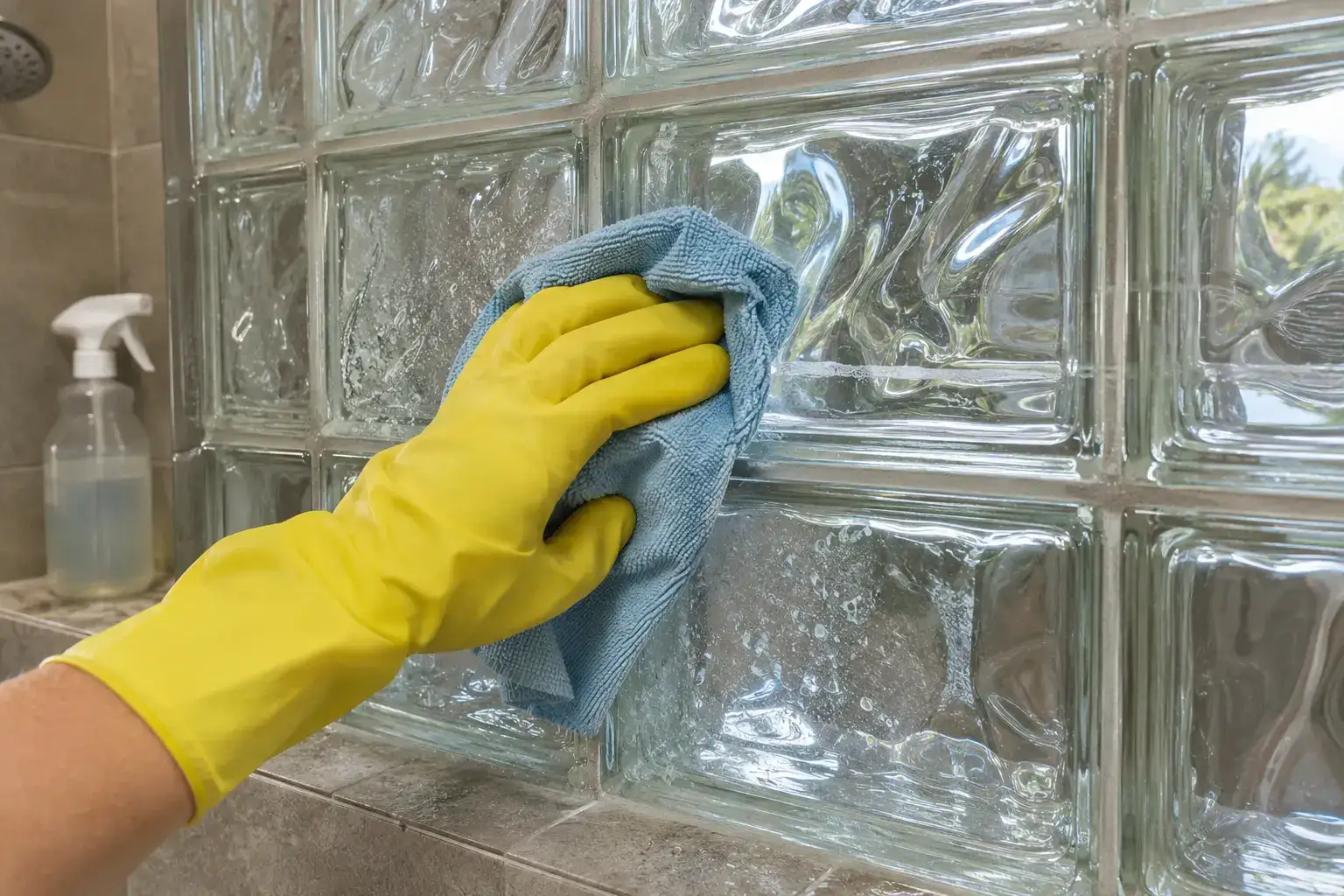
Glass block has deep ridges and mortar joints, so it collects dust and soap scum more than flat glass. Pittsburgh Corning’s care advice is simple: wipe interior panels with a soft, damp cloth and hose off exterior panels. During installation, it warns not to use abrasive materials, because they can scratch the glass.
- Dust first. Brush or vacuum the ridges and joints so you don’t grind grit into the glass.
- Wash. Use warm water with a little dish soap and a soft cloth or sponge. A soft brush helps in the grooves.
- Rinse. Wipe with clean water, or hose off the outside on a cloudy day.
- Dry. Buff with a microfiber cloth to prevent water spots.
- Check the joints. Look for cracked mortar or loose sealant around the edges, which can let water in.
How do you get hard water spots off glass block?
Shower and bathroom panels often get white mineral spots. Try a mild vinegar and water solution on the glass, let it sit a few minutes, then wipe and rinse well. Keep strong acids off the mortar and grout, since acid can etch cement-based joints, and never use steel wool or powdered cleansers on the glass. In Central Oregon, find out whether Bend has hard water, and our hard water stain removal service clears mineral buildup from glass that DIY cleaners can’t.
Glass Block: Pros and Cons
| Pros | Cons |
|---|---|
| Lets in light while blocking the view | Solid panels don’t open |
| Hard to break into | Can’t serve as a bedroom escape window |
| Tight seal cuts drafts | Less efficient than modern code windows |
| Holds up to moisture in basements and showers | Ridges and joints take more effort to clean |
If you want privacy without giving up an opening window, see our guide to privacy film for windows. Our guide to standard window sizes explains how to measure an opening before you order.
The Bottom Line
Glass block gives basements and bathrooms light, privacy, and security in one sealed panel. Prefabricated units run roughly $180 to $340 before installation, and vents can add airflow. Never use a fixed panel as a bedroom’s only escape window. Clean it with a soft, damp cloth and mild soap, use diluted vinegar on mineral spots, and keep abrasives off the glass.