
To clean window tracks, vacuum out the loose dirt first, then wet the grime with warm water and a little dish soap. Let it soak for a few minutes, scrub the corners with an old toothbrush, and wipe the track dry. Finish by clearing the small drain slots on the outside of the frame so rain can run out. The dry pass first is the step most people skip, and it is why their tracks turn into mud.
Most guides on how to clean window tracks stop at “make it look clean.” This one also covers the drain holes, which cleaners are safe for your frames, and when the gunk in a track is a sign of a bigger problem.
Why Window Tracks Matter
Window tracks do more than guide the sash. On most sliding windows, the bottom track is also a drain. Rain that gets past the sash collects in the track and runs out through small openings called weep holes. When dirt, pollen, and pine needles pack the track, water has nowhere to go. It can pool, spill onto the sill, and lead to mold or rot.
Dirty tracks also make windows hard to open. Grit grinds against the rollers and the frame every time the window slides. The same grit often makes sliding doors squeak and grind, as our guide on how to fix a squeaky door explains. If a sliding screen door still drags after a cleaning, our guide on how to repair a screen door covers roller adjustments.
What You Need
- A vacuum with a crevice tool
- An old toothbrush or a narrow detail brush
- Dish soap and warm water in a spray bottle
- Microfiber cloths or paper towels
- Cotton swabs and a pipe cleaner
- A plastic putty knife, or a butter knife wrapped in a cloth
- Dry silicone spray (optional, for sliding windows)
Pick the Right Cleaner
The safest cleaner for most tracks is plain dish soap and water. Stronger products can do more harm than good.
| What’s in the track | What to use | Notes |
|---|---|---|
| Dust, pollen, needles | Vacuum, then soapy water | Always vacuum first |
| Sticky gray film | Warm soapy water, a few minutes to soak | Repeat instead of scrubbing harder |
| Mold or mildew spots | Detergent and water, then dry fully | Fix the moisture source too |
| White mineral crust | Soapy water first; check your window maker’s guide before using vinegar | Some makers warn against acidic cleaners |
| Dead bugs, spider webs | Vacuum and cotton swabs | Check the weep holes for nests |
A lot of guides tell you to pour baking soda and vinegar into the track. Window maker Milgard tells owners never to use abrasive or acidic cleaners because they might cause permanent damage to the finish, and vinegar is an acid (Milgard care and maintenance). If you want to use vinegar on mineral spots, check your own window’s care guide first and rinse the track with clean water afterward.
Safety note: Never mix bleach with vinegar or with cleaners that contain ammonia. Bleach and ammonia make toxic fumes, and bleach and acids release chlorine gas (EPA mold guide, Michigan.gov bleach fact sheet). Soap and water handles almost every track.
How to Clean Window Tracks Step by Step
1. Open the window and vacuum dry
Slide the window open as far as it goes. Run the crevice tool along the whole track, then loosen packed dirt with a dry brush and vacuum again. Getting the dry dirt out first keeps you from turning it into mud.
2. Wet the grime and let it soak
Spray the track with warm soapy water. Use just enough to dampen the dirt, not flood it. Wait three to five minutes so the soap can loosen the film stuck to the bottom of the track.
3. Scrub the corners
Work the toothbrush along the track and into each corner, where dirt packs the hardest. For tight spots, wrap a cloth around a plastic putty knife or a butter knife and run it along the groove. Skip steel wool and metal scrapers, which can scratch the frame.
4. Wipe it clean
Wipe up the loosened dirt with a damp cloth. Fold the cloth to a clean side often. Cotton swabs pick up what is left in the corners.
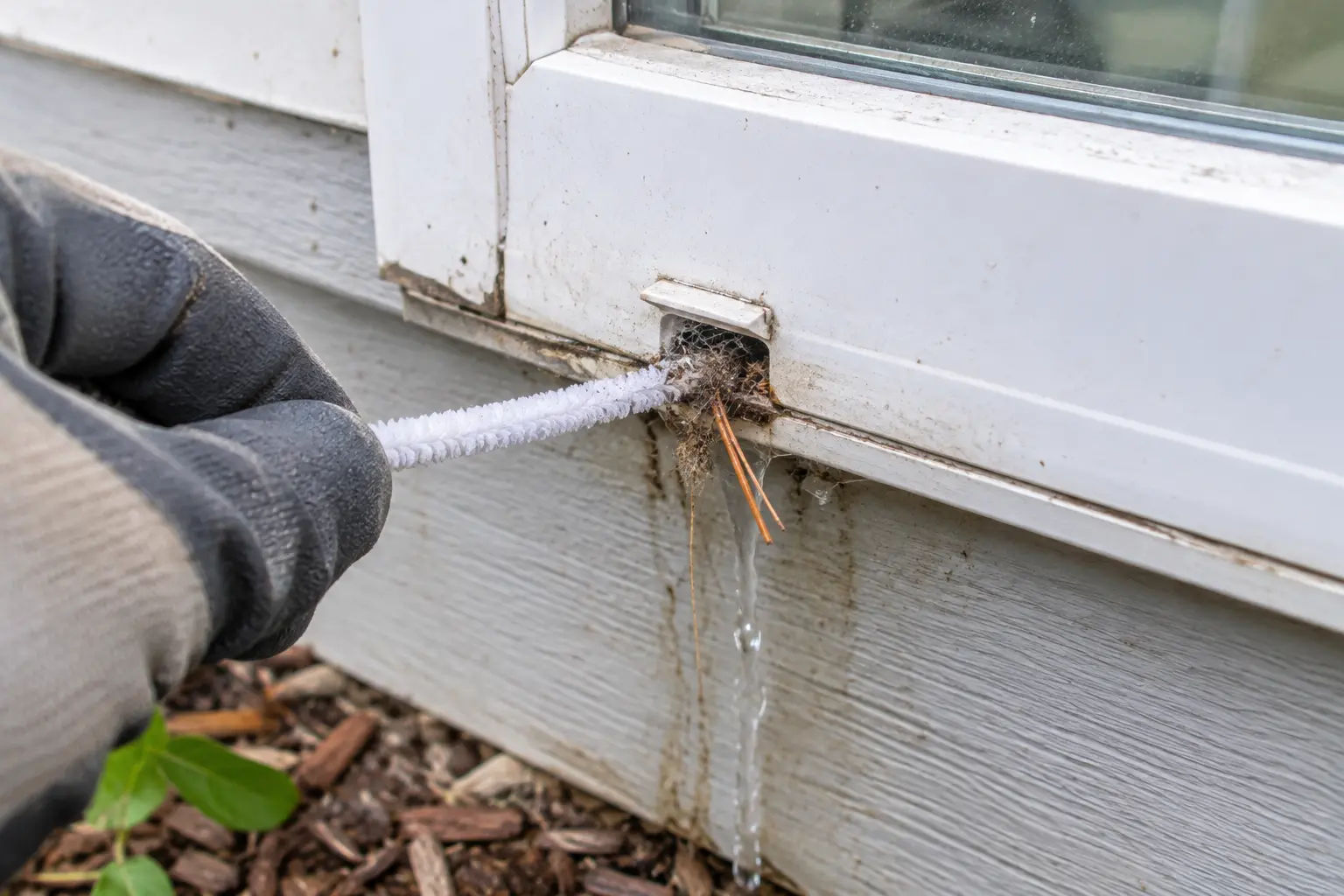
5. Clear the weep holes
Find the small slots or covered openings along the outside bottom of the frame. Milgard’s sliding window guide says to clean them with a pipe cleaner, and its care guide says to check them periodically and clear blockages with a soft brush (Milgard sliding window guide). To test them, pour a small cup of water into the outer track and watch it drain outside.
6. Dry it and lubricate
Dry the track fully with a clean cloth and leave the window open for a few minutes. Milgard recommends lubricating sliding window tracks and rollers with a dry silicone spray at least once a year. It also says to avoid petroleum-based chemicals on its frames, so check your own window’s guide before using an oily spray.
Cleaning Different Types of Tracks
| Track type | What works | What to avoid |
|---|---|---|
| Vinyl | Soapy water, soft brush | Solvents, abrasive pads |
| Aluminum | Soapy water, soft brush | Steel wool, harsh acids |
| Painted wood | Damp cloth, mild soap, dry right away | Soaking, scraping paint |
| Stained or bare wood | Barely damp cloth, dry right away | Standing water |
On wood, water is the enemy. Use a cloth that is barely damp and dry the wood as you go.
Mold in Window Tracks
Black or green spots in a track usually mean water sits there too long. The EPA says to scrub mold off hard surfaces with detergent and water and dry them completely. It also says that if you clean the mold but don’t fix the water problem, the mold will most likely come back (EPA mold guide).
In a window track, the water problem is often a clogged weep hole or condensation running down the inside of the glass. Clear the drains, and if your windows fog up on cold mornings, run a bathroom or kitchen fan more often. The EPA says most people can clean small areas of mold themselves if the area is under about 10 square feet. Wear gloves and avoid touching mold with bare hands.
Lead paint warning: If your home was built before 1978, painted windows may contain lead. The EPA notes that worn lead paint on surfaces like window sills can create hazardous chips and dust (EPA lead renovation program). On older painted tracks and sills, wipe with a damp cloth, don’t dry scrape or sand, and vacuum with a HEPA vacuum if you have one.
Mistakes That Make the Job Harder
- Starting with water. Wet dust turns into paste. Always vacuum first.
- Flooding the track. Too much water runs under the frame or onto the sill.
- Using abrasive tools. Steel wool and metal scrapers leave scratches that hold more dirt.
- Ignoring the weep holes. A clean track that can’t drain will fill up again with the next rain.
- Cleaning tracks after the glass. Dirty water from the track can splash onto clean glass. Do tracks first.
How Often Should You Clean Window Tracks?
There is no single rule. Milgard suggests vacuuming tracks occasionally and lubricating sliding tracks at least once a year. A good routine for most homes is a quick vacuum every month or two and a full cleaning twice a year.
Plan those deep cleanings around what lands on your windows. Tree pollen fills tracks in spring, and leaves, needles, and dust add more through summer and fall. A cleaning in late spring and another in early fall catches the worst of both. Homes near busy roads, construction, or lots of trees may need it more often. Pollen settles on bedding too, so wash your pillows as well; our guide on washing pillows explains how.
If you are cleaning the glass at the same time, our guide on the best way to clean windows explains why tracks and frames always come first.
When to Hand It Off
Track cleaning is an easy job on ground floor windows. Upper windows, sliding doors that won’t budge, and tracks full of mold are harder. If you live in Central Oregon, our residential window cleaning service washes screens, vacuums and wipes tracks, and cleans sills on every full visit at no extra charge. If your sliding door opens onto a grill deck, our guide to the best wireless meat thermometer helps you watch a cook from inside.
If a track stays wet even after the weep holes are clear, water may be getting in around the frame. Our guide on how to reseal windows shows how to find the leak.
Frequently Asked Questions
Can I use vinegar to clean window tracks?
Sometimes, but check first. Some window makers, including Milgard, warn against acidic cleaners because they can damage the frame finish. Dish soap and water is safe for almost every track. If you use vinegar on mineral spots, rinse the track with clean water afterward.
Why does water pool in my window track?
The weep holes are usually blocked. Dirt, needles, and insects clog the small drain openings on the outside of the frame. Clear them with a pipe cleaner or soft brush, then pour a little water in the track to make sure it drains.
How do I clean window tracks without a vacuum?
Use a dry brush or a dry paintbrush to sweep the dirt toward one end of the track. Pick it up with a damp paper towel. Then wash the track with soapy water as usual.
Should I lubricate window tracks after cleaning?
For sliding windows, yes, once the track is fully dry. Milgard recommends a dry silicone spray at least once a year. Check your own window maker’s guide for the product they approve.
The Bottom Line
Vacuum first, wash with soapy water, scrub the corners, and dry the track. Then clear the weep holes so the track can drain. Skip steel wool, harsh acids, and bleach mixes. Learning how to clean window tracks takes about ten minutes per window, and doing it twice a year keeps windows sliding easily and stops water from pooling on your sills.


3 Comments
Comments are closed.