
Windows on a mobile home mount differently from house windows. Most have a flange (a flat lip around the frame) that sits on the outside wall, sealed with butyl tape and screwed through the flange, with trim covering the edges. Replacement windows are sold by opening size, such as 30 x 40 or 46 x 39 inches, in single-hung or horizontal sliding styles, and white vinyl has largely replaced old aluminum frames. Basic vinyl replacements listed by mobile home parts sellers run from about $150 to $580 per window before installation. Bedroom windows must also meet egress rules so you can climb out in a fire.
Most pages about these windows are store listings with no measuring help, or sales pages for an installer. This guide covers what makes them different, how to measure, what they cost, the safety rules, and how a replacement is done.
How They Differ From House Windows
The term “mobile home” technically covers homes built before June 15, 1976. Homes built after that date are manufactured homes built to HUD’s construction and safety standards, and each section carries a HUD certification label (HUD Office of Manufactured Housing Programs). Most people still use both terms, and the windows work the same way.
Compared with windows in a site-built house, these windows:
- Mount from the outside. The flange lies flat against the outside wall instead of fitting into a deep wood frame.
- Seal with butyl tape. A sticky tape behind the flange, often called tacky tape or putty tape, keeps water out.
- Fit thinner walls. The interior jamb trim covers the gap between the window and the inside wall.
- Come in their own sizes. Standard house window sizes usually won’t match a mobile home opening.
In the replacement video we reviewed from a mobile home parts shop, the installer pointed out that old butyl tape dries out over time. That’s a common reason an older window starts to leak.
Window Types for Manufactured Homes
| Type | How it opens | Notes |
|---|---|---|
| Single-hung | Bottom sash slides up | The most common style |
| Horizontal slider | One sash slides sideways | Good for wide, short openings |
| Awning or jalousie | Tilts out or has crank-open glass slats | Common in older homes; slats seal poorly |
| Picture | Doesn’t open | Can’t count as an egress window |
| Storm window add-on | Mounts inside or outside the main window | Adds insulation without replacing the window |
Older homes often have aluminum frames with single-pane glass. Most new replacements are dual-pane vinyl, often with low-E coatings. Our guide to low-E glass explains how the coating blocks heat.
Mobile Home Window Sizes and How to Measure
These windows are usually named by width and height in inches. The parts store in our video called its most common window a “4639,” which measured 46-1/4 inches wide by 39-5/8 inches tall. Sizes listed by one seller include 14 x 40, 30 x 27, 30 x 36, 30 x 40, 30 x 54, 30 x 60, 40 x 54, and 46 x 54.
The diagram below shows how a typical flange window mounts and where to measure.
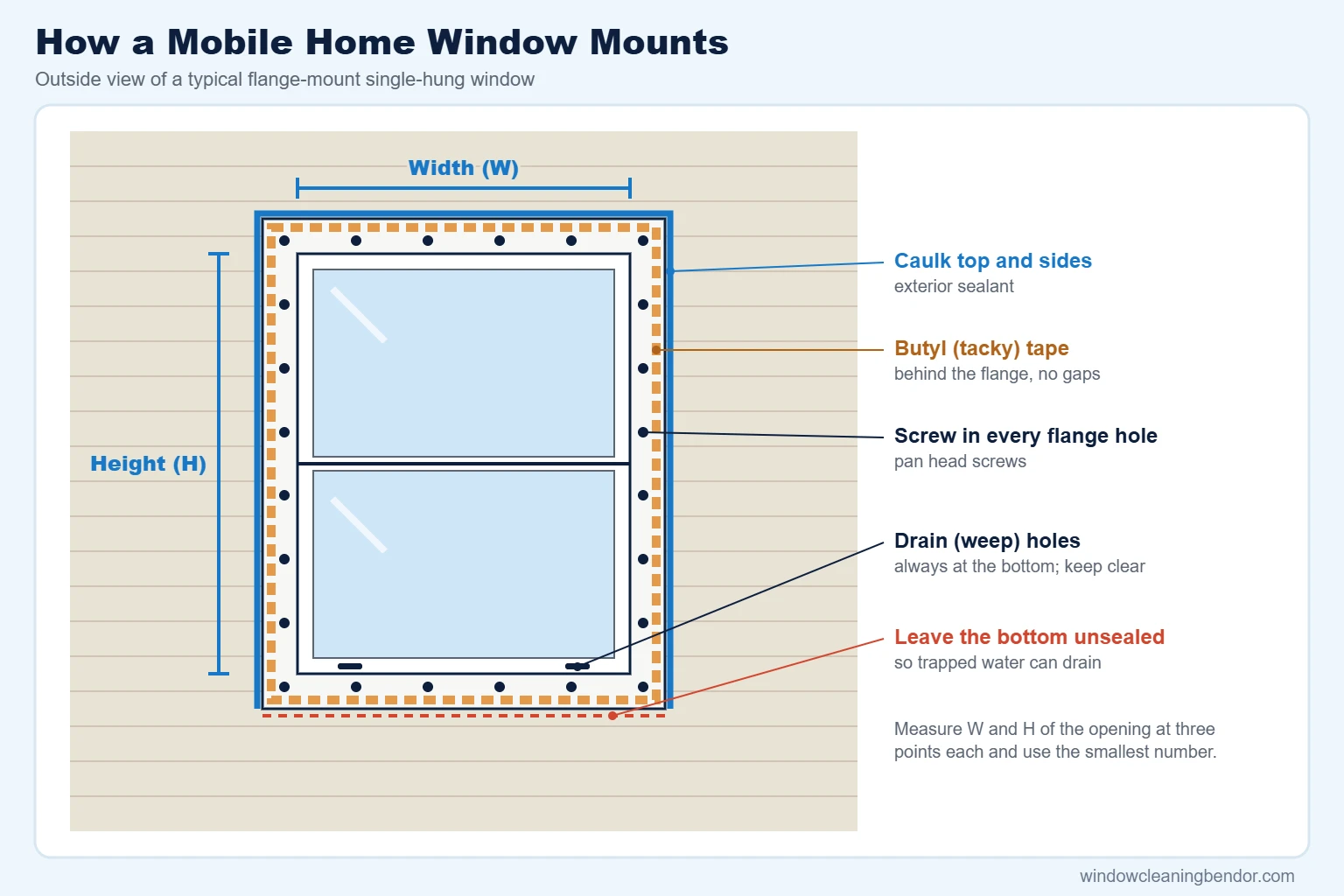
To measure for a replacement:
- Remove the outside trim so you can see the whole window flange.
- Measure the opening, not the glass. Measure the width at the top, middle, and bottom of the rough opening, and the height at the left, middle, and right.
- Use the smallest numbers. Older openings are often slightly out of square.
- Check how the seller lists sizes. Some list the rough opening, others the window itself. Lowe’s mobile home listings mix both, with some windows named by rough opening (such as 36 x 72) and others by actual size (such as 35-1/2 x 71-1/2).
- Note the style and glass. Write down single-hung or slider, clear or obscure glass, and which side opens.
What size is a standard mobile home window?
There’s no single standard size, but a handful of sizes cover most homes. Widths of 14, 30, 36, 40, and 46 inches are common, with heights from about 27 to 60 inches. Measure your own opening before ordering, since a window even half an inch too big won’t fit.
How Much Do Mobile Home Windows Cost?
Prices below come from mobile home parts sellers’ listings when we checked in November 2026. They’re for the window only.
| Window | Listed price |
|---|---|
| Basic vinyl single-hung, 14 x 40 to 46 x 54 (Builders Discount) | About $150 to $223 |
| Dual-pane vinyl single-hung or slider (Mobile Home Outfitters) | About $285 to $581 |
| Professional installation | Varies by area; get at least three bids |
Our guide to the cost to replace windows covers installation prices for site-built homes and what drives them up.
Is there a tax credit for replacing windows on a mobile home in 2026?
Not a federal one. The IRS says the Energy Efficient Home Improvement Credit does not apply to property placed in service after December 31, 2025 (IRS energy credit FAQs). Some utilities and states still offer rebates, so keep the efficiency label that comes on the new window. The installer in our video peels it off whole and saves it for that reason.
Egress Rules for Bedroom Windows
Under the federal standards for manufactured homes, a bedroom without an outside door needs at least one egress window or approved exit device. The window must open to a clear space of at least 5 square feet, at least 20 inches wide and 24 inches tall, without tools or removing the sash. The bottom of the opening can be no more than 36 inches above the floor, and the latches must be no higher than 54 inches (24 CFR 3280.404).
Egress warning: Don’t replace a bedroom egress window with a smaller window, a picture window, or a style whose opening is too small. Check the clear opening of the new window, not just its outside size, before you buy.
How do I know if a window is an egress window?
Look for a “Do Not Remove” label with opening instructions on the window, which the federal rules require on egress windows. It’s usually the largest operable window in a bedroom. If the label is gone, measure the clear opening when the window is fully open.
How to Replace a Mobile Home Window
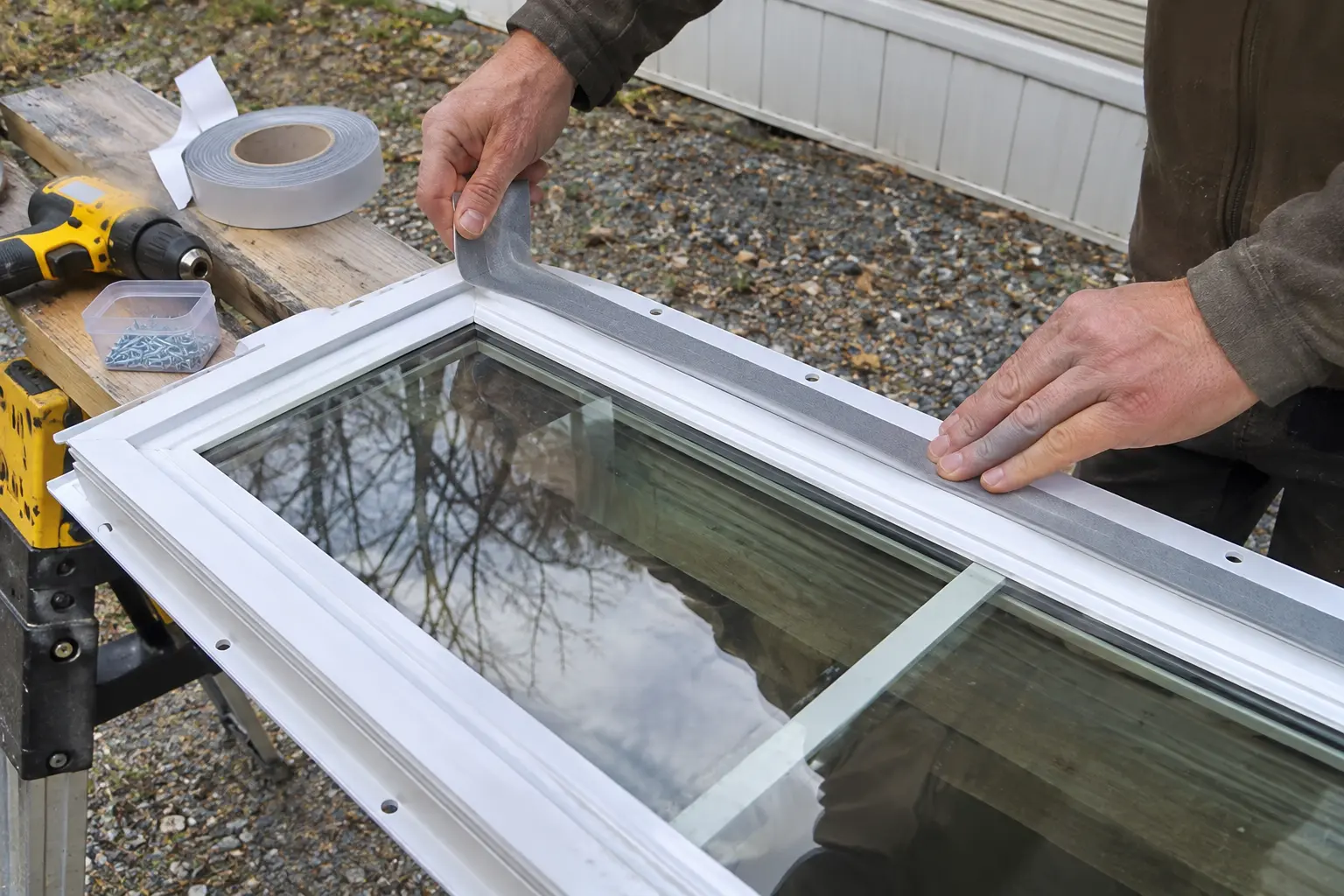
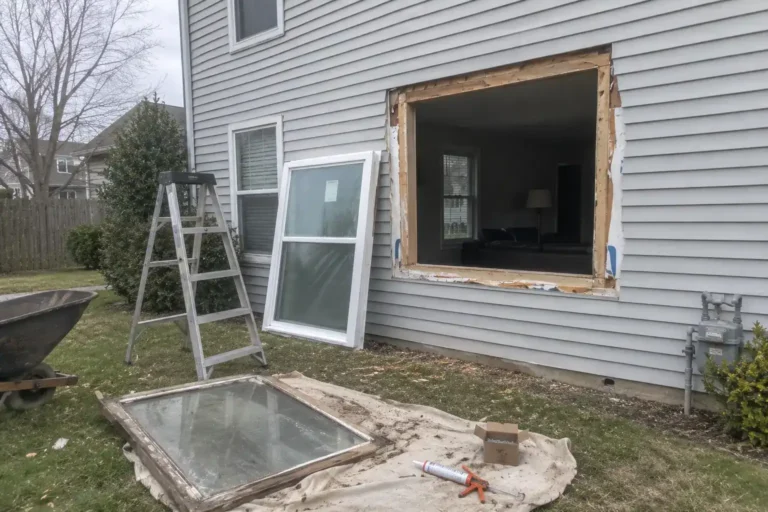
Mobile home window replacement is done from the outside, because the window’s flange is fastened to the outside wall. These steps follow the method shown in the parts shop’s video. Always check the instructions that come with your window.
- Remove the trim and fasteners. Take off the outside trim, then remove the screws, nails, or staples through the flange. Start at the bottom so the window can’t fall on you.
- Pry out the old window. Work the flange loose from the bottom up. Get help for large windows.
- Clean the opening. Scrape off all old butyl tape and caulk with a 5-in-1 painter’s tool or putty knife. Pull any leftover staples and make sure nearby siding is still tight.
- Remove the inside jamb trim. Vinyl replacements are usually thicker than old aluminum windows, so the interior trim often needs to be cut back or replaced.
- Prep the new window. Remove shipping blocks and stickers. Find the drain holes, which always go at the bottom.
- Apply butyl tape to the flange. Start along the top, then the sides and bottom, overlapping the corners so there are no gaps. Leave the paper backing on for a test fit if you’re unsure.
- Set and fasten the window. Have a helper inside check that it’s level and square and that the sash slides smoothly. Then drive a screw through every flange hole.
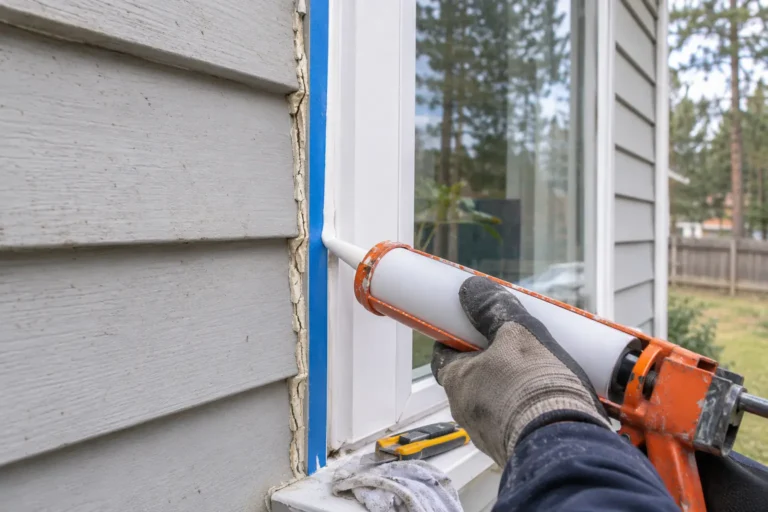
- Seal and trim. Trim off squeezed-out tape, caulk the top and sides with an exterior sealant, and leave the bottom edge unsealed so trapped water can drain. Reinstall the trim the same way.
Why does my mobile home window leak?
Usually because the butyl tape behind the flange has dried out, or the caulk around the trim has cracked. Clogged drain holes at the bottom of the frame can also back water up inside. Our guide on how to reseal windows covers the caulking part.
Replacing Your Own Windows: Pros and Cons
| Pros | Cons |
|---|---|
| Window-only prices are often a few hundred dollars | Wrong measurements mean a return or reorder |
| Flange windows mount from the outside | Large windows need two people |
| Fixes drafts and leaks from old butyl tape | Hidden rot or bent framing can turn up |
| A good time to upgrade to dual-pane glass | Bedroom windows must still meet egress rules |
If new windows aren’t in the budget, low-E storm windows are another option. The Department of Energy says they can save 10% to 30% on heating and cooling costs, with savings similar to replacement at about a third of the cost (DOE Energy Saver on storm windows).
Keeping the Windows Clean and Working
Vinyl sliders and single-hung windows last longer when the tracks and drain holes stay clear. Vacuum grit out of the tracks, wipe the sashes, and poke a soft wire through the drain holes once or twice a year. Our guide on how to clean window tracks shows the steps. In Central Oregon, our post-construction window cleaning service removes leftover stickers, tape residue, and dust from new windows after a replacement.
The Bottom Line
Windows on a mobile home mount from the outside with a flange, butyl tape, and screws, and they come in their own sizes, so measure the rough opening and check how the seller lists sizes. Dual-pane vinyl replacements run about $150 to $580 each from parts sellers. Keep bedroom windows large enough for egress, seal the top and sides but not the bottom, and keep drain holes clear. The federal window tax credit ended after 2025, but local rebates may still apply.
One Comment
Comments are closed.