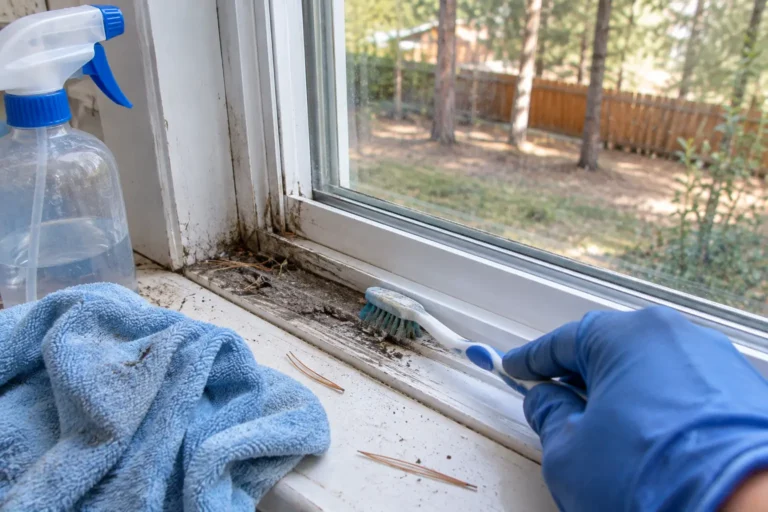
The best way to clean windows is to wash the glass with warm water and a few drops of dish soap, then pull it dry with a squeegee and wipe the edges with a lint-free microfiber cloth. Work on a cloudy day or in shade, clean the frames and tracks first, and change your water when it turns gray. That simple routine beats spray bottles and paper towels on almost every kind of dirt.
Below you will find which method to use for which job, the right mix for each type of grime, step-by-step squeegee technique, and how to fix the streaks that show up anyway.
Which Cleaning Method Works Best?
Each method has a place. The right pick depends on how dirty the glass is and how many windows you have.
| Method | Best for | Weak spot |
|---|---|---|
| Squeegee and soapy water | Whole house, outside glass, big panes | Takes 20 minutes of practice |
| Microfiber cloth and spray | A few small or inside windows | Smears on oily or very dirty glass |
| Vinegar and water | Light film and mineral haze | Can streak if the glass has old wax or soap residue |
| Store-bought glass spray | Quick touch-ups, mirrors | Leaves film when used on heavy dirt |
| Paper towels | Nothing, really | Leave lint and push dirt around |
For most homes, the squeegee method is the best way to clean windows, because it gives the cleanest result in the least time. Spray and cloth is fine for touch-ups between full cleanings.
What You Need
- A bucket (a long one fits a squeegee best)
- A 10 to 14 inch squeegee with a fresh rubber blade
- A scrubber or a soft sponge
- Two or three lint-free microfiber cloths
- Dish soap
- White vinegar for mineral haze
- A soft brush and a vacuum with a crevice tool for tracks
- A towel to lay on the sill
A worn squeegee blade causes more streaks than anything else. If the edge is nicked or rounded, replace it. A new blade costs a few dollars.
The Right Mix for Each Type of Dirt
Not all dirt comes off the same way. Match the mix to the problem.
| Type of dirt | What to use | Notes |
|---|---|---|
| Dust and light grime | Warm water plus a few drops of dish soap | Too much soap leaves film |
| Fingerprints and kitchen grease | Same soapy water, a little stronger | Wash twice if needed |
| White mineral spots from sprinklers | Equal parts white vinegar and water | Let it sit 2 to 3 minutes, then wash |
| Bird droppings and bugs | Soak with soapy water first | Never scrape dry dirt |
| Tree sap | Rubbing alcohol on a cloth | Test a corner first |
The window maker Renewal by Andersen tells owners to use mild soap and water and to avoid harsh or abrasive cleaners on its windows (Renewal by Andersen care guide). Most other window makers give similar advice.
Safety note: Never mix bleach with ammonia or with vinegar. Bleach plus ammonia makes toxic chloramine gas, and bleach plus an acid like vinegar releases chlorine gas (Michigan.gov bleach fact sheet). Many glass sprays contain ammonia, so keep bleach far away from your window kit.
How to Clean Windows Step by Step
1. Pick the right time
Clean on a cloudy day or when the glass is in shade. Direct sun dries soapy water before you can squeegee it, and that is where most streaks come from. The Andersen care guide also suggests cleaning when it is between about 40°F and 85°F.
2. Clean the frame and sill first
Brush loose dirt off the frame and vacuum the tracks. If you skip this, the first splash of water turns that dust into mud that runs down your clean glass.
3. Wash the glass
Dip your scrubber, squeeze out most of the water, and wash the whole pane. Get into the corners. On very dirty glass, wash twice.
4. Squeegee from top to bottom
Wipe a dry strip about one inch wide along the top edge with your cloth. Set the squeegee in that dry strip and pull straight down to the bottom. Overlap each stroke by an inch or two. Wipe the blade on a cloth after every pull.
If you want to go faster, try the “S” method. Keep the blade on the glass and move it in a snake pattern from top to bottom. It takes some practice, but it leaves fewer lines.
5. Detail the edges
Wrap a dry microfiber cloth around one finger and wipe the edges where the glass meets the frame. Then wipe the sill dry. Check the glass from an angle, since streaks hide when you look straight at them.
Cleaning Outside and Upper Windows
Outside glass collects pollen, dust, smoke film, and hard water spots, so it usually needs a stronger wash than inside glass. For ground-floor windows, a squeegee on an extension pole works well and keeps you off a ladder.
Upper windows are where people get hurt. If you must use a ladder, follow the basic rules from OSHA’s portable ladder safety card (OSHA ladder safety):
- Set the base one foot out for every four feet of height. This is called the 4 to 1 rule.
- Keep three points of contact, such as two feet and one hand, at all times.
- Never stand on the top three rungs of a straight or extension ladder.
- Place the ladder on firm, level ground.
If you have second-story glass over a slope, gravel, or a deck, it is usually safer to hire someone with water-fed poles that work from the ground.
Screens and Tracks
Dirty screens put dust right back on clean glass. Take them out, lay them flat on a towel or the lawn, and scrub gently with soapy water and a soft brush. Rinse with a gentle spray and let them dry fully before you put them back.
For tracks, vacuum first, then wipe with a damp cloth. An old toothbrush gets into the corners. Doing it in that order keeps you from turning grit into paste.
Why You Still Get Streaks (and How to Fix Them)
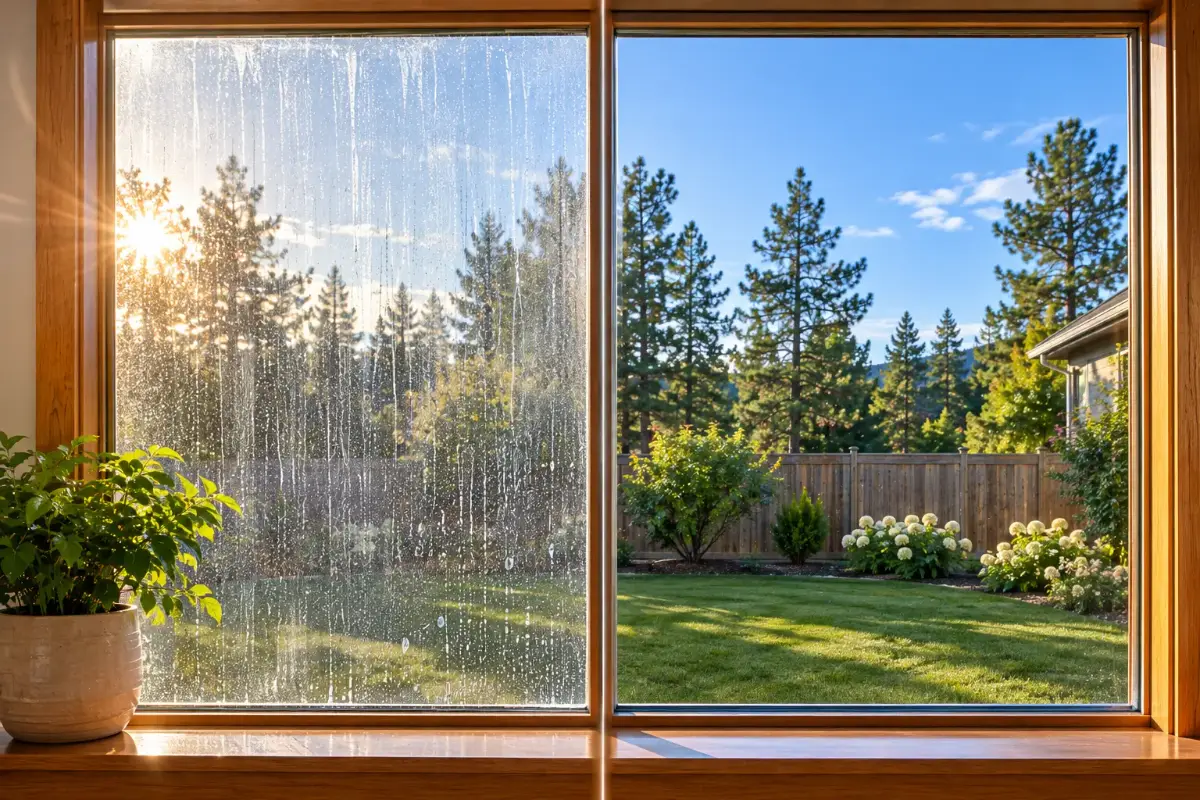
| What you see | Likely cause | Fix |
|---|---|---|
| Lines in the same spot every time | Nicked squeegee blade | Replace the rubber |
| Hazy film over the whole pane | Too much soap | Use less soap, rinse with clean water |
| Streaks only on sunny windows | Water dried too fast | Clean in shade |
| Drips along the bottom edge | Water left at the sill | Wipe the bottom edge last |
| Swirls and lint | Paper towels or a dirty cloth | Switch to clean microfiber |
| White spots that come back | Mineral deposits | Vinegar soak, then wash |
Special Glass Needs Extra Care
Low-E and coated glass
Many newer windows have a thin coating that helps keep heat in or out. Glass maker Cardinal warns in its technical bulletins that abrasive cleaners and scraping can damage glass surfaces (Cardinal Glass bulletin). Renewal by Andersen also tells owners not to use metal razor blades on its glass. Stick with soft cloths and mild soap.
Window film and tint
Tinted film can break down if you use harsh chemicals. Many film makers say to avoid ammonia-based sprays. Use soapy water and a soft cloth, and never use a scraper on film. Our guide to home window tinting covers film care in more detail.
Hard water spots
White spots come from minerals left behind when water dries on glass. The U.S. Geological Survey rates water by how much calcium and magnesium it holds, from soft to very hard (USGS water hardness). The harder the water, the faster the spots build up. If your water is very hard, our guide to water softener costs explains what a softener would run. A vinegar soak takes off fresh spots. Old spots that look the same wet and dry may have etched the glass, and cleaning will not remove them. For tough cases, see our guide to hard water stain removal.
When It Makes Sense to Call a Pro
Doing your own windows is a good fit for a one-story home with glass you can reach. It may be time to hire help if you have:
- Second-story or vaulted windows
- Skylights
- Hard water spots that won’t come off
- Many windows and little time
If you want to see what it costs first, read our window cleaning cost guide, or learn about our residential window cleaning service.
Frequently Asked Questions
Is vinegar or Windex better for cleaning windows?
Both work on light dirt. Vinegar and water is cheap and good at cutting mineral haze. Windex and similar sprays are handy for quick touch-ups. For very dirty glass, warm soapy water and a squeegee does better than either one, because sprays tend to smear heavy grime instead of lifting it.
Should I use newspaper to clean windows?
It is better not to. Old advice says newspaper leaves glass streak-free, but ink can rub off onto frames. Renewal by Andersen tells owners not to use newspaper on its windows because it may discolor the Fibrex frame material. A clean microfiber cloth does the same job without the risk.
Why is there fog between the panes of my window?
Fog or moisture between the two panes means the seal has failed. You cannot clean it away, because the moisture is inside the sealed unit. The glass unit usually has to be repaired or replaced. Check your window warranty before you pay for a fix.
How often should I clean my windows?
Most homes do well with two full cleanings a year, once in spring and once in fall. Homes near busy roads, under trees, or with sprinklers hitting the glass may need a third. Inside glass near kitchens or where kids and pets play often needs a quick wipe more often.
The Bottom Line
The best way to clean windows comes down to three tools: warm soapy water, a sharp squeegee, and a clean microfiber cloth. Together they give you clear glass on almost any window. Clean the frames first, work in the shade, and wipe the edges last. Use vinegar for mineral spots, keep bleach out of the mix, and stay off ladders when the job gets high. For glass you can’t reach safely, a pro with water-fed poles is the safer choice.