Home window tinting means applying a thin film to your window glass to cut heat, glare, and UV rays, and in some cases to add privacy. Good films can block 99% or more of UV, according to the Skin Cancer Foundation. Professionally installed home film usually costs about $5 to $20 per square foot, and DIY kits start around $15. Before you tint, check that the film is approved for your type of glass and that it won’t void your window warranty. After it goes on, wait about 30 days before the first cleaning, and never use a blade on it.
Most pages that rank for this topic are product listings or installer ads. They show films and prices but rarely explain glass risks, warranty limits, or how to clean tinted glass without ruining it. This guide covers all of that.
What House Window Tint Does and Doesn’t Do
Window film can help with several common problems:
- UV and skin protection. Glass blocks most UVB, but UVA rays pass through windows all year. The Skin Cancer Foundation says film can block more than 99% of UVA and UVB light (Skin Cancer Foundation).
- Heat. Solar control films reflect or absorb part of the sun’s heat. The U.S. Department of Energy suggests sun control films on south-facing windows to cut summer heat gain.
- Glare. Darker and reflective films cut glare on TVs and screens.
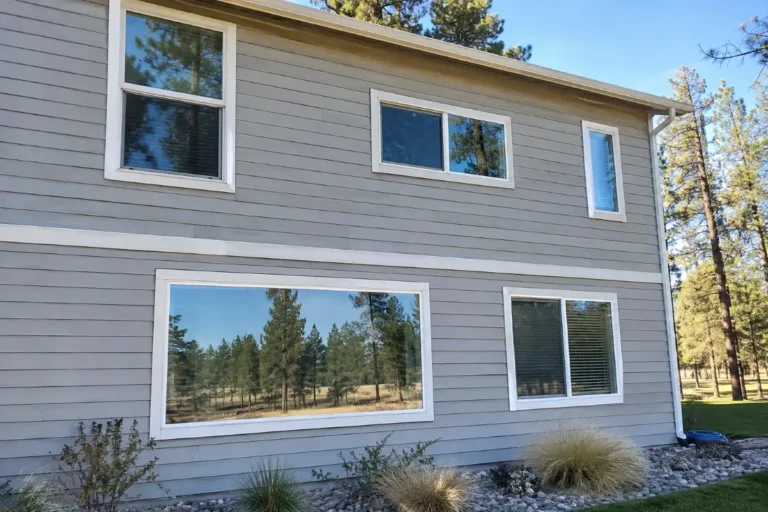
- Daytime privacy. Reflective and frosted films make it harder to see inside during the day.
What film can’t do matters too. The International Window Film Association (IWFA) says film can block up to 99% of UV, but “no window film can eliminate fading,” since visible light and heat also fade fabrics. Reflective film also loses its privacy at night when your lights are on, because the brighter side becomes the see-through side. If you want to block light completely, our guide to blackout window film explains the options and the heat risk.
Types of Home Window Tint
| Film type | What it does | Look | Best for |
|---|---|---|---|
| Dyed | Absorbs light to darken the glass | Flat, dark tint | Glare control on a budget |
| Reflective (metalized) | Reflects heat and light | Mirror-like from outside in daylight | Hot, sunny windows and daytime privacy |
| Ceramic or spectrally selective | Blocks infrared heat with little change in look | Near clear | Heat control without a dark look |
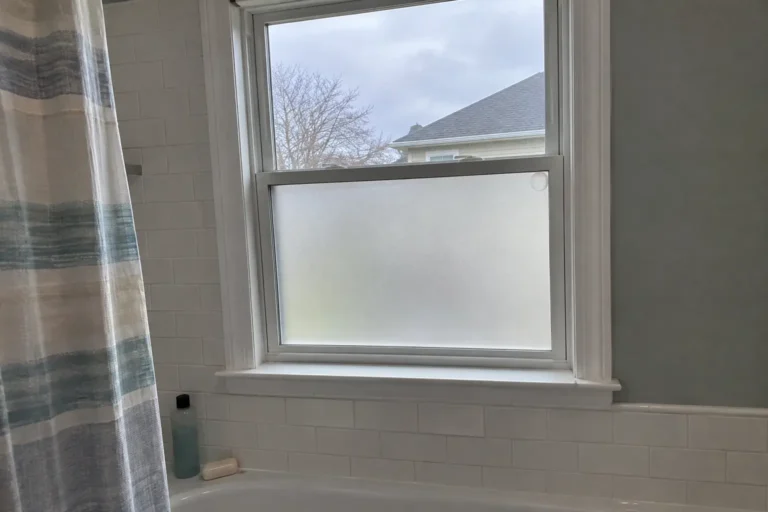
| Frosted or opaque privacy | Blocks the view, lets some light through | Milky or solid | Bathrooms, entry doors, street-facing rooms |
| Security or safety | Thick polyester that helps hold broken glass together | Usually clear | Ground-floor glass and doors |
| Low-E (insulating) | Reflects indoor heat back into the room | Clear to light tint | Older single-pane windows in cold climates |
A federal study summarized by the General Services Administration notes that spectrally selective films affect mainly the infrared part of sunlight, so they change the look of the glass very little.
If privacy is your main goal, our guide to privacy film for windows goes deeper. Before you order film, our guide to types of windows helps you identify your window styles and frames.
How Dark Should It Be?
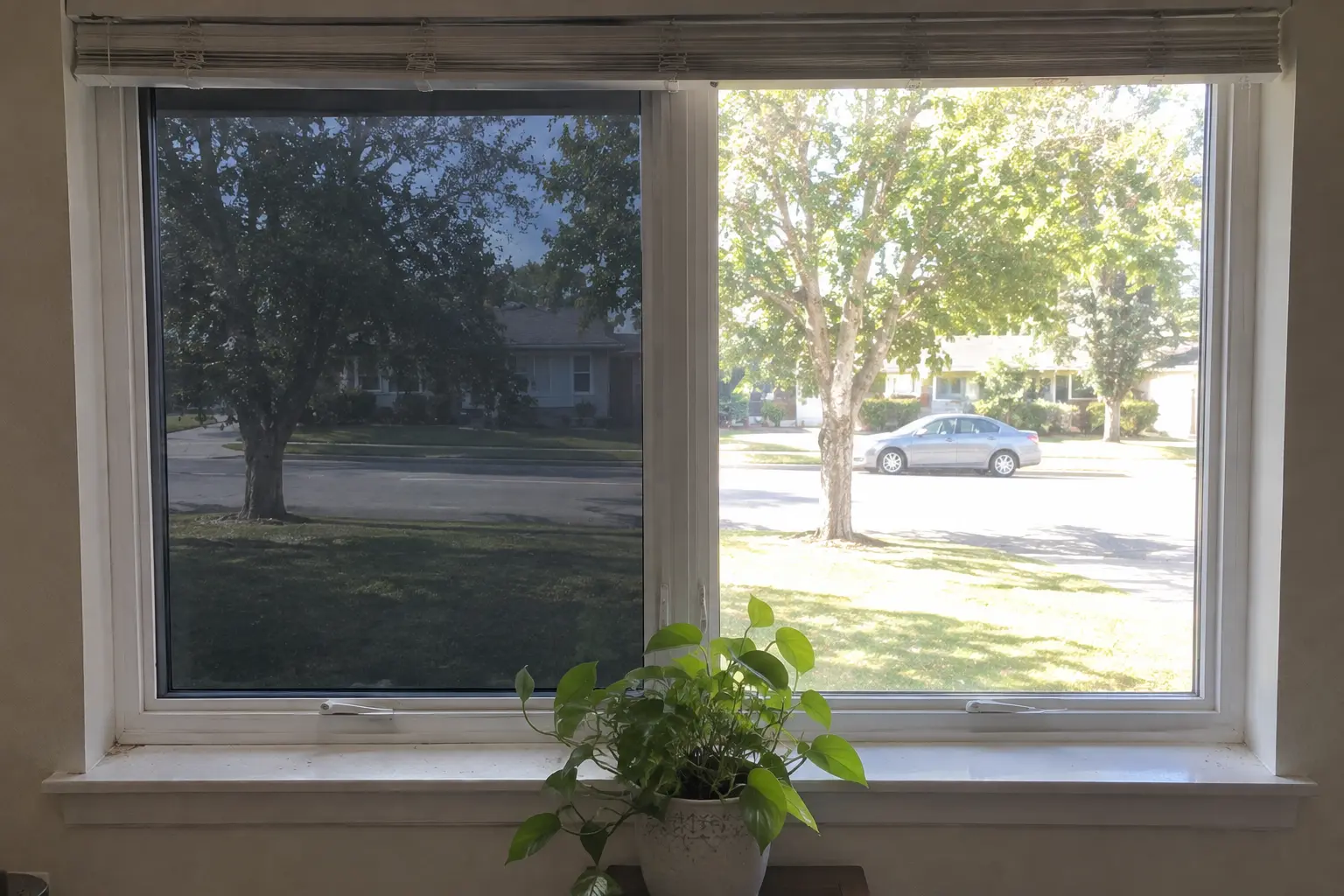
Film darkness is listed as VLT, or visible light transmission. It is the share of daylight that gets through. Retail films are sold from about 5% VLT (very dark) to 70% VLT (light).
| VLT | How it looks | Common use |
|---|---|---|
| 5% to 15% | Very dark | Media rooms, strong glare |
| 20% to 35% | Medium to dark | West-facing rooms with hard afternoon sun |
| 50% to 70% | Light | Living spaces where you want daylight |
| 70% and up | Near clear | Ceramic heat and UV films |
Other numbers on the film label help you compare:
- UV rejection: Look for 99% or higher.
- Total solar energy rejected (TSER): Higher means more heat blocked.
- SHGC (solar heat gain coefficient): Lower means less of the sun’s heat gets in.
- Visible light reflectance: Higher means a more mirror-like look from outside.
Can people see into tinted house windows at night?
Often, yes. Reflective film acts like a one-way mirror only when it is brighter outside than inside. At night, with your lights on, people outside can see in. For privacy around the clock, use frosted or opaque film, or pair tint with blinds or curtains. Our guide to one way glass explains the lighting it needs to work.
How Much Does Window Tinting Cost?
Fixr’s cost guide gives these prices for home window film (Fixr window film cost guide):
| Item | Typical cost |
|---|---|
| Professional install, most films | $5 to $20 per sq. ft. |
| Decorative film | $9 to $20 per sq. ft. |
| Security film | Up to $26 per sq. ft. |
| Five 24 by 36 inch windows | $150 to $600, about $375 on average |
| DIY film on a roll | About $1 per sq. ft. |
| DIY kit with tools | $15 to $45 |
| Removing old film | $3 to $5 per sq. ft. |
Fixr also notes that many installers have a minimum charge of around $392, so a single small window can cost more per square foot than a whole-house job. Smart film that switches from clear to frosted costs far more, up to $4,200 for those same five windows.
Does window tint lower energy bills?
It can, mostly in warm, sunny climates. A federal study summarized by the GSA found up to 29% HVAC energy savings in warmer climates, though that study looked at office buildings. Savings at home depend on your glass, the window’s direction, and your weather.
Pros and Cons
| Pros | Cons |
|---|---|
| Blocks 99% or more of UV with quality film | Can void your window maker’s glass warranty |
| Cuts heat gain on sunny windows | Can raise the risk of heat cracks on some glass |
| Reduces glare on screens | Dark films make rooms dimmer |
| Adds daytime privacy | Reflective privacy fails at night |
| Costs far less than new windows | Can block welcome winter sun in cold climates |
| Can be removed later | DIY jobs can show bubbles, dust, and creases |
The GSA findings note that solar control film works best on single-pane clear windows with direct sun in places with hot summers and mild winters. In colder places, a dark film on a south window can block free winter heat.
How long does home window film last?
It depends on the film, the glass, and how much sun the window gets, according to the IWFA. The Skin Cancer Foundation says window tint usually stays effective for about a decade. Many brands back residential film with long warranties when a certified dealer installs it.
Check Your Glass and Warranty First
Safety note: Window film can raise the risk of glass cracking from heat. The sun heats the center of the pane while the edges stay cool in the frame, and the film adds to that heat. The European Window Film Association says film will never cause this kind of break in tempered glass, but it can greatly raise the risk on ordinary annealed glass if the wrong film is chosen (EWFA thermal stress article). Ask for the film maker’s film-to-glass chart before you buy, and don’t put dark or reflective film on glass the chart doesn’t approve.
Other things to check:
- Large or older double-pane windows. 3M asks installers to fill out a glass checklist for double-pane glass over 40 square feet, cracked or chipped glass, or glazing compound that has hardened.
- Your window warranty. Andersen’s 400 Series warranty, for example, does not cover “glass tinting” or “glass shading devices”. Read yours first. Some film makers offer their own glass coverage when a certified dealer installs approved film.
- Low-E glass. Many newer windows already have a low-E coating. The IWFA suggests asking your dealer whether film can go on them. Our low-E glass guide explains how to tell if you have it.
Can you tint double-pane windows?
Usually, but the film must be approved for that glass. Dark or heat-absorbing films can raise the risk of heat cracks, and many window makers exclude aftermarket tint from their warranty. Check the film maker’s film-to-glass chart and your window warranty first.
DIY or Professional?
DIY works best on small, single-pane windows with static cling or light films. Lowe’s installation steps boil down to this:
- Measure each pane and buy about 15% extra.
- Clean the glass well, removing paint specks and grime.
- Cut the film about 1 inch larger than the glass and spray both the glass and film with application solution.
- Apply from the top down and squeegee from the center out.
- Trim the edges and press out remaining water.
Work in the shade on a cool day, since heat and direct sun dry the solution too fast. Some haze and small water pockets are normal at first. 3M says thick or metalized films can take more than 30 days to fully dry.
A pro makes more sense for large panes, double-pane or low-E windows, dark or reflective films, and security film. Ask the installer which film-to-glass chart they used and what the film warranty covers.
How to Clean Tinted House Windows
House window tint is softer than glass, so the usual tricks for glass can scratch it. 3M’s care guide and Madico’s cleaning FAQ give these rules:
- Wait 30 days after install before the first wash so the adhesive can set.
- Use mild cleaners. A regular non-abrasive glass cleaner or water with a few drops of dish soap works.
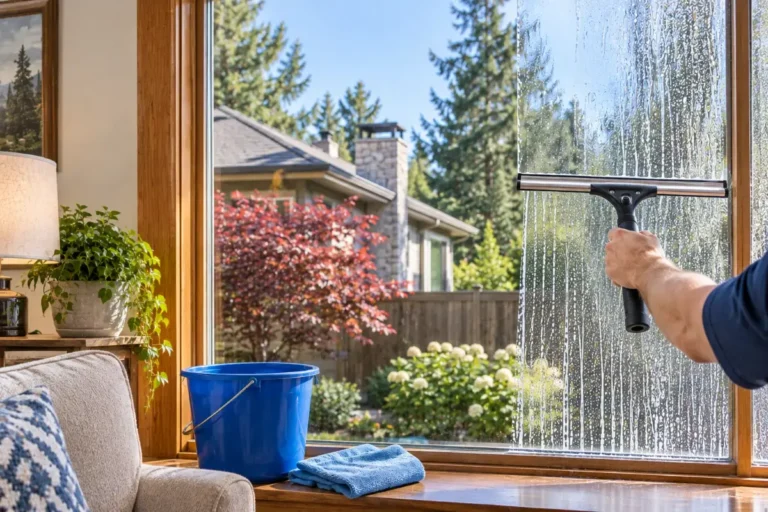
- Use soft tools. A soft cloth, good paper towels, a synthetic sponge, or a rubber squeegee with light pressure.
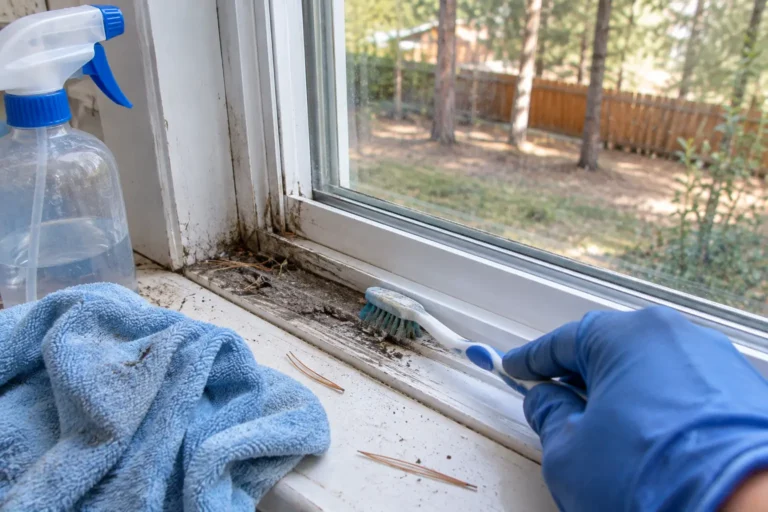
- No blades or scrapers. 3M says not to use knives, scrapers, brushes, or abrasive pads on filmed glass.
- Don’t scrub hard. Wipe lightly and don’t apply heavy pressure.
- Wipe along seams, not across them, so you don’t lift the edge.
- Skip stickers and suction cups. 3M says tapes, suction cups, and stickers on the film can void its warranty.
- Dry it. Squeegee or wipe the film dry instead of leaving it wet.
Remember that film usually goes on the inside of the glass, so the outside can still be cleaned the normal way. If you live in Central Oregon, our commercial window cleaning team also cleans tinted office and storefront glass without scratching the film.
The Bottom Line
House window tint is a low-cost way to cut UV, heat, and glare, and the right film can add daytime privacy. Pick the film type and VLT for each room, check the film-to-glass chart and your window warranty before you buy, and use a pro for large or double-pane glass. Once it’s on, wait 30 days, then clean it gently with soft tools and mild cleaner, and keep blades and scrapers away from it.

6 Comments
Comments are closed.