
A window treatment is anything added to a window, inside or out, to control light, privacy, heat, or style. That includes blinds, shades, shutters, curtains and drapes, valances, window film, and exterior pieces like awnings and solar screens. Designers usually sort them into hard treatments, which are rigid like blinds and shutters, and soft treatments, which are fabric like shades and curtains. The right choice depends on what the room needs most: darkness for a bedroom, moisture resistance for a bathroom, or insulation for a cold or sunny window.
Most guides that answer what is a window treatment come from blind and shade companies steering you toward their own products. This guide defines the terms plainly, compares every main type side by side, and adds the energy and child-safety facts that sales pages often leave out.
Window Treatment Categories
| Category | What it means | Examples |
|---|---|---|
| Hard treatments | Rigid materials like wood, vinyl, or metal | Blinds, shutters, cornices |
| Soft treatments | Fabric that hangs, folds, or rolls | Shades, curtains, drapes, valances |
| Layered treatments | Two or more used together | Drapes over cellular shades, a valance over blinds |
| Glass treatments | Applied right to the glass | Window film, frosted or tinted film |
| Exterior treatments | Mounted outside the window | Awnings, exterior shutters, solar screens |
“Window treatment” and “window covering” are often used the same way. Some designers use “covering” for the working part, like a shade, and “treatment” for the full look, including decorative curtains and valances.
The Main Types of Window Treatments
Blinds
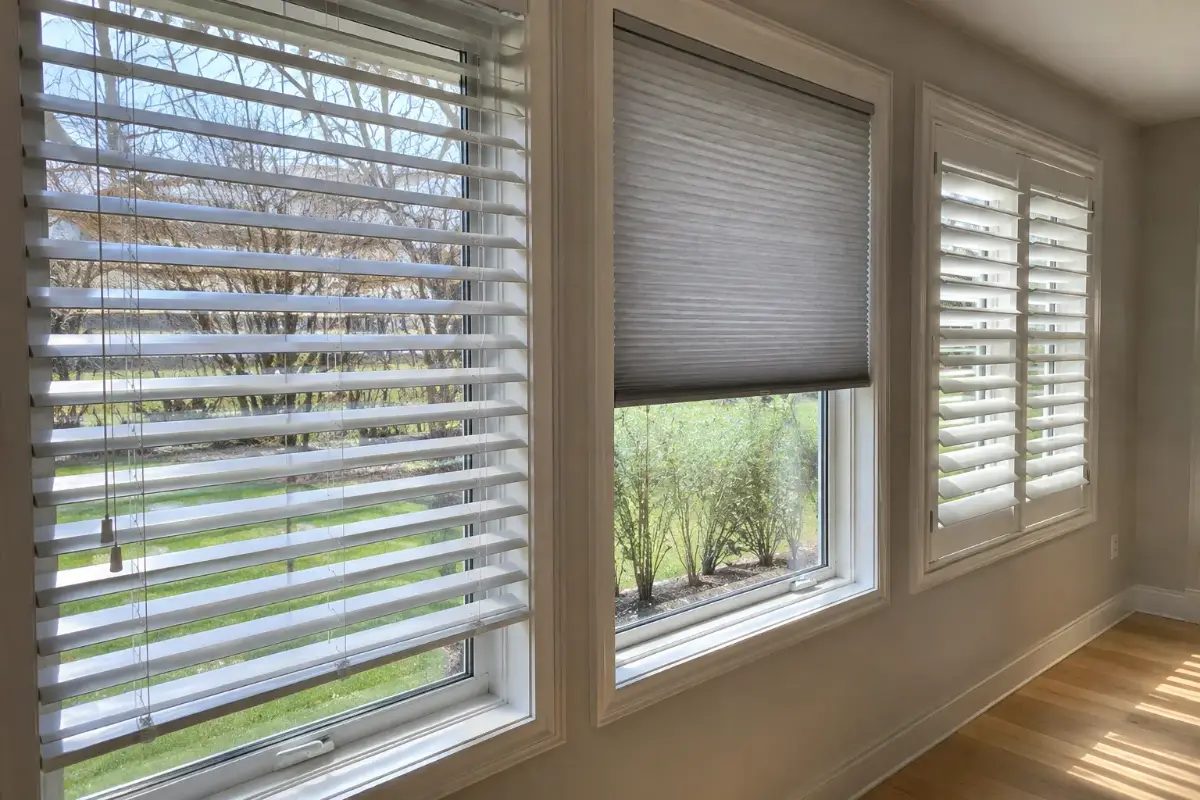
Blinds have horizontal or vertical slats that tilt to adjust light and privacy. They come in real wood, faux wood, aluminum, and vinyl. Faux wood handles humidity better than real wood, which makes it a common pick for kitchens and bathrooms. Vertical blinds are common on sliding glass doors.
Shades
Shades are a single piece of material that raises and lowers. Common styles include:
- Roller shades: A simple fabric panel that rolls onto a tube. Available in sheer, light-filtering, and blackout fabrics.
- Cellular (honeycomb) shades: Pleated fabric with air pockets that slow heat transfer.
- Roman shades: Fabric that folds into soft pleats when raised.
- Solar shades: A screen-like fabric that cuts glare and UV while keeping some view.
- Woven wood shades: Natural materials like bamboo, grass, or reed.
Shutters
Interior shutters are hinged panels mounted to the window frame, usually with adjustable louvers. Plantation shutters have wide louvers. They’re sturdy and have no cords, but they’re among the most expensive choices.
Curtains and drapes
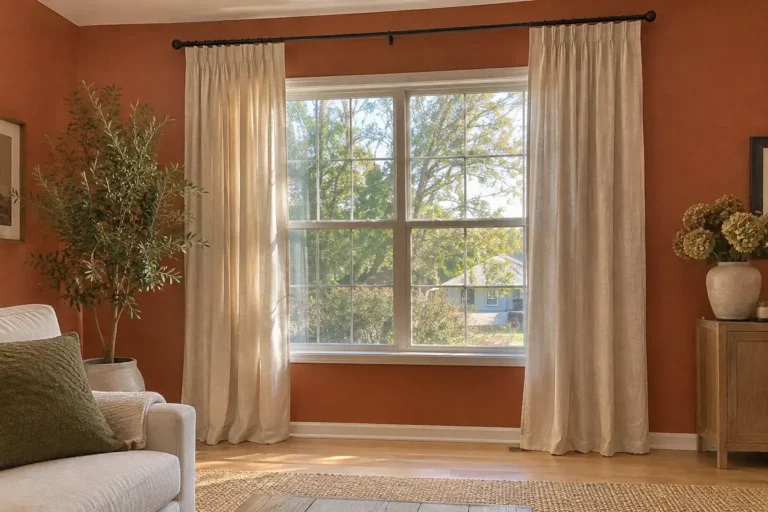
Curtains are usually lighter fabric panels, while drapes are heavier, often lined panels that hang to the floor. Both hang from a rod. Sheers soften light and give daytime privacy, while lined or blackout drapes block light and help with drafts. Our guide on how to measure for curtains explains rod height, width, and length.
Valances and cornices
A valance is a short fabric piece across the top of a window. A cornice is a rigid, often padded box that does the same job. Both hide hardware and finish the look but don’t control light much on their own.
Window film
Film sticks right to the glass. It can tint, frost, darken, or reflect, depending on the type. Our guides cover house window tint for heat and UV, privacy film for windows for daytime privacy, and blackout window film for dark rooms.
Exterior treatments
Awnings, exterior roll-down shutters, and solar screens block sun before it reaches the glass, which keeps heat out better than most indoor options.
Window Treatment Types Compared
| Type | Light control | Privacy | Insulation | Best rooms |
|---|---|---|---|---|
| Blinds | Very good, tilts | Good | Low | Kitchens, offices, baths (faux wood) |
| Roller shades | Good, up or down | Good to full | Low to medium | Most rooms |
| Cellular shades | Good, blackout options | Good to full | High | Bedrooms, drafty or sunny windows |
| Roman shades | Good | Good | Medium if lined | Living and dining rooms |
| Solar shades | Glare and UV only | Daytime only | Low | Offices, TV rooms, sunny views |
| Shutters | Very good, louvers | Very good | Medium | Bedrooms, baths, street-facing rooms |
| Curtains and drapes | Varies by fabric | Varies | Medium if lined | Living rooms, bedrooms |
| Window film | Fixed | Daytime or full | Low to medium | Baths, sunny glass, sidelights |
Do Window Treatments Save Energy?
Some do, and cellular shades lead the way. A U.S. Department of Energy fact sheet on an Oak Ridge National Laboratory study found that cellular shades saved up to 20% on heating energy and up to 15% on total heating and cooling energy compared with no shades (DOE cellular shade fact sheet). The DOE suggests looking for products rated by the Attachments Energy Rating Council (AERC), which carry a label showing their expected performance by climate (DOE on energy-efficient window coverings).
A few simple habits help with any treatment:
- Close coverings on sunny windows in summer to block heat.
- Open south-facing coverings on winter days, then close them at night.
- Choose lined drapes or cellular shades for drafty or single-pane windows.
- Seal leaks first, since a covering can’t fully stop a draft from a gap in the frame.
Child Safety: Choose Cordless
Cord safety warning: Cords on blinds and shades can strangle young children. The U.S. Consumer Product Safety Commission says about nine children under age 5 die each year from window covering cords, and it urges cordless coverings in every room where a child may be (CPSC on corded window coverings). If you keep corded products, shorten cords, anchor continuous loops to the wall or floor, and move cribs and beds away from windows.
Stock blinds and shades sold in stores are now generally made cordless or with inaccessible cords under an industry safety standard, and the CPSC has proposed tighter federal rules. Older blinds and some custom orders may still have cords, so check before you buy.
How to Choose a Window Treatment by Room
| Room | Good choices |
|---|---|
| Bedroom | Blackout cellular or roller shades, lined drapes |
| Living room | Roman or solar shades, curtains layered over shades |
| Kitchen | Faux wood blinds, roller shades, cafe curtains |
| Bathroom | Faux wood blinds, vinyl shutters, privacy film |
| Home office | Solar shades to cut screen glare |
| Nursery or kids’ rooms | Cordless blackout shades only |
| Sliding glass doors | Vertical blinds, sliding panels, wide drapes |
Ask yourself four questions before you shop: How dark does the room need to be? How much privacy do you need at night? Does the window get hot sun or let in cold drafts? And will kids or pets be near it?
Layering Window Treatments: Pros and Cons
| Pros | Cons |
|---|---|
| Combines light control with a softer look | Costs more than one treatment |
| Adds insulation from two layers | Needs more wall and ceiling space |
| Blocks light better at the edges | More to clean and dust |
| Lets you change the look by swapping drapes | Can feel heavy in small rooms |
New treatments look their best on clean glass and frames. If you’re in Central Oregon, our residential window cleaning service can clean the glass, tracks, and sills before your new treatments go up.
Frequently Asked Questions
What is the difference between blinds and shades?
Blinds have slats that tilt to adjust light. Shades are one continuous piece of fabric or material that raises and lowers. Blinds give finer light control, while shades usually look softer and seal the window better.
Are curtains considered window treatments?
Yes. Curtains, drapes, sheers, and valances are all soft window treatments. They’re often layered over blinds or shades.
What window treatment is best for energy savings?
Cellular shades are the best-studied option. A DOE fact sheet on an Oak Ridge National Laboratory study reported up to 20% heating savings. Lined drapes and exterior awnings also help, especially on sunny or drafty windows.
Is window film a window treatment?
Yes. Window film is applied directly to the glass and can tint, frost, or darken it. It’s often used where a shade or curtain would be in the way, like on sidelights or bathroom windows.
The Bottom Line
A window treatment is any blind, shade, shutter, curtain, film, or exterior cover that controls light, privacy, heat, or style. Hard treatments like blinds and shutters are durable and adjustable, soft treatments like shades and drapes add warmth and texture, and layering gives you both. Choose by room, go cordless where children live or visit, and pick cellular shades or lined drapes when energy savings matter.


2 Comments
Comments are closed.