
One way glass is glass with a thin, partly reflective metal coating, so it looks like a mirror from the bright side and lets people see through from the dark side. It is not truly one-way. Light passes through in both directions, and the effect only works when one side is much brighter than the other. Glass maker Pilkington recommends at least an 8 to 1 light ratio. At night, when your lights are on inside, the effect flips and people outside can see in. Clean it with a mild glass cleaner and a soft cloth, and never use razor blades, steel wool, or acid-based cleaners on the coating.
Most pages that rank for this term are product listings or short sales pages. They rarely explain the lighting it needs, why it fails at night, how to tell if a mirror is two-way, or how to clean the coating without ruining it. This guide covers all of that.
How One Way Glass Works
The glass has a very thin metal coating. That coating reflects most of the light that hits it and lets a small part pass through. What you see depends on which side has more light:
- On the bright side, the strong reflection of the bright room drowns out the faint light coming through from the dark room. People see a mirror.
- On the dark side, there is almost no reflection, so the bright room shows through clearly, like looking through a dark tinted window.
If both rooms are equally bright, the glass just looks like a dim, partly see-through mirror from both sides. That is why lighting matters more than the glass itself.
How do one way mirrors work?
A one way mirror is the same coated glass, so it works the same way. The thin metal coating reflects most of the light that hits it and lets a small part through. People on the bright side see their own reflection, while people on the dark side can see through. Pilkington recommends the bright side be about 8 times brighter. If the lighting evens out, the effect stops working.
Here are the numbers for Pilkington Mirropane, a widely used two-way mirror glass (Pilkington Mirropane technical bulletin):
| Spec | Value |
|---|---|
| Light that passes through (either direction) | 11% |
| Reflection from the coated side | 68% |
| Reflection from the plain glass side | 16% |
| Recommended light ratio, bright side to dark side | At least 8 to 1 |
| Glass | 1/4 inch gray tinted |
Some sellers say the bright side only needs to be twice as bright. Pilkington’s 8 to 1 guideline is much stricter, and it is the safer number to plan around.
Types of Two-Way Mirror Glass
| Type | What it is | Good for | Watch out for |
|---|---|---|---|
| Coated glass | Gray glass with a hard reflective coating | Observation rooms, offices, security | Heavy; needs a frame and correct lighting |
| Acrylic two-way mirror | Plastic sheet with a mirror coating | Displays, signs, light-duty mirrors | Scratches more easily than glass |
| One-way mirror film | Reflective film applied to existing windows | Daytime privacy on home and office windows | Works only by day; softer than glass |
| Clear “smart” mirror glass | More see-through two-way mirror | TV mirrors, smart mirrors, teleprompters | Less privacy; made for screens, not rooms |
Coated glass like Mirropane can be tempered for safety, and it can be laminated if the coating faces out, according to Pilkington. Acrylic is lighter and harder to break, but it is not meant for outdoor use, since moisture can damage its coating.
For home windows, film is by far the cheapest way to get the effect. Our guide to house window tint compares reflective film with other film types.
How to Set Up the Lighting
Pilkington gives these lighting rules:
- Face the coating toward the bright side. The reflective side must face the room you want to look into.
- Keep at least an 8 to 1 ratio. The observed room should be at least eight times brighter than the viewing room.
- Light the room, not the glass. Spread light evenly over the people, walls, and furniture on the bright side, but don’t aim lights straight at the glass.
- Keep the viewing side dim. No bare bulbs or open light sources. Use opaque lampshades.
- Avoid shiny surfaces on the dark side. Chrome furniture and other bright surfaces can show through to the other side.
For the same reason, a glowing phone or laptop screen on the dark side can give you away.
Using One Way Film on Home Windows
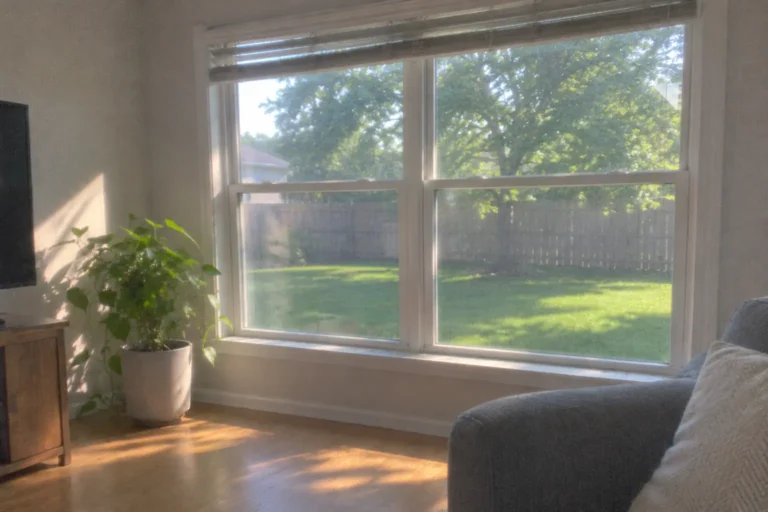
On a sunny day, the outdoors is far brighter than most rooms, so reflective film gives good daytime privacy. People walking by see a mirror, and you can still see out.
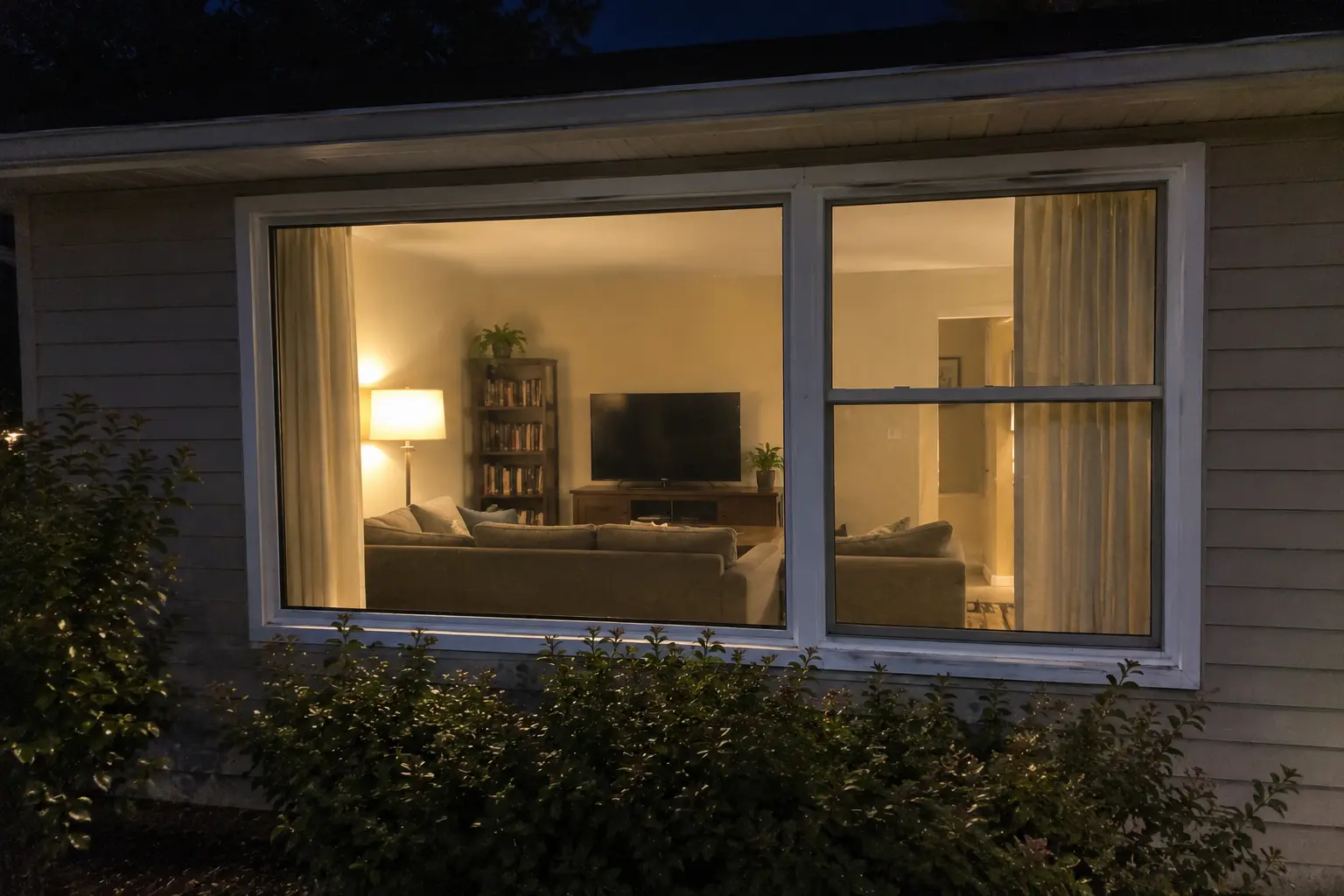
The problem starts after dark. Once your lights are on and it is dark outside, your room becomes the bright side. Now the film reflects back at you, and people outside can see in. For privacy at night:
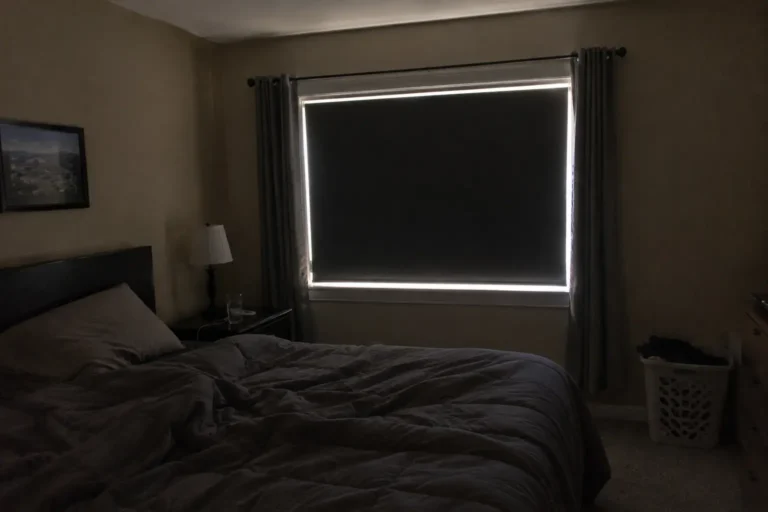
- Close blinds or curtains after sunset.
- Use frosted or opaque film on bathrooms and bedrooms instead of mirror film.
- Keep indoor lights low near street-facing windows.
Our guide to privacy film for windows explains which films keep their privacy around the clock.
Pros and Cons
| Pros | Cons |
|---|---|
| Lets you see out while blocking the view in, by day | Only works when one side is much brighter |
| Film versions cost far less than special glass | Reverses at night when indoor lights are on |
| Coated glass can be tempered or laminated | Coating is easy to damage with the wrong tools |
| Reflective surface cuts glare and some heat | Mirror look changes how your home looks from outside |
| Useful for offices, storefronts, and smart mirrors | Illegal in restrooms and fitting rooms in some states |
Is a Two-Way Mirror Legal?
Yes, for normal uses like windows, offices, and observation rooms. But some states ban two-way mirrors that let anyone watch private spaces. California Penal Code 653n makes it a misdemeanor to install or keep a two-way mirror that allows viewing into a restroom, bathroom, shower, locker room, fitting room, or hotel or motel room (California Penal Code 653n). New York’s General Business Law 395-B has a similar ban for fitting rooms, restrooms, showers, and hotel rooms. Check your state and local rules before installing one near any private space.
How to Tell If a Mirror Is Two-Way
The popular fingernail test isn’t reliable. The idea is that a normal mirror shows a gap between your fingertip and its reflection, while a two-way mirror doesn’t. Fact-checkers at Africa Check explain that “first surface” mirrors, which are real mirrors with the coating on the front, also show no gap, and some two-way mirrors sit behind an extra sheet of glass that does show one (Africa Check).
Better checks:
- Look at the lighting. A two-way mirror needs a much brighter room on your side. A dim room makes it hard to hide anything.
- Tap it. A mirror set into a wall with a room behind it may sound hollow. A mirror hung on a solid wall sounds solid.
- Cup your hands. Press your cupped hands around your eyes against the glass to block the room light. You may be able to see through.
- Use a flashlight. Hold a phone light against the glass and look for light showing on the other side.
How to Clean One Way Glass
The reflective coating is what makes the glass work, so treat it gently. Pilkington’s cleaning guide for Mirropane gives these steps (Pilkington cleaning guide):
- Wash with a mild detergent and water or a regular non-abrasive glass cleaner, using a clean, soft cloth or sponge.
- Rinse with clean water.
- Dry right away with a cloth or squeegee so water doesn’t spot the coating.
- For stubborn stains, Pilkington lists mineral spirits or denatured alcohol, followed right away by a detergent wash and rinse.
Avoid these on the coated side:
- Razor blades, steel wool, and metal parts of cleaning tools
- Abrasive or creamy cleansers
- Strong acid cleaners
- Grit trapped in your cloth or sponge
Hard water warning: Pilkington warns that water stain “rejuvenating” products usually contain hydrofluoric acid and can severely damage the coating. Never use hard water stain removers on mirror-coated glass.
For one-way window film, wait about 30 days after install before the first cleaning, and skip blades and scrubbers, since film scratches easily. For the plain glass side, our guide on the best way to clean windows covers the basic method. If you manage a rental in Central Oregon, our vacation rental window cleaning service cleans coated and filmed glass without scratching it.
Frequently Asked Questions
Is one way glass the same as a two-way mirror?
Yes. Both names, along with one-way mirror and transparent mirror, describe the same thing: glass with a partly reflective coating. The names differ, but they all depend on one side being much brighter than the other.
Does one way glass work at night?
Only if the bright side stays bright. On home windows, night usually reverses the effect, because your lit room becomes the bright side and people outside can see in. Use blinds, curtains, or frosted film for privacy after dark.
Can you put a one-way mirror in a house?
Yes. For home windows, one-way mirror film is the usual choice, since it costs far less than replacing the glass. Coated mirror glass can be used for interior windows, home offices, or smart mirrors, but it needs the right lighting to work.
Can two-way mirror glass be tempered?
Coated glass like Pilkington Mirropane can be tempered for safety and impact resistance. Ask for tempered or laminated glass wherever building codes require safety glass, such as doors and glass near floors.
The Bottom Line
One way glass is a mirror coating that only works with strong lighting on one side, ideally at least 8 to 1. Face the coating toward the bright room, keep the viewing side dim, and expect the effect to flip at night on home windows. Film is the low-cost option for homes, and coated glass is better for offices and observation rooms. Clean the coating with mild soap or glass cleaner and a soft cloth, and keep blades, steel wool, and hard water removers away from it.


2 Comments
Comments are closed.