
Most down, feather, and polyester (synthetic) pillows can go in the washing machine. Check the care label, wash two pillows at a time on a gentle cycle with a small amount of liquid detergent and the warmest water the label allows, and run an extra rinse and spin. Dry them on low heat with dryer balls or clean tennis balls, fluffing every 30 minutes, until they’re completely dry inside. Memory foam and latex pillows are different: don’t machine wash or tumble dry them. Spot clean them, wash only the removable cover, or follow the maker’s instructions. Most guides suggest washing pillows at least twice a year.
The big worry with washing a pillow is ending up with a lumpy mess or stuffing all over the washer. This guide explains how to clean each type of pillow, which settings to use, how to dry them all the way through, and when it’s smarter to buy a new one.
Can You Wash Your Pillow? Check the Fill and the Label
| Pillow type | Machine wash? | Water | Drying |
|---|---|---|---|
| Polyester or down alternative | Usually yes | Warm, or what the label says | Low heat with dryer balls |
| Down or feather | Usually yes, gently | Warm or cool, per label | No heat or air fluff; may take several cycles |
| Memory foam | No | Spot clean or hand wash only if the label allows | Air dry flat, never in the dryer |
| Latex | No | Hand wash or spot clean | Air dry flat |
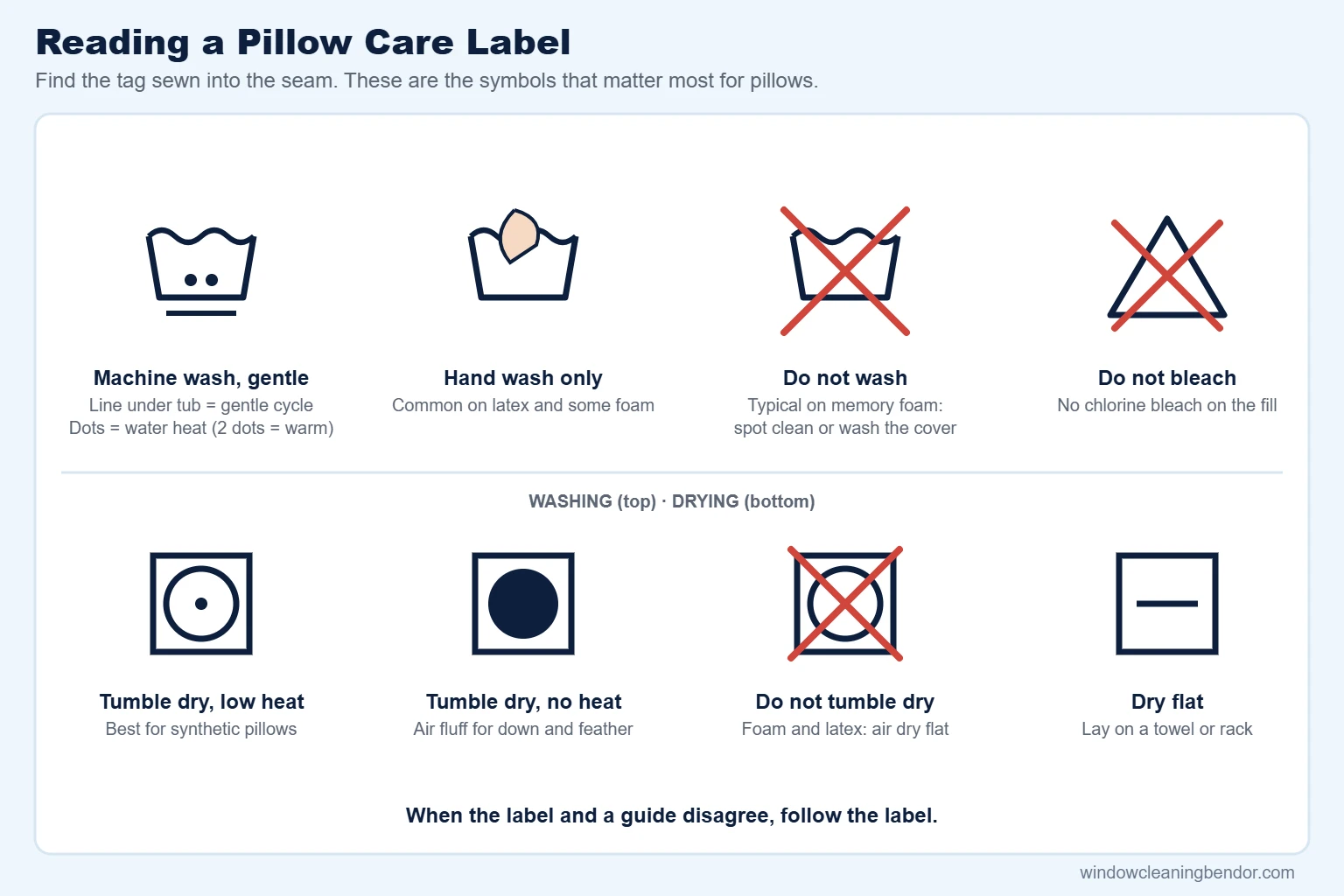
The care tag sewn into the seam is the final word. Some foam pillows have a washable cover that zips off, and Tempur-Pedic says its pillows are “not washable” because the foam is sensitive to liquids, but the cover can be washed in cold water and hung to dry (Tempur-Pedic pillow care). The chart below shows the care-label symbols to look for.
Can I put a pillow in the washing machine?
Yes, if it’s polyester, down alternative, down, or feather and the label doesn’t say otherwise. That was the original question in a popular Reddit thread, and most replies said the same thing: read the label, use a gentle cycle, and dry it well. Foam pillows are the exception. One commenter put it bluntly: foam pillows “get murdered” in a top-loading washer with a center agitator.
How to Machine Wash Down, Feather, and Synthetic Pillows
- Remove the pillowcase and protector. Wash those separately.
- Check the seams. Several Reddit users warned about pillows splitting open in the wash. Sew up any small holes first, or skip washing a pillow with torn seams.
- Spot-treat stains. Dab yellow sweat stains or drool marks with a little detergent before washing.
- Load two pillows. Whirlpool and The Company Store both suggest washing two at a time to balance the drum (Whirlpool on washing pillows). In a top loader, set them upright around the agitator.
- Use a little detergent. About one to two tablespoons of liquid detergent is enough. Too much soap is hard to rinse out and can leave the fill clumpy.
- Pick the cycle. Use a gentle or delicate cycle and the warmest water the label allows. In an Apartment Therapy test, a warm-water machine wash cleaned a stained pillow better than a cold-water wash or a hand wash.
- Add an extra rinse and spin. This removes leftover soap and squeezes out more water, which shortens drying time.
Hot or cold water: which is better?
Use the warmest water the care label allows. Warm water cleaned better than cold in Apartment Therapy’s side-by-side test, and some Reddit users argued that cold water does little for bedding. If dust mites are your concern, National Jewish Health recommends washing bedding weekly in 130°F water, and says to either wash pillows weekly with the bedding or put them in zippered dust-proof covers (National Jewish Health on dust mite allergies). Many pillows can’t handle water that hot, so a dust-proof cover is often the easier fix.
How to Dry Pillows All the Way Through
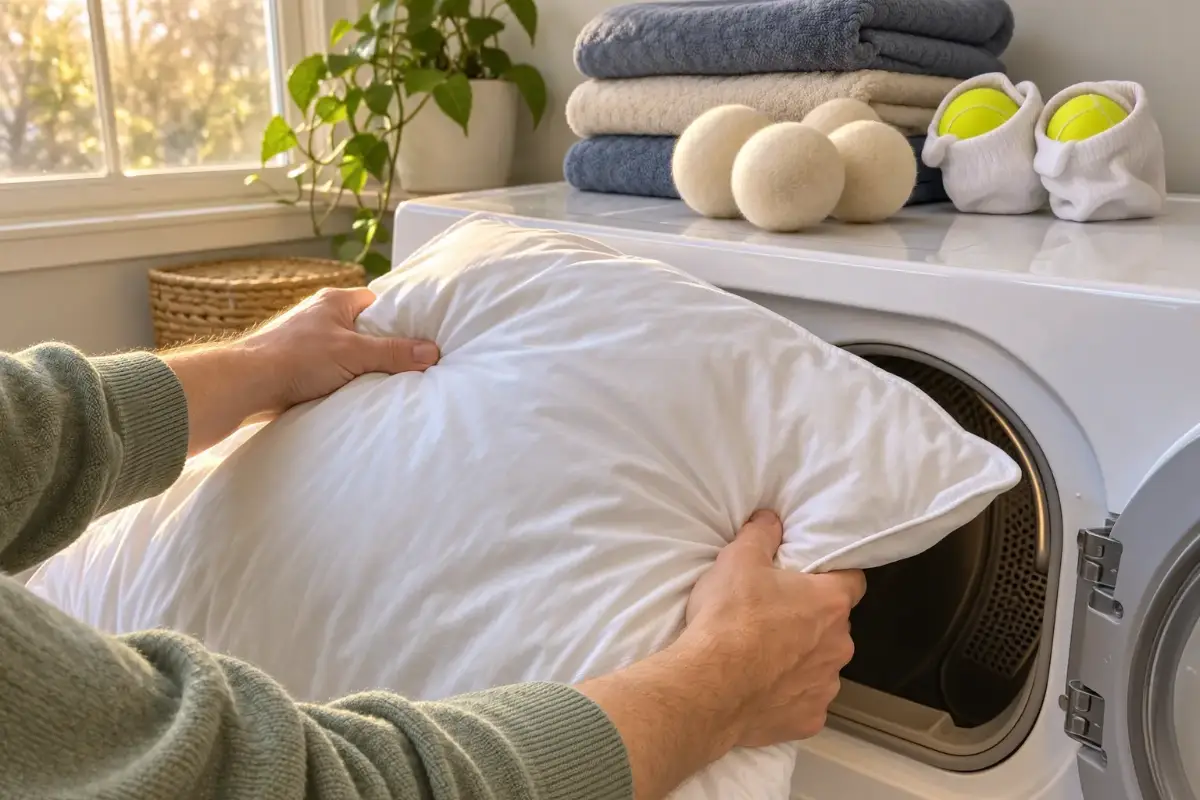
Drying is where most pillow washes go wrong. A pillow that feels dry on the outside can still be damp in the middle.
- Use low heat. Whirlpool recommends low heat for synthetic pillows and no heat or air fluff for down and feather. Check your label.
- Add dryer balls or tennis balls. Reddit users and The Company Store both suggest them to break up clumps. Put tennis balls in clean socks so the dye doesn’t rub off.
- Fluff often. Take the pillows out every 30 minutes or so, shake them, and break up clumps by hand.
- Plan for more time than you think. A down pillow can take several dryer cycles. As one commenter said, dry them “twice as long as you think necessary.”
- Finish in the sun if you can. Air drying on a sunny, breezy day works well for synthetic pillows and freshens them too.
Why is my pillow lumpy after washing?
The fill clumped together while it was wet and didn’t get broken up during drying. Put it back in the dryer on low with dryer balls and fluff it by hand every 20 to 30 minutes. Cheaper polyester pillows sometimes never fully recover, which several Reddit users said about bargain pillows. That’s a sign it’s time to replace it.
Mildew warning: Never put a damp pillow back on the bed or in a closet. Moisture trapped in the fill can lead to mold, mildew, and a sour smell. Squeeze the center and smell it. If you feel any cool dampness or smell mustiness, keep drying.
How to Clean Memory Foam and Latex Pillows
Foam can tear in a washer and hold water like a sponge, so treat it gently.
- Remove and wash the cover according to its label.
- Vacuum the foam with an upholstery attachment.
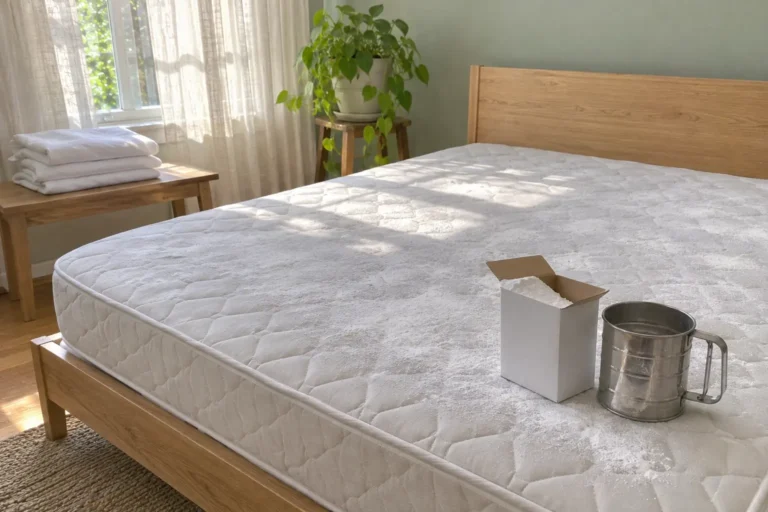
- Freshen it. Whirlpool suggests sprinkling baking soda on both sides, waiting an hour, and vacuuming it off.
- Spot clean stains with a cloth dampened in lukewarm water with a little mild detergent. Blot, don’t scrub.
- Air dry flat away from direct heat until it’s dry all the way through.
If your label allows a deeper clean, submerge the foam in lukewarm soapy water, press gently without wringing, rinse, and air dry. Never put foam in the dryer.
Pillow Washing Settings at a Glance
| Setting | Recommendation |
|---|---|
| Cycle | Gentle or delicate |
| Detergent | 1 to 2 tablespoons of liquid, no fabric softener |
| Water | Warmest the label allows |
| Rinse | Extra rinse and spin |
| Dryer heat | Low for synthetic; no heat or air fluff for down |
| Load | Two pillows at a time |
| How often | At least twice a year; more often for allergies |
Washing vs. Replacing: Pros and Cons of Washing
| Pros | Cons |
|---|---|
| Removes sweat, oils, and odors | Cheap pillows can come out lumpy |
| Brightens yellowed pillows | Drying takes hours |
| Costs much less than a good new pillow | Foam and latex can’t go in the machine |
| Helps reduce dust mite allergens | Won’t restore a flat, worn-out pillow |
When should you replace a pillow instead of washing it?
Replace it if it stays flat or lumpy after washing and drying, has torn seams, or still smells musty after a full dry. A pillow that no longer supports your neck isn’t worth saving. A zippered pillow protector makes any pillow last longer between washes.
Pillows are only part of a clean bed. Our guide on how to clean a mattress covers the layer underneath, including dust mites and stains. Shopping for a bigger bed? Our guide to king size bed dimensions compares mattress, frame, and sheet sizes. Dust and pollen also build up in window tracks near the bed, and our guide on how to clean window tracks shows how to clear them. In Central Oregon, our residential window cleaning service washes screens and wipes tracks along with the glass.
The Bottom Line
Most down, feather, and polyester pillows can be machine washed: two at a time, gentle cycle, a little liquid detergent, the warmest water the label allows, and an extra rinse. Dry them on low with dryer balls, fluffing often, until the center is completely dry. Spot clean memory foam and latex instead of washing them, wash pillows at least twice a year, and replace any pillow that stays flat or lumpy.


One Comment
Comments are closed.