
To repair a screen door with a torn screen, lift the door off its track or hinges, lay it flat, and pry out the rubber spline that holds the screen in the frame. Pull out the old screen, roll new screen over the frame with 1 to 2 inches of extra on every side, then press the spline back into the groove with a spline roller, keeping the screen taut but not drum tight. Trim the extra screen along the outside of the groove and rehang the door. Small holes can be patched instead, and doors that stick, sag, or won’t latch usually need roller, track, or hinge adjustments rather than a new screen.
Most guides on how to repair screen door problems cover only rescreening, and few give spline sizes or say when a patch is enough. This guide covers the full job, from choosing screen and spline to fixing rollers, tracks, and latches, with a diagram that shows how the spline locks the screen in place.
Screen Door Problems and Fixes at a Glance
| Problem | Fix |
|---|---|
| Hole smaller than a quarter | Patch kit or a few drops of clear glue |
| Tear larger than a few inches | Replace the screen |
| Screen loose or popping out | Reseat or replace the spline |
| Sliding door drags or jumps the track | Clean the track and adjust or replace rollers |
| Hinged door sags or won’t latch | Tighten hinges and adjust the closer or latch |
| Bent or broken frame | Replace the frame or the whole door |
What You’ll Need
- Replacement screen, sized with 1 to 2 inches extra on each side
- Matching spline, plus a little extra length
- Spline roller tool, usually under $10
- Flathead screwdriver or awl
- Sharp utility knife with a fresh blade
- Tape measure and scissors
- A large flat work surface, like a table or two sawhorses
How to Rescreen a Screen Door
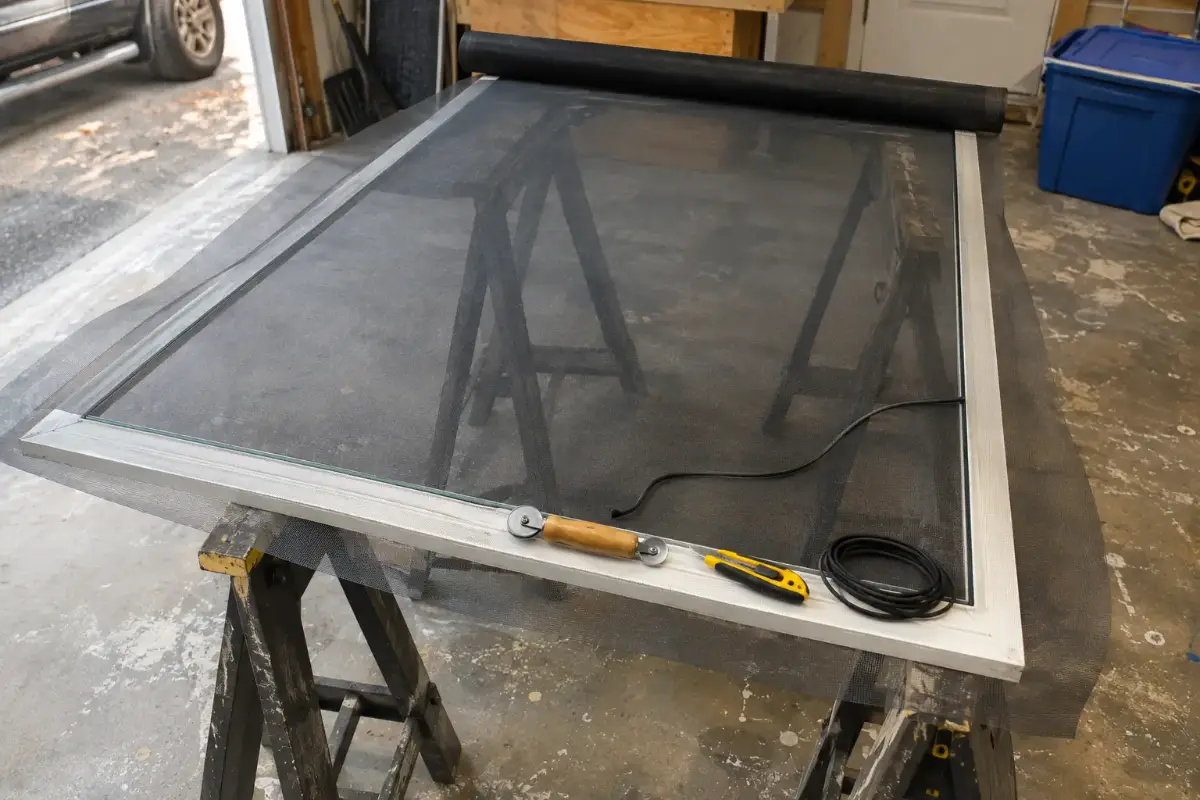
1. Remove the door
For a sliding screen door, most models lift up into the top track so you can swing the bottom out. If it won’t budge, loosen the roller adjustment screws on the bottom edge first. Lowe’s notes that you may also need to remove the latch (Lowe’s screen door repair guide). For a hinged door, remove the closer pin and then the hinge screws or pins.
2. Pull out the old spline and screen
Find the end of the spline, usually in a corner, and lift it out with a screwdriver or awl. Pull the rest out by hand. Once the spline is out, the old screen lifts right off. Save a short piece of spline to match at the store.
3. Lay out the new screen
Roll the new screen over the frame and check it for flaws. Phifer, a major screen maker, recommends at least 1 to 2 inches of extra screen around the edges of patio panels (Phifer screen installation guide). Don’t trim it to size yet.
4. Roll in the spline
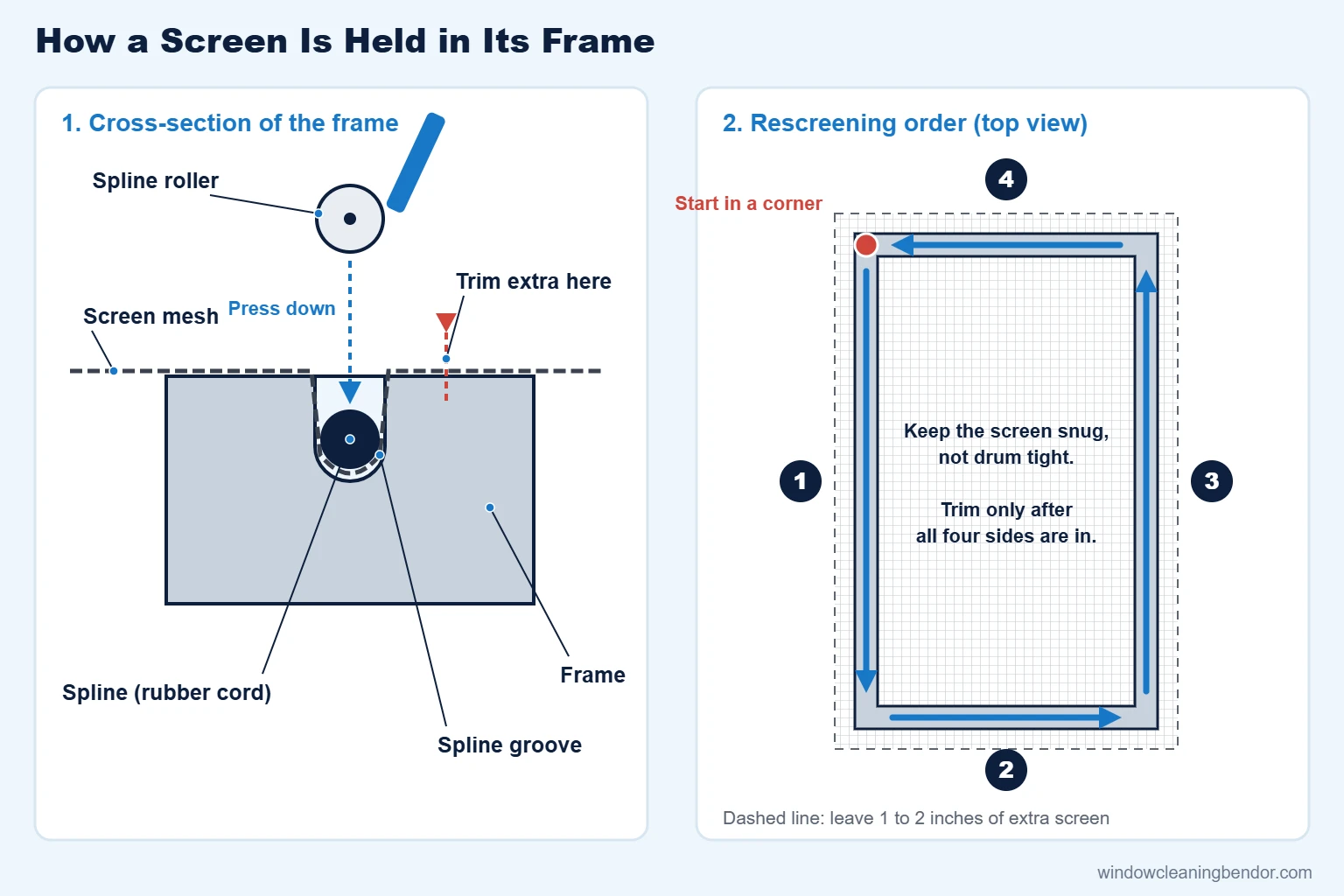
Start in one corner. Press the spline over the screen and into the groove with the spline roller. Work down one long side, then across, keeping the screen snug as you go. Phifer stresses securing the spline firmly in each corner, and a screwdriver tip can help push it in where the roller won’t reach.
Keep the screen taut, but don’t pull it drum tight. Too much tension can bow the side rails of a lightweight aluminum frame inward.
5. Trim the extra
Once all the spline is seated, trim the extra screen with a sharp utility knife. Phifer says to cut toward the outside edge of the spline groove so you don’t slice into the new screen. Holding the blade low and running it along the frame gives a clean line.
6. Rehang the door
Set the door back in its track or on its hinges. Adjust the rollers or closer so it slides or swings smoothly. If you’re replacing the whole door instead, our standard door size guide covers common patio and entry door sizes.
How the Spline Holds the Screen
The diagram below shows a cross-section of a screen frame. The spline presses the screen down into the groove and wedges it in place.
Choosing the Right Spline Size
Spline is sold by diameter. Phifer says to measure the groove in your frame and match the spline to the groove width for standard fiberglass or aluminum screen. For thicker screens like pet-resistant or solar screen, it recommends a spline one size smaller (Phifer spline size guide).
Phifer lists common spline sizes of .125 inch (1/8), .140 inch (9/64), .160 inch (5/32), .190 inch (3/16), .210 inch (7/32), and .250 inch (1/4), plus a flat spline for some frames.
The easiest way to get it right is to take a piece of the old spline to the store. If the new screen keeps popping out, the spline is too thin. If it won’t press in, it’s too thick.
Which Screen Should You Use?
| Screen type | Best for | Trade-off |
|---|---|---|
| Fiberglass | Most doors and windows | Easy to install, but tears more easily |
| Aluminum | Durability and a crisp look | Dents and creases if handled roughly |
| Pet-resistant | Homes with dogs or cats | Thicker and costs more |
| Solar screen | Hot, sunny exposures | Darker view, costs more |
Standard insect screen works for most homes. University of Kentucky entomologists recommend tight 16-mesh screens to keep out small insects like fruit flies, and our guide to fruit fly traps explains why.
How to Patch a Small Hole
A full rescreen isn’t always needed. For small damage:
- Tiny holes: Dab a few drops of clear glue or clear nail polish over the hole and let it dry.
- Holes up to a few inches: Use a self-adhesive screen patch kit, pressing the patch over both sides of the hole.
- Aluminum screen: Cut a square of matching screen a bit larger than the hole, bend the loose wires at the edges, push them through the screen around the hole, and fold them flat on the back.
Patching vs. Rescreening: Pros and Cons of Patching
| Pros | Cons |
|---|---|
| Takes minutes and costs very little | Shows as a visible spot |
| No need to remove the door | Doesn’t fix a loose or sagging screen |
| Works for pet or kid damage near the bottom | Patches can peel off in heat and sun |
| Stops bugs right away | Large tears usually spread anyway |
Fix a Sliding Screen Door That Sticks or Jumps the Track
- Clean the track: Vacuum out sand, dirt, and leaves, then wipe the track. Our guide on how to clean window tracks works for door tracks too.
- Adjust the rollers: Turn the adjustment screws at the top or bottom corners to raise or lower the door until it glides without rubbing.
- Replace worn rollers: Lowe’s says to remove the door, pull out the old roller, clean the spot, and seat the new one. Bring the old roller to match it.
- Check for a bent frame: If the door is twisted, it won’t roll straight no matter how you adjust it.
Fix a Hinged Screen Door That Sags or Won’t Latch
- Tighten the hinge screws. Replace stripped screws with longer ones that reach solid wood.
- Adjust the door closer. Most have a screw on the end that controls closing speed. Turn it so the door closes fully without slamming.
- Line up the latch and strike. Loosen the strike plate, move it to meet the latch, and retighten. Our guide on how to fix a squeaky door covers hinge fixes that also help with sagging.
Gaps around a screen or storm door can still let in drafts and bugs. Our guide to door weather stripping shows how to seal them. If you manage a vacation rental in Central Oregon, our vacation rental window cleaning service cleans glass and screens between guests.
Frequently Asked Questions
Can you repair a screen door without removing it?
You can patch small holes and adjust rollers or closers with the door in place. To replace the screen, take the door down and lay it flat so you can keep the screen even and tight.
How much does it cost to rescreen a screen door?
Doing it yourself usually costs about the price of a roll of screen, a pack of spline, and a spline roller. Many local hardware stores also rescreen doors for a fee, often less than buying a full roll yourself.
Can I reuse the old spline?
Sometimes. If it’s still soft and springy, it can go back in. If it’s cracked, hard, or stretched, replace it, since old spline is a common reason screens pop loose.
How tight should a new screen be?
Snug and smooth, with no ripples, but not drum tight. Pulling too hard can bow a light aluminum frame and make the door bind in its track.
The Bottom Line
To repair a screen door, decide whether the problem is the screen, the spline, or the hardware. Patch small holes, rescreen anything with a big tear by removing the spline, laying new screen with extra on all sides, rolling the spline back in, and trimming along the groove. For doors that stick or sag, clean the track, adjust the rollers or closer, and line up the latch before you replace anything.


2 Comments
Comments are closed.