
To fix a squeaky door, find the hinge that’s making the noise, pull out its hinge pin, clean off the old grime and rust, coat the pin with a lubricant like white lithium grease, silicone spray, or petroleum jelly, and tap it back in. Swing the door a few times to spread the lubricant, then wipe off the extra. If the squeak comes back fast, tighten loose hinge screws and check whether the door is rubbing the frame, since lubricant can’t fix a sagging or swollen door.
Most guides on how to fix a squeaky door, and a lot of videos, stop at “spray the hinge.” That often works for a week, then the squeak returns because the old grime is still in there. This guide shows the fix that lasts, plus what to do when lubricant isn’t enough.
Find Where the Squeak Comes From
Open and close the door slowly and listen at each hinge. Have someone else swing it while you listen up close if you can’t tell which one it is.
| What you hear | Likely cause | Fix |
|---|---|---|
| Squeak or creak at one hinge | Dry or dirty hinge pin | Clean and lubricate the pin |
| Squeak plus a little wobble | Loose hinge screws | Tighten or replace screws |
| Scraping or rubbing sound | Door sagging or swollen | Fix the hinges, shim, or plane |
| Click or squeak at the latch | Dry latch or misaligned strike plate | Lubricate latch, adjust strike |
| Squeak along the bottom | Worn door sweep or threshold | Replace the sweep |
| Grinding on a sliding door | Dirty track or worn rollers | Clean track, lubricate rollers |
What You’ll Need
| Tool or supply | What it’s for |
|---|---|
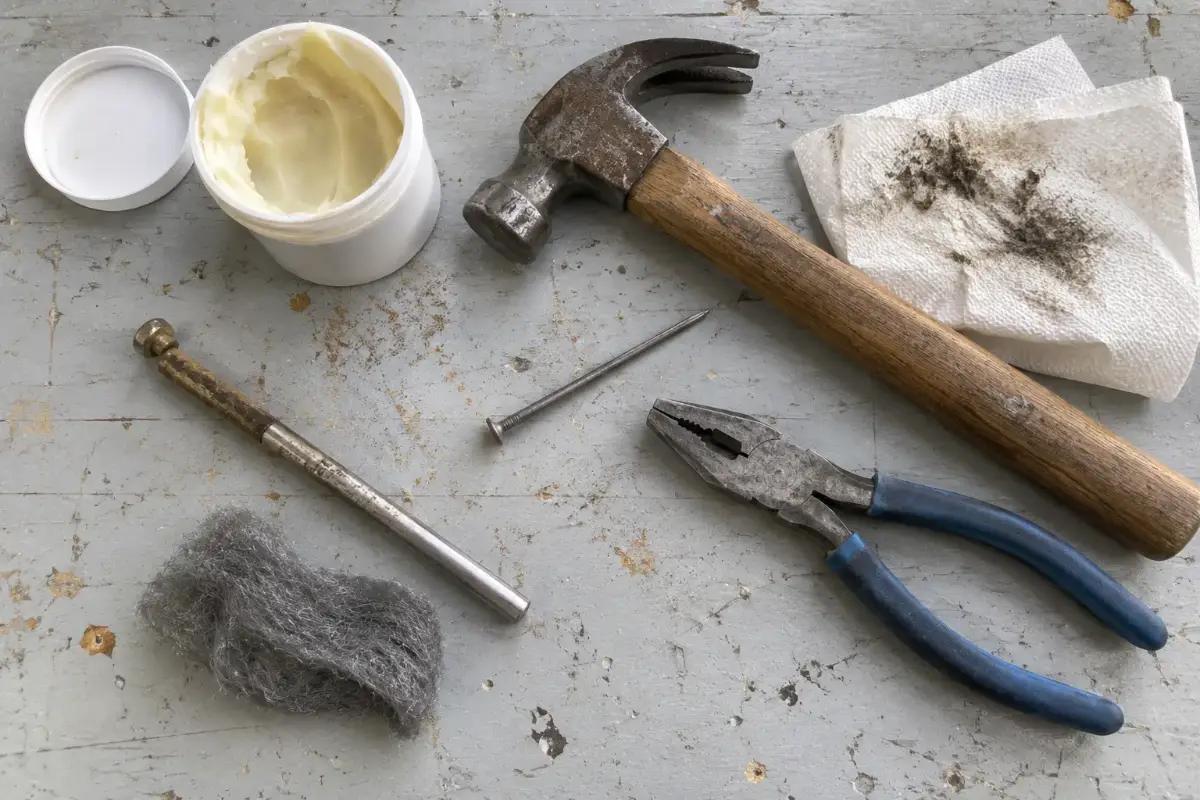
| Hammer and a nail or thin screwdriver | Tapping the hinge pin out |
| Pliers | Pulling a stuck pin |
| Rags or paper towels | Catching drips and wiping grime |
| Fine steel wool or sandpaper | Removing rust from the pin |
| Lubricant | Coating the pin (see the table below) |
| Screwdriver | Tightening hinge screws |
How to Fix a Squeaky Door Hinge
Safety note: Keep the door closed and remove only one hinge pin at a time. If you pull all the pins with the door open, the door can drop off its hinges and fall on you.
- Close the door. This keeps the weight on the latch and the other hinges.
- Tap out the pin. Put the tip of a nail or thin screwdriver under the head of the pin and tap upward with a hammer. Pull it out the rest of the way with pliers if needed. WD-40’s hinge guide suggests spraying a stuck, rusty pin and tapping it loose (WD-40 hinge guide).
- Clean the pin and hinge. Wipe off the black grime. Rub off any rust with fine steel wool or sandpaper, then wipe the inside of the hinge barrel.
- Lubricate. Coat the pin with a thin layer of lubricant. Add a little inside the hinge barrel.
- Put the pin back. Slide it in and tap it down until it’s fully seated.
- Work it in. Open and close the door 10 or so times to spread the lubricant.
- Wipe off the extra. Leftover lubricant drips, stains, and collects dust, which brings the squeak back. Put a rag under the hinge while you work to catch drips.
Repeat with the next hinge if the squeak is still there. If the door still rubs or sticks after the hinges are quiet, our standard door size guide explains slab sizes and clearances.
Quick fix without removing the pin
If you’re in a hurry, tap the pin up about halfway, spray lubricant onto the exposed pin and the top of the hinge, then tap it back down and swing the door. Schlage describes this as a temporary fix that will need to be redone now and then (Schlage squeaky hinge guide).
Best Lubricant for Door Hinges
| Lubricant | Best for | Watch out for |
|---|---|---|
| White lithium grease | A long-lasting fix on any hinge | Can be messy; wipe off extra |
| Silicone spray | Sliding door rollers and a clean finish | Overspray is slippery on floors |
| WD-40 Multi-Use | Loosening rust and old grime | Works best before a heavier lube |
| Petroleum jelly | A quick fix with the pin pulled | Can collect dust |
| Graphite powder | Dusty spots like garage doors | Messy black powder |
| Bar soap or candle wax | An emergency fix | Wears off fast |
WD-40’s own hinge guide recommends its White Lithium Grease for hinges and says lithium grease resists dust. It also notes that cooking oils like olive or canola oil can quiet a squeak, but they attract grime and don’t last as long.
Household Fixes: Pros and Cons
| Pros | Cons |
|---|---|
| Free or nearly free | Most wear off faster than real lubricants |
| Already in your kitchen or bathroom | Cooking oils attract dust and get sticky |
| Good for a quick fix before guests arrive | Can stain wood or paint if they drip |
| Soap and wax don’t drip | Don’t loosen rust or old grime |
When Lubricant Isn’t Enough
If the squeak comes back within days, or the door also sticks or rubs, the problem is usually the hinges or the fit of the door.
Tighten the screws
This Old House suggests opening the door halfway and lifting up on the handle. If any part of a hinge moves, tighten all the screws on both the door side and the frame side (This Old House sticking door guide). If the knob itself wobbles, our guide on how to fix a loose doorknob covers every knob type.
Fix stripped screw holes
If a screw just spins, This Old House suggests gluing a thin sliver of wood into the hole, letting it dry, and driving the screw again.
Use one long screw
Family Handyman suggests swapping a screw near the middle of a hinge on the frame side for a 3-inch screw that reaches the wall framing, then giving it a quarter turn more by hand. This pulls the hinge, and the door, tighter to the frame (Family Handyman hinge screw guide). Use a screwdriver, not a drill, for the final turn so you don’t strip the hole.
Shim a hinge
This Old House explains that a thin cardboard or wood shim behind a hinge leaf can shift the door so it stops rubbing.
Deal with swelling
Wood doors swell in humid weather and shrink when it’s dry. If a door only rubs in summer, sand or plane the tight spot, then seal the bare wood.
Replace worn hinges
Schlage notes that no amount of lubricant can fix a hinge that is bent or rusted through. New hinges swap in with just a screwdriver. Match the size and corner shape of the old ones.
Sliding and Exterior Doors
Sliding patio doors often squeak or grind because of dirt packed in the track. Vacuum the track, scrub it, and add a little silicone spray to the rollers. Our guide on how to clean window tracks works for sliding door tracks too.
On entry doors, Lowe’s suggests checking the door sweep at the bottom and tightening loose storm door hardware. Worn weatherstripping can also rub and squeak. Our guide on how to reseal windows covers replacing weatherstripping. If the trim around the door is soft or peeling, see our guide to exterior window trim, since door and window trim fail the same way. If you manage a rental in Central Oregon, our vacation rental window cleaning service also cleans sliding door tracks and glass between guests. Our guide to door weather stripping covers choosing and installing new seals.
Frequently Asked Questions
Is WD-40 good for squeaky door hinges?
It works, especially for loosening rust and grime. But for a longer-lasting fix, WD-40’s own guide points to its White Lithium Grease for hinges. A good approach is to clean with WD-40 Multi-Use first, then coat the pin with grease or silicone.
Can I use olive oil or cooking spray on a squeaky door?
It will quiet the door for a short time. WD-40 notes that cooking oils attract dust and grime, so they don’t last as long as real lubricants. If you use one, apply a tiny amount and wipe off the extra.
Why does my door squeak more in winter or summer?
Wood swells in humid weather and shrinks in dry weather, according to This Old House. That changes how the door sits on its hinges and in the frame, which can start or stop a squeak or rub.
How often should I lubricate door hinges?
There’s no set schedule. Schlage calls lubrication a temporary fix that needs to be redone from time to time, so redo it whenever the squeak starts again. Doors that get heavy use, like entry and bathroom doors, usually need it more often.
The Bottom Line
The way to fix a squeaky door for good is simple: pull the hinge pin, clean it, coat it with a real lubricant, and wipe off the extra. Do one hinge at a time with the door closed. If the squeak keeps coming back or the door rubs, tighten the hinge screws, add a long screw to a hinge, or replace worn hinges, since lubricant can’t fix a door that’s out of line.




5 Comments
Comments are closed.