
The best wireless meat thermometer for most people is one that sends readings through a base or Wi-Fi hub, not Bluetooth straight to your phone, because that’s what keeps the signal alive when you walk to another room. For whole-house range and long smokes, the ThermoWorks RFX is our top pick. Combustion gives the most sensors and the best cook-time predictions, the MEATER Pro has the easiest app, and the CHEF iQ Sense adds Wi-Fi with a talking hub. On a budget, the TempPro (formerly ThermoPro) TempSpike Plus is a solid fully wireless choice, and the wired TempPro TP930 gives you four probes for about $60 to $70.
We didn’t lab-test these. We compared the makers’ own spec sheets, checked in November 2026, with published independent testing and owner comments on Reddit, and we cut anything that only sounded good on a sales page.
Our Picks at a Glance
| Thermometer | Probes | How it connects | Max heat at handle | Price checked Nov. 2026 |
|---|---|---|---|---|
| ThermoWorks RFX | 1 to 4 per gateway | 433 MHz radio to a gateway, then Wi-Fi or Bluetooth | 1,000°F | 4-probe kit $389 list, often on sale |
| Combustion Predictive | 1 to 4 | Bluetooth, Wi-Fi with booster or display | 900°F | $149 probe; $199 with Wi-Fi booster |
| MEATER Pro | 1 | Bluetooth; Wi-Fi only through a second phone or tablet | 1,000°F | $99.99 |
| CHEF iQ Sense | 1 to 4 | Wi-Fi hub with a speaker | 1,000°F | $129.99 for 1 probe |
| TempPro Twin TempSpike Plus (TP972) | 2 | Bluetooth booster, up to 600 ft | 1,050°F | $169.99 list |
| TempPro TP930 | 4 wired | Bluetooth, up to 650 ft | Probes to 572°F | About $61 to $70 |
| ThermoWorks Signals | 4 wired | Wi-Fi and Bluetooth | Probes to 572°F | $249 |
Prices change often, and most of these brands run frequent sales, so check before you buy.
Our 7 Picks in Detail
1. ThermoWorks RFX: Best for whole-house range
The RFX probe talks to its gateway over a 433 MHz radio signal, which passes through smoker walls and house walls better than Bluetooth. The gateway then sends readings to your phone by Wi-Fi or Bluetooth. ThermoWorks lists up to 1,500 feet line of sight, 65+ hours of probe battery on a full charge, and accuracy of ±0.9°F (ThermoWorks RFX specs).
- Good for: Overnight brisket, offset smokers, cooks where you leave the house
- Watch out for: You need the gateway, and AmazingRibs notes the app was still being improved
2. Combustion Predictive Thermometer: Best for data and predictions
Combustion packs eight sensors into the probe plus an ambient reading, so it finds the coldest spot in the meat on its own. The maker lists 90+ hours of cook-mode battery and a 900°F rating on the upper half. Bluetooth alone reaches about 10 to 100 feet when blocked by walls, so plan on the Wi-Fi booster or display for whole-house use.
- Good for: People who like graphs, roasts with uneven thickness
- Watch out for: Several pieces of hardware, and owners on Reddit report a learning curve with the app
3. MEATER Pro: Best app for beginners
MEATER’s app is the one owners most often call easy. The Pro has six sensors and is dishwasher safe. Its Bluetooth is rated at about 250 feet in a typical home, but it has no built-in Wi-Fi, so you need a second phone or tablet near the grill to reach the cloud (MEATER Pro specs). If you want Wi-Fi built in, the Pro Duo has it in the charging block.
- Good for: Steaks, chicken, and oven roasts in a kitchen or on a patio
- Watch out for: Older MEATER models had range complaints, especially inside kamado grills
4. CHEF iQ Sense: Best Wi-Fi pick under $150
The Sense uses a small Wi-Fi hub with a built-in speaker, so it can call out alerts even when your phone is in another room. CHEF iQ lists four internal sensors plus one ambient sensor, a 1,000°F ambient limit, and 1 to 4 probe kits. One tester found it lost signal outdoors and upstairs, so keep the hub within a room or two of the grill.
- Good for: Rotisseries, sous vide, cooks who like guided presets
- Watch out for: The hub needs to stay fairly close to the cooker
5. TempPro Twin TempSpike Plus: Best fully wireless value
ThermoPro renamed itself TempPro in April 2026, so you’ll see both names on boxes. The TP972 has two color-coded probes, a booster rated up to 600 feet over Bluetooth, an IP67 rating, and 36+ hours of probe battery.
- Good for: Two pieces of meat at once on a budget
- Watch out for: Bluetooth only, with no cloud access when you leave home
6. TempPro TP930: Best budget pick with four probes
If you don’t mind a wire, the TP930 gives you four 8-inch probes, a backlit display on the base, and up to 650 feet of Bluetooth range. Its rechargeable battery is rated for months per charge.
- Good for: Holiday meals with several proteins, smoker temp plus meat temp
- Watch out for: Probe cables can get in the way, and accuracy is ±1.8°F, looser than the others
7. ThermoWorks Signals: Best wired Wi-Fi pick for long smokes
Signals runs four wired channels with both Wi-Fi and Bluetooth, can plug into the wall for all-night cooks, and works with the ThermoWorks Billows fan to control smoker heat. Owners on BBQ forums rate it highly, though a few report probes or units that failed out of warranty.
- Good for: Pellet grills, offset smokers, anyone who wants fan control
- Watch out for: $249, and only about 16 hours on battery alone
Bluetooth, Wi-Fi, or Radio? What the Connection Means
| Connection | What to expect |
|---|---|
| Bluetooth straight to phone | Cheapest, but often drops a room or two away |
| Bluetooth with a booster | Longer range, still no access away from home |
| Wi-Fi hub or base | Check temps anywhere you have internet |
| Radio (RF) to a gateway | Best range through walls and metal cookers |
| Wired probes to a base | Most reliable signal, but cables to manage |
AmazingRibs found that Bluetooth range drops inside metal cookers, through walls, and in bad weather (AmazingRibs wireless thermometer comparison). In the same tests, every probe they checked read within about 1 to 2°F in a lab dry well, so accuracy is rarely what separates good models. Range, battery life, and the app are.
Wireless vs. Wired Probes: Pros and Cons
| Pros | Cons |
|---|---|
| No cables through the grill lid or oven door | Probes need charging before each cook |
| Works on rotisseries and in sous vide | Bluetooth signals struggle through metal |
| Many read meat and air temp at once | Probe tips must go deep to protect the handle |
| Easy to move between cuts | Cost more per probe than wired sets |
How to Choose the Right One
Decide where you’ll be during the cook
If you’ll stay on the patio or in the kitchen, Bluetooth is fine. If you want alerts upstairs, in the yard, or away from home, pick a model with a Wi-Fi hub, built-in Wi-Fi, or an RF gateway.
Count your probes
One probe covers most steaks and chickens. Two to four probes help with holidays, two briskets, or a roast where you want the thickest part and a thinner end.
Match the heat rating to your cooker
Searing and pizza ovens get far hotter than smokers. The MEATER Block, for example, is rated for 527°F at the handle, while most newer probes list 900°F to 1,050°F.
Look at battery life
For overnight smokes, look for 24+ hours of probe battery or a base that can plug in.
Tips for Using a Wireless Probe
- Run a range test on day one. Start the probe, leave it near the grill, and walk around the house. You’ll find your dead zones before they ruin a cook.
- Insert it past the line. Most wireless probes have a mark on the shaft. Push it in past that mark so the handle electronics stay out of the worst heat.
- Aim for the thickest part, away from bone and fat pockets.
- Set your alert a few degrees early for large roasts, since the meat keeps cooking while it rests.
- Charge before every long cook, even if the app shows some battery left.
Low-E glass has a thin metal coating that can weaken radio signals. If your patio door or windows have it and your signal drops when you step inside, our guide to low-E glass explains how the coating works.
Safe Temperatures to Set Your Alarms
These are the minimums from FoodSafety.gov (FoodSafety.gov temperature chart).
| Food | Safe minimum temperature |
|---|---|
| Beef, pork, veal, lamb steaks, roasts, and chops | 145°F, then rest 3 minutes |
| Ground beef, pork, and sausage | 160°F |
| Chicken, turkey, and all poultry | 165°F |
| Fresh (raw) ham | 145°F, then rest 3 minutes |
| Fish | 145°F |
| Leftovers and casseroles | 165°F |
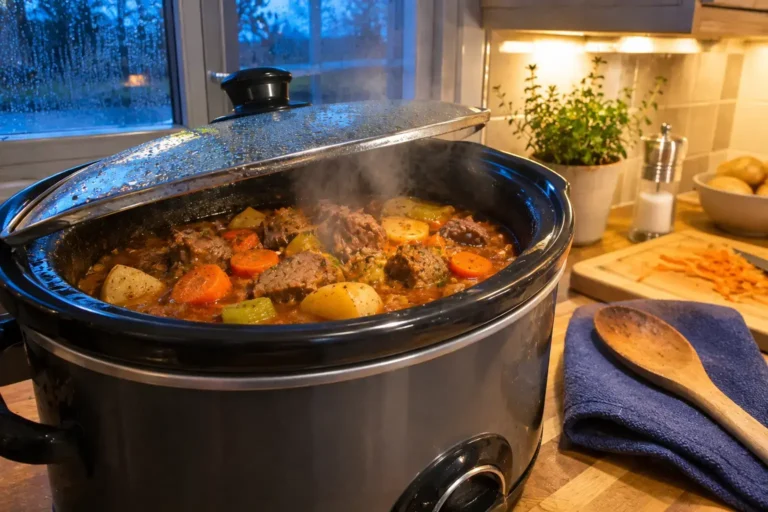
Food safety note: Color and cooking time don’t tell you if meat is safe. Check the temperature in the thickest part, and if the probe reading looks off, confirm it with a second thermometer before you serve. The same goes for slow cooker meals, as our guide on how to use a slow cooker explains.
Grill smoke and grease leave a film on nearby patio doors and windows. Our guide on the best way to clean windows covers how to cut through it, and our guide on how to clean window tracks helps keep a sliding patio door gliding. If you live in Central Oregon, our residential window cleaning service handles the glass for you.
Frequently Asked Questions
Are wireless meat thermometers accurate?
Good ones are. In AmazingRibs’ lab tests, the wireless probes they checked read within about 1 to 2°F. Range and battery life vary much more than accuracy between brands.
Can a wireless meat thermometer work through a closed grill?
Yes, but metal lids and smoker walls weaken Bluetooth. Models with a booster, Wi-Fi hub, or radio gateway near the grill hold the signal much better.
Can you leave a wireless thermometer in the oven?
Yes, that’s what leave-in probes are made for. Keep the handle within its heat rating, and don’t use one under a broiler or on a very hot sear unless the maker allows it.
Do I need Wi-Fi for a wireless meat thermometer?
No. Bluetooth works if you stay nearby. You need Wi-Fi, built in or through a hub, only if you want alerts from far rooms or away from home.
The Bottom Line
For most cooks, the right pick is the one with a strong link between the grill and your phone. Pick the ThermoWorks RFX for the longest range, Combustion for the most data, the MEATER Pro for the simplest app, the CHEF iQ Sense for Wi-Fi under $150, and TempPro’s TempSpike Plus or TP930 if budget matters most. Whatever you buy, run a range test first and set your alarms by safe temperatures, not by time.
3 Comments
Comments are closed.