
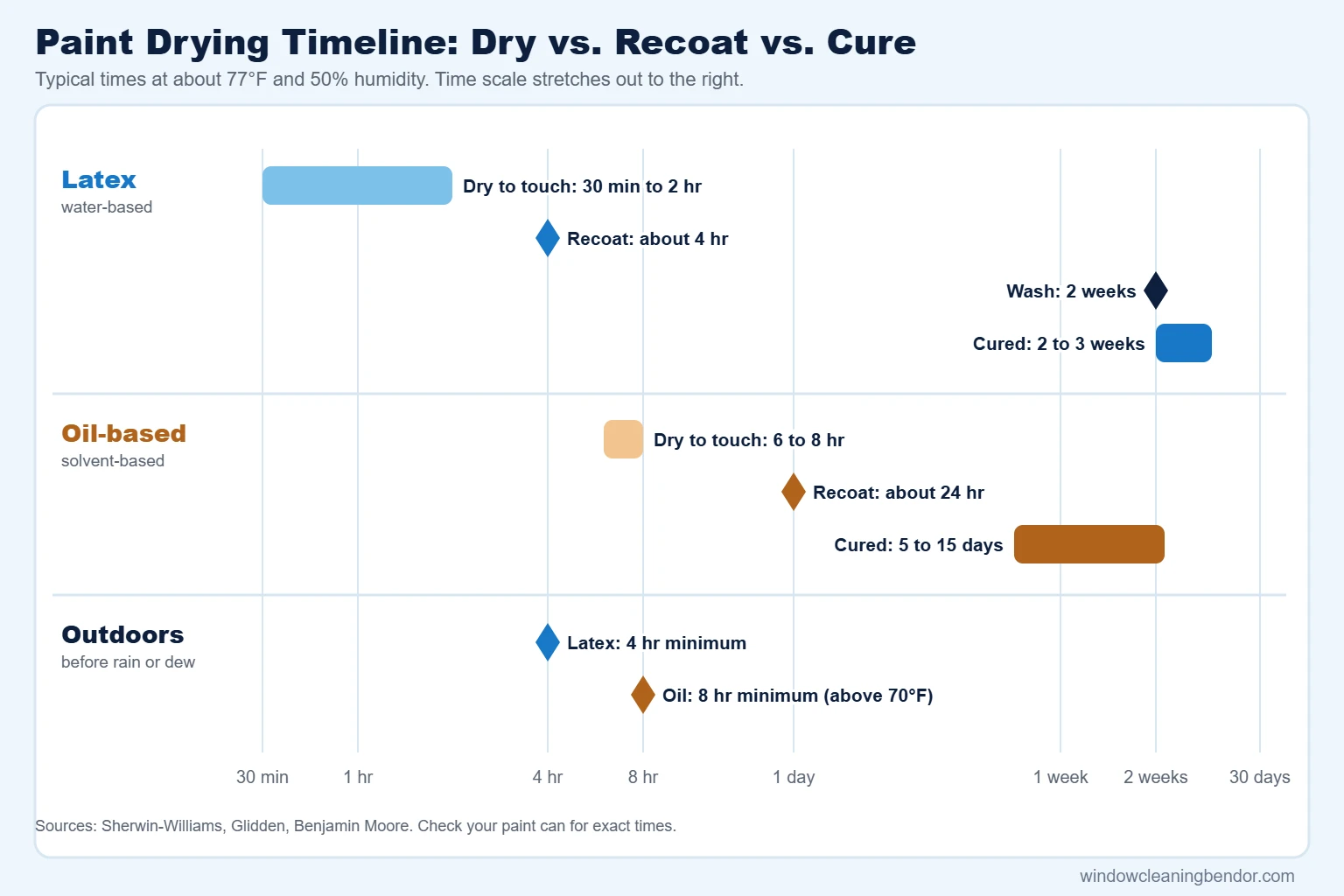
Latex (water-based) wall paint is usually dry to the touch in 30 minutes to 2 hours and ready for a second coat in about 4 hours. Oil-based paint takes 6 to 8 hours to feel dry and about 24 hours before you recoat. Being dry isn’t the same as being cured. Sherwin-Williams says latex takes 2 to 3 weeks to cure, or fully harden, and Benjamin Moore says to wait two weeks before washing a newly painted wall. These times assume about 77°F and 50% humidity. Cold or damp air makes everything take longer.
Most answers to this question come from paint brands with no conditions listed, or from painting companies selling estimates. This guide pulls the numbers from manufacturer data, explains what each stage means, and answers the questions people ask most on Reddit and Quora, like when to rehang towel bars and how long the smell lasts.
Dry, Recoat, and Cure Times by Paint Type
| Paint type | Dry to the touch | Ready to recoat | Fully cured |
|---|---|---|---|
| Latex or acrylic | 30 minutes to 2 hours | About 4 hours | 2 to 3 weeks |
| Oil-based | 6 to 8 hours | About 24 hours | 5 to 15 days |
| Latex primer | 30 minutes to 1 hour | Per the label | Not listed |
| Oil-based primer | 1 to 3 hours | Per the label | Not listed |
| Spray paint (aerosol) | Up to 8 hours | Per the can | Up to 48 hours |
Dry and cure times come from Sherwin-Williams’ guide to faster drying. Recoat times for latex and oil come from Glidden, and the 30-minute low end comes from Benjamin Moore’s technical data. Your paint can or the maker’s data sheet has the exact numbers for your product.
The chart below shows how far apart these stages are.
What “Dry,” “Recoat,” and “Cured” Mean
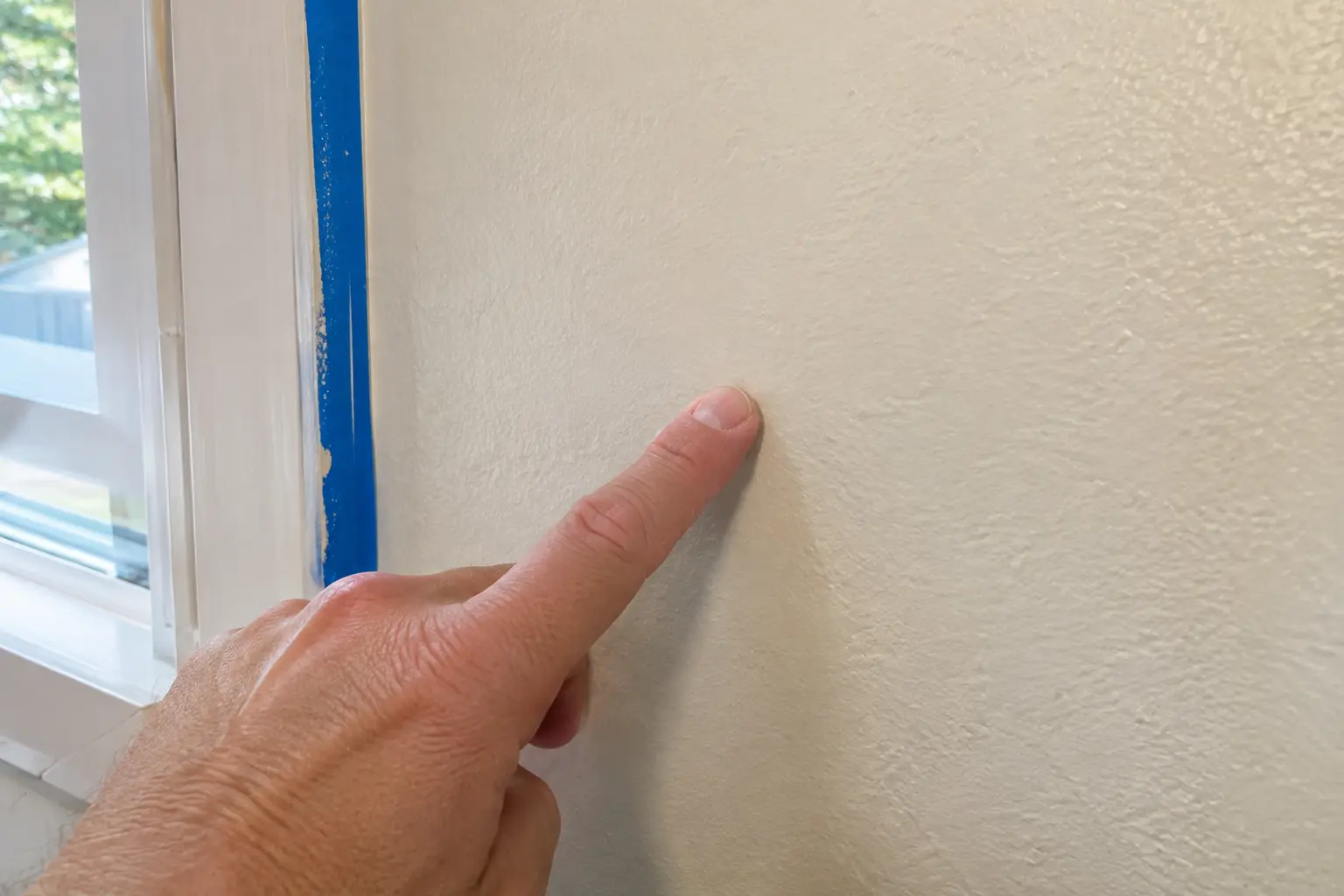
- Dry to the touch: The surface no longer feels tacky. You can brush against it lightly, but it still dents and scuffs easily.
- Ready to recoat: The film is firm enough that a new coat won’t lift or drag the first one. Rolling a second coat on too early can leave a gummy, uneven finish.
- Cured: The paint has hardened all the way through and reached its full scrub and stain resistance. This takes days to weeks, even though the wall looks finished in an hour.
A painter with 25 years in the business put it simply in a YouTube video we reviewed: people mix up dry time and cure time, but for walls, once the paint is dry to the touch, you can usually put blinds and window coverings back up.
When can I put towel rails and hardware back up after painting?
Once the paint is dry to the touch for light items you’re remounting, and later for anything tight against the wall. A Reddit user who asked this after painting a bathroom got mixed answers, but the best advice was consistent: wait until the paint isn’t tacky, then go easy. Two commenters said to leave switch plates and outlet covers loose for a day or two, because a cover tightened onto soft paint can stick and peel it when you take it off later. One commenter waits up to a month in a humid bathroom before fully tightening them.
What Changes Drying Time
Manufacturer times are measured at 77°F and 50% relative humidity. Benjamin Moore’s data sheets warn that “high humidity and cool temperatures” lengthen dry, recoat, and service times (Benjamin Moore Aura Bath & Spa data sheet).
- Temperature: Most latex paints need at least 50°F, for both the air and the surface. Cooler rooms dry slowly.
- Humidity: Damp air slows evaporation. A bathroom after a shower or a basement in summer can take much longer than the label says.
- Coat thickness: One heavy coat dries slower than two thin ones and is more likely to sag or stay soft.
- Airflow: Moving air carries moisture away from the wall.
How can I make paint dry faster?
Improve airflow and lower humidity. Sherwin-Williams suggests running fans a few feet from the wall, angled so they don’t blow dust onto wet paint, and using a dehumidifier. It also says not to open windows on humid days and to avoid adding heat, which can change the paint’s final color. Thin coats help more than anything else. Fans and dehumidifiers speed drying, but they don’t speed curing much.
Exterior Paint and Rain
Outdoors, the weather sets the schedule. Sherwin-Williams says most latex exterior paints need at least 4 hours of dry time before rain or dew settles on them, and oil-based paint needs at least 8 hours above 70°F. Ideally, it says the temperature should stay above the dew point for 48 hours after painting (Sherwin-Williams exterior application FAQs).
Rain and dew warning: Dew forms on nearly everything as soon as the sun goes down, according to Sherwin-Williams. Stop exterior painting early on cool fall days so the paint has hours to dry before evening, or moisture can stain the finish or weaken its grip.
How long before exterior paint can get rained on?
At least 4 hours for most latex paints and 8 hours for oil-based paint, under good conditions. Cool or damp weather stretches that out, so check the forecast for a dry 24 to 48 hours. Our guide to the best exterior paint lists products that can go on in cooler weather.
When Can You Use the Room Again?
| What you want to do | Wait at least |
|---|---|
| Touch the wall or rehang blinds | Until dry to the touch, about 1 to 2 hours for latex |
| Add a second coat of latex | About 4 hours |
| Tighten switch plates and outlet covers | A day or two, per experienced painters |
| Wash or scrub the wall | Two weeks (Benjamin Moore) |
| Expect full hardness | 2 to 3 weeks for latex (Sherwin-Williams) |
How long before I can wash freshly painted walls?
Two weeks is a safe rule. The Reddit user’s paint can said the same, and Benjamin Moore’s bathroom paint data sheet says painted surfaces can be washed after two weeks. Before that, wipe off a fresh smudge gently with a damp cloth rather than scrubbing.
How long does the paint smell last?
For latex paint, Quora commenters who paint for a living mostly said the smell fades in a day or two with good airflow, while oil-based paint can linger for a week or more. Paint contains organic solvents, and the EPA recommends increasing ventilation and providing plenty of fresh air when using products that release them (EPA on volatile organic compounds). Open windows when the air outside is dry and run a fan pointed outward.
Ventilation warning: Follow the safety precautions on the paint label, and keep the room ventilated while you paint and afterward. If the smell gives you a headache or makes you dizzy, leave the room and get fresh air. Consider keeping babies, pregnant family members, and anyone with asthma out of the room until the smell is gone.
Latex vs. Oil-Based Paint: Pros and Cons of Latex
| Pros | Cons |
|---|---|
| Dry to the touch in about an hour | Takes 2 to 3 weeks to fully harden |
| Recoat the same day | Needs about 50°F or warmer to apply |
| Milder smell than oil-based paint | Soft for days, so it scuffs and sticks easily |
| Cleans up with soap and water | Slows down a lot in humid rooms |
Cabinets and trim need the most patience, because they get bumped and handled. Our guide to the best paint for kitchen cabinets covers enamels made for that. If you’re fixing old walls before you paint, our guide on how to replaster a wall explains how long new plaster needs to dry first. If you’re painting outside, see our tips on exterior window trim, and our guide to the best way to clean windows explains how to remove paint specks from glass without scratching it. In Central Oregon, our commercial window cleaning service clears paint overspray and dust from storefront and office glass after a repaint.
The Bottom Line
Latex paint is usually dry to the touch in 30 minutes to 2 hours and ready to recoat in about 4 hours, while oil-based paint needs 6 to 8 hours to dry and about 24 hours to recoat. Curing takes much longer, about 2 to 3 weeks for latex, so wait two weeks before washing walls and go easy on fresh paint. Warm, dry air and good ventilation speed things up, and exterior latex needs at least 4 dry hours before rain or dew.


2 Comments
Comments are closed.