
Triple pane windows have three layers of glass with two sealed, gas-filled spaces between them, instead of the two panes and one space in a standard double-pane window. They lose less heat, keep the inside glass warmer, and block more outside noise. Pella says they usually cost about 10 to 15% more than comparable double-pane windows, and Andersen says they weigh about 1.5 times as much. They make the most sense in cold climates like Central Oregon, where meeting the ENERGY STAR Northern zone standard is simplest with triple glazing, and in homes near traffic or other noise. In mild climates, the energy savings may take decades to pay back the extra cost.
Most guides on this topic come from window makers selling triple-pane lines. This guide uses ENERGY STAR and U.S. Department of Energy research, adds what homeowners and window pros said in a popular Reddit thread, and covers the downsides sales pages skip, including weight, cleaning, and condensation.
How Triple Glazing Works
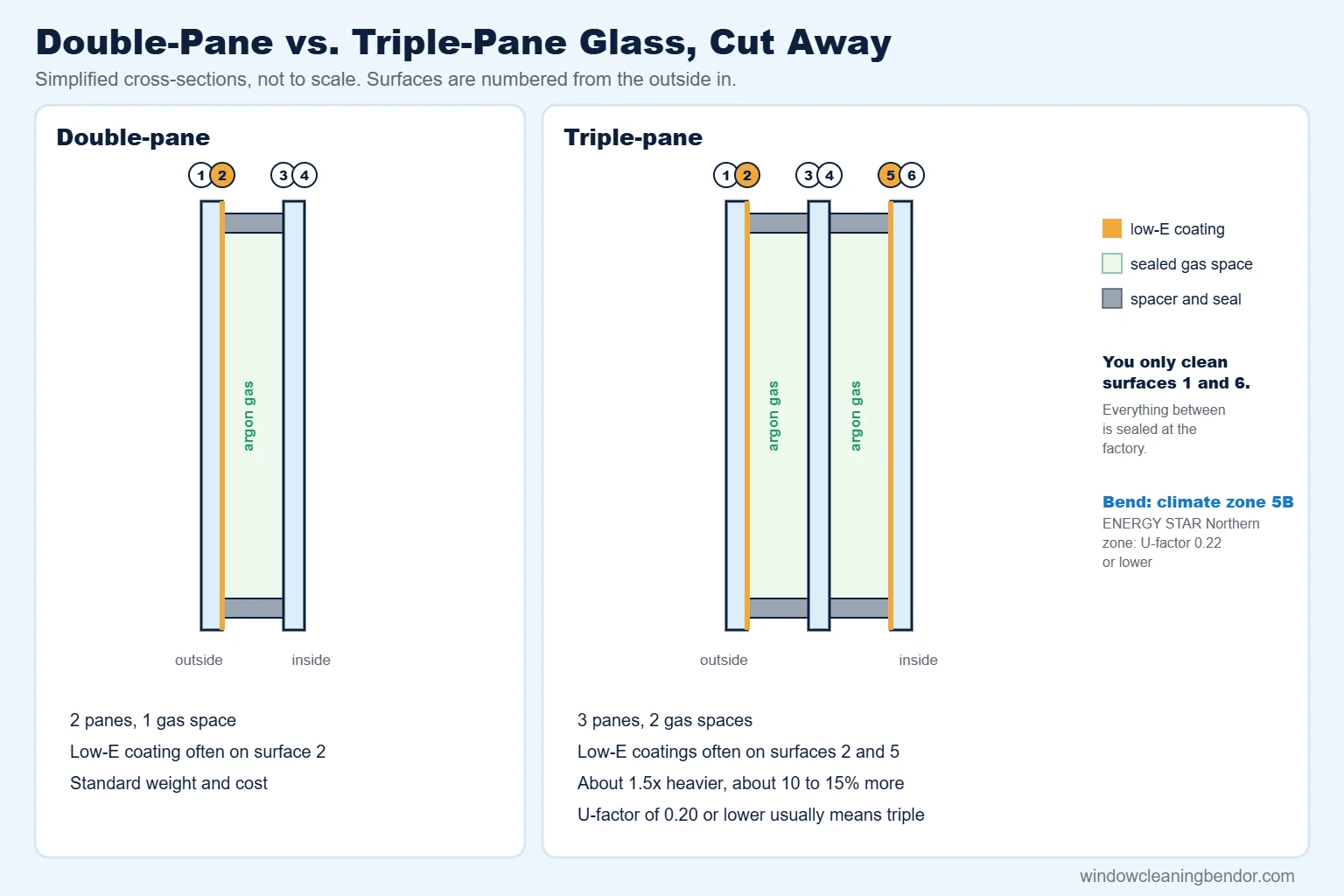
Each extra pane adds another insulating gas space, usually argon or krypton, and another glass surface that can carry a low-E coating. The diagram below compares the two builds and shows where the coatings sit.
| Feature | Double-pane | Triple-pane |
|---|---|---|
| Glass layers | 2 | 3 |
| Gas-filled spaces | 1 | 2 |
| Low-E coatings, up to | 2 | 3 |
| Weight | Standard | About 1.5 times heavier |
| Typical cost | Base price | About 10 to 15% more |
| Typical U-factor | Higher | 0.20 or lower is likely triple |
Coating counts and weight come from Andersen, cost from Pella’s comparison guide, and the U-factor note from the Department of Energy’s Building America Solution Center, which says a window U-factor of 0.20 or lower usually means three panes (Building America: high-performance windows). U-factor measures heat loss, and lower is better.
In a European window video we reviewed, a window supplier explained that three panes give six glass surfaces, and the coatings are placed on chosen surfaces, such as 2 and 5, to tune how much solar heat comes in. Not all triple glazing is equal. He noted that some North American units have narrow gas spaces that don’t perform as well.
Are They Worth It in Central Oregon?
Bend and the rest of Deschutes County sit in climate zone 5B, which ENERGY STAR groups into its Northern zone. Under ENERGY STAR Version 7.0, Northern zone windows need a U-factor of 0.22 or lower, and Andersen says “the simplest path to compliance will be with a triple-pane product” (Andersen on ENERGY STAR 7.0). Cold winter nights and big temperature swings are where the extra pane helps most.
| Situation | Is triple-pane worth it? |
|---|---|
| Cold climate, long-term home | Often yes, for comfort and lower heating loads |
| Busy road, airport, or noisy neighbors | Often yes, mainly for quiet |
| New build aiming for a high efficiency rating | Can help meet the target |
| Mild climate, short stay | Usually no; savings pay back slowly |
| Leaky, poorly insulated walls | Fix air sealing and insulation first |
Is triple glazing worth the cost?
It depends on how long you’ll stay and why you want the upgrade. In the Reddit thread, a window professional with 11 years in the business said the energy savings alone can take the average homeowner 20 or more years to recover. Another homeowner said their energy auditor found the triple-pane upgrade let them use a smaller heating and cooling system. The original poster, building in the Rockies with plans to stay 30 years, was told by several commenters that a long stay and cold winters make the case stronger.
Does a third pane block more noise?
Usually, yes. Andersen says triple-pane almost always beats dual-pane on sound tests, rated by STC and OITC, where higher numbers mean quieter. Reddit commenters who live under an airport flight path or next to a construction site said the difference was clear. An industry commenter added that a double-pane window with two different glass thicknesses can also cut noise well, sometimes for less money, and that noisy walls will still let sound through.
Coatings Matter as Much as Panes
The low-E coating controls the solar heat gain coefficient (SHGC), the share of the sun’s heat that passes through. ENERGY STAR’s Northern zone allows trade-offs between U-factor and SHGC, because letting winter sun in helps heat a home. In the video, the builder said changing the coating on three sun-facing doors cut his cooling equipment size in half. Ask your supplier for the whole-window U-factor and SHGC on the NFRC label, not just the number of panes. Our guide to low-E glass explains how these coatings work.
The Downsides
- Weight: About 1.5 times heavier, so crank operators and balances work harder. The Reddit window pro said he talks older customers out of triple-pane double-hungs because the heavy sashes are hard to tilt in for cleaning.
- Cost: About 10 to 15% more per window, plus possible extra install labor for large units.
- Light: One commenter noticed slightly darker rooms and a faint green tint from heavy low-E coatings.
- Styles: The supplier in the video said thick triple glass is easier to fit in European tilt-turn and casement frames than in slim double-hung sashes.
- Fake triples: Some budget units use a plastic film as the middle layer. The Reddit pro suggested choosing three true glass panes.
Tilt-turn and casement windows handle heavy glass well. Our guide to the types of windows explains how each style opens.
Weight warning: Triple-pane sashes are much heavier than they look. Use two people to tilt in or remove a large sash for cleaning, support it fully, and never lean out an upper-story window to reach the outside glass.
Condensation: Inside and Out
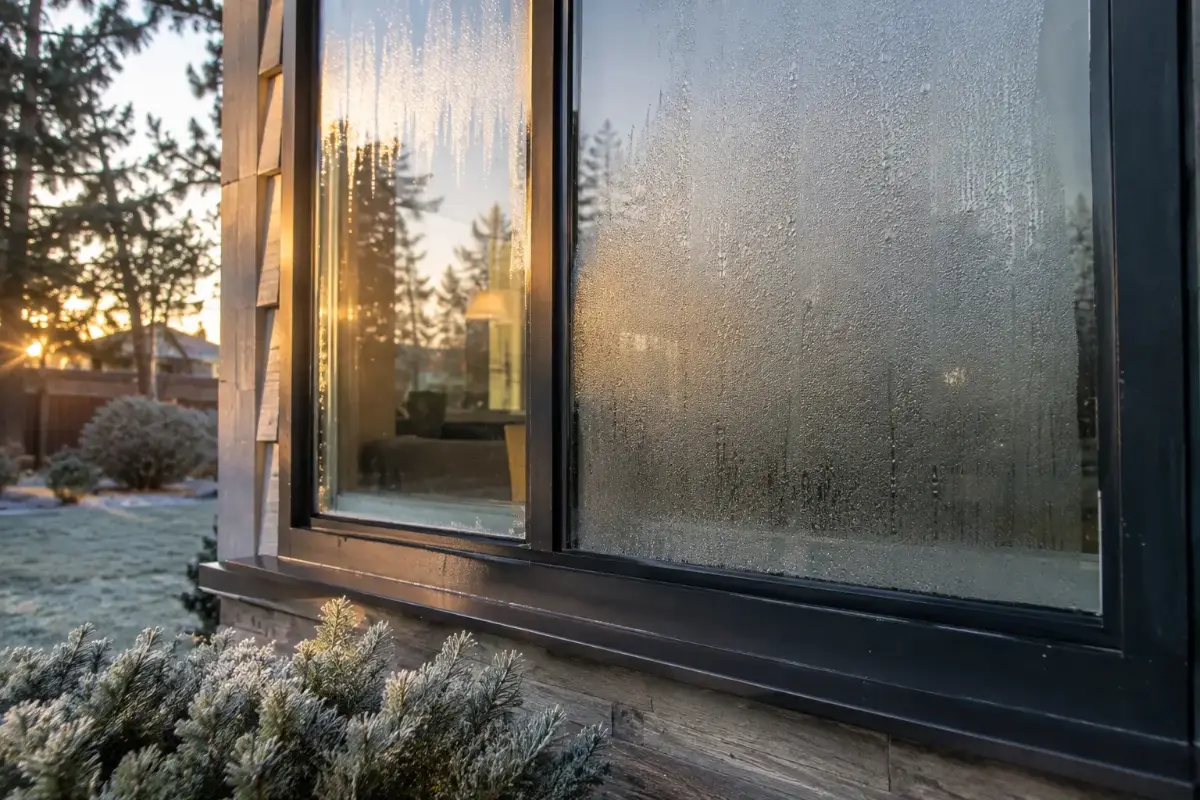
The Building America guide says triple glazing helps minimize condensation on the inside glass in cold climates, because the inner pane stays warmer. You may see a new kind of condensation, though. Natural Resources Canada explains that on high-performance windows, dew “may form on the outside surface of the glass around sunrise” after a cool, calm, humid night (Natural Resources Canada on condensation). The outer pane stays cold because so little heat escapes.
Why is there condensation on the outside of my new windows?
Because the windows are doing their job. Very little indoor heat reaches the outer pane, so on cool, still mornings it can drop below the dew point and fog up, just like a car windshield. It clears as the sun warms the glass. Fog between the panes is different. That means the seal has failed and the glass unit needs replacing.
Cleaning Triple-Pane Glass
You clean triple-pane glass the same way as any window, because you only ever touch the two outside surfaces. The coatings and gas are sealed inside. Our guide to the best way to clean windows covers the method that prevents streaks. Check the frame seals each year, since a sealed unit is only as good as its perimeter, and our guide on how to reseal windows shows how to fix gaps around the frame.
Can you clean between the panes?
No. The spaces between the panes are sealed at the factory and filled with gas. If you see dust, moisture, or fog inside, the seal has failed, and a glass shop needs to replace the sealed glass unit or the sash. Check your warranty first, since many makers cover seal failure for years.
Triple Glazing: Pros and Cons
| Pros | Cons |
|---|---|
| Lower heat loss and warmer inside glass | About 10 to 15% more upfront |
| Noticeably quieter rooms | About 1.5 times heavier sashes |
| Less condensation on the inside glass | Morning dew on the outside glass |
| Easier to meet ENERGY STAR Northern zone limits | Long payback in mild climates |
Window prices vary widely with size and frame type, so see our guide to the cost to replace windows before you compare quotes. In Central Oregon, our residential window cleaning service handles heavy sashes and tall glass safely, inside and out.
The Bottom Line
A third pane cuts heat loss, keeps the inside glass warmer, and blocks more noise, at about 10 to 15% more cost and 50% more weight. In a cold climate like Bend’s, triple glazing is the simplest way to meet ENERGY STAR’s Northern zone standard and makes sense for a long-term home or a noisy street. Compare whole-window U-factor and SHGC, choose three true glass panes, and expect some harmless morning dew on the outside glass.

One Comment
Comments are closed.