
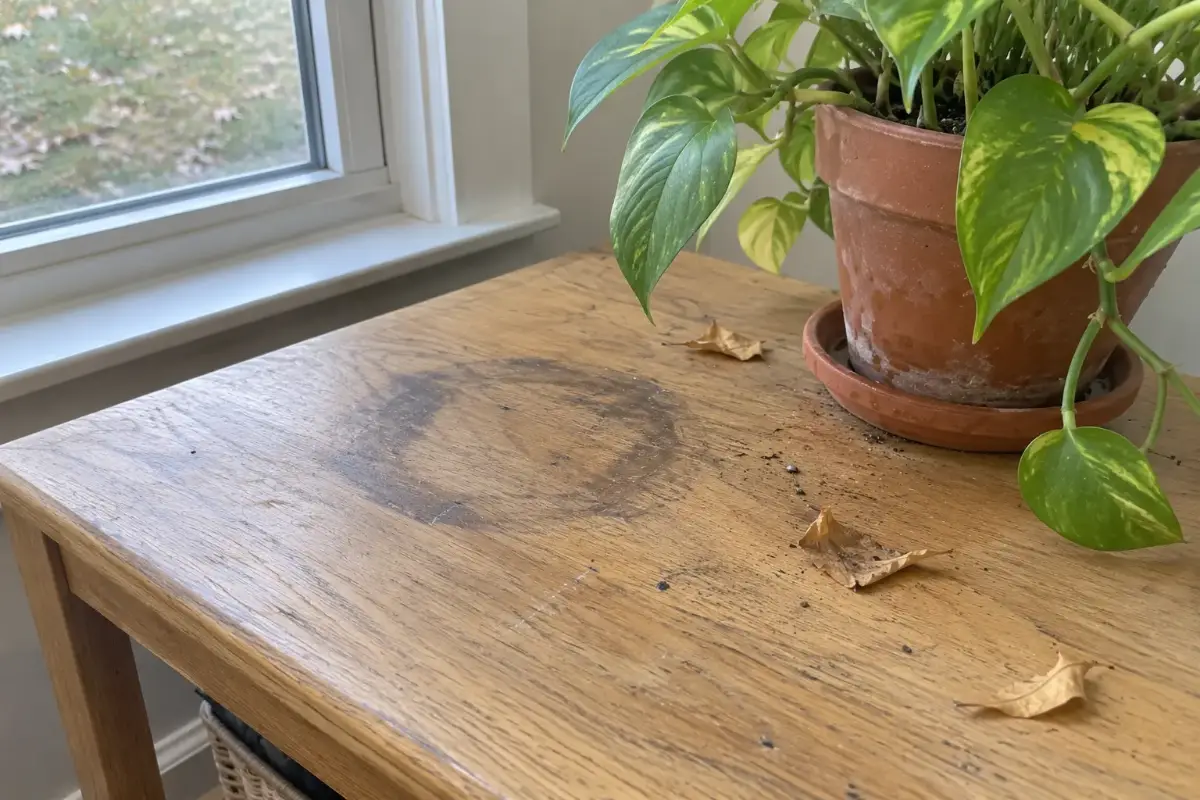
To remove water stains from wood, first check the color. A white or cloudy ring means moisture is trapped in the finish, not the wood, and it can usually be fixed by leaving an oily product like petroleum jelly on it overnight, warming it gently with a hair dryer, or wiping it very lightly with alcohol. A dark gray or black stain means water reached the wood itself. That usually takes stripping the finish and bleaching the spot with oxalic acid, then refinishing. Always start with the gentlest method and test it on a hidden spot first.
Most guides on how to remove water stains from wood list a few kitchen tricks and stop there. This guide explains why the stain color matters, ranks the fixes from safest to riskiest, and covers the dark stains that kitchen tricks can’t touch.
White Ring or Dark Stain? Check First
| What you see | Where the damage is | What usually fixes it |
|---|---|---|
| White, milky, or cloudy ring | In the finish | Oil, gentle heat, light alcohol wipe, or mild polishing |
| Gray, brown, or black stain | In the wood under the finish | Stripping, oxalic acid bleach, and refinishing |
| Raised, rough, or swollen wood | Wood fibers swelled | Light sanding and refinishing |
| Soft, spongy wood | Rot | Repair or replace the wood |
Woodworking writer Kevin Southwick suggests a quick test: wipe the area with mineral spirits. If the marks fade while it’s wet, the damage is in the finish. If they stay dark, they’re in the wood (Popular Woodworking water damage repair).
Why White Rings Happen
Finishing expert Bob Flexner explains that moisture gets into the finish and creates tiny voids that scatter light, which makes the spot look milky (Popular Woodworking on watermarks). The wood underneath is usually fine. That’s why most white rings can be fixed without sanding.
Dark marks are different. Flexner says they form when water, often carrying metal residue, gets through cracks in the finish and into the wood.
How to Remove White Water Rings
Flexner lists these fixes in order from least to most risky. Start at the top and stop as soon as one works.
| Method | Best for |
|---|---|
| Oil left overnight | Fresh, light rings |
| Gentle heat | Rings that oil didn’t clear |
| Light alcohol wipe | Stubborn rings on hard finishes |
| Mild abrasive | Rings that sit near the surface |
| Refinishing | Rings that won’t come out |
1. Leave an oily product on it
Spread a thin layer of petroleum jelly, furniture polish, or mayonnaise over the ring and leave it overnight. Flexner says this can restore some clarity. Wipe it off and buff the area the next day.
2. Warm it gently
Use a hair dryer on low, held several inches away and kept moving. Flexner says gentle heat can help the finish close up again. Don’t overheat it, since too much heat can blister the finish. Some people press a warm, dry iron over a cotton cloth instead. Keep the iron moving, use no steam, and lift it often to check.
3. Wipe very lightly with alcohol
Dampen a cloth with a little denatured alcohol, just enough to leave a trail that dries in a second, and wipe across the ring once. Flexner warns that shellac is very sensitive to alcohol and too much can smear or dull the finish, so test first.
4. Rub with a mild abrasive
Rub gently with non-gel toothpaste or rottenstone mixed with a light oil, then wipe clean. Go easy, since abrasives can dull a glossy finish. Flexner says steel wool works faster but scratches, so save it for last.
5. Add a fresh coat of finish
If the ring is still there, a light sanding and a new coat of finish usually covers it. Southwick notes that white marks in the finish often disappear once a fresh coat goes on. If you are repainting painted cabinets instead, our guide to the best paint for kitchen cabinets covers the right enamel and sheen.
Kitchen Tricks: Pros and Cons
| Pros | Cons |
|---|---|
| Use things you already have | Results vary a lot by finish |
| Low risk when you start gently | Mayonnaise and oils can leave a greasy film |
| Often fix fresh white rings overnight | Heat and abrasives can dull or blister the finish |
| No sanding or stripping needed | Can’t fix dark stains in the wood |
How to Remove Dark Water Stains
Dark stains are in the wood, so you have to get past the finish to treat them. Both Flexner and Southwick use oxalic acid, a wood bleach sold as crystals at hardware stores. It removes the gray-black color from water-stained wood without bleaching out the natural wood color.
- Strip or sand off the finish over the stained area.
- Mix the solution. Flexner dissolves the crystals in hot water until no more will dissolve, in a glass or plastic container, never metal.
- Brush it on the whole surface, not just the spot, so the color stays even.
- Let it dry, then wash the dried crystals off with water. Southwick floods and wipes the surface several times.
- Repeat if needed. Southwick says if two or three applications don’t work, more won’t help.
- Sand lightly and refinish once the wood is fully dry.
Oxalic acid warning: Oxalic acid is toxic. Flexner and Southwick both say to wear gloves and eye protection, never brush off the dried crystals, and rinse thoroughly before sanding, since the dust is harmful to breathe. Keep it away from kids and pets, and don’t use it on thin veneer.
Don’t confuse oxalic acid with household chlorine bleach or two-part wood bleach. Flexner notes that those remove dye or the wood’s natural color, not water stains.
When to Call a Pro
- The piece is a valuable antique, where the original finish matters
- The finish is bubbled, peeling, or cracked
- The stain is on thin veneer
- The wood is soft, warped, or rotted
Stop Water Stains Before They Start
- Use coasters and trivets, and wipe up spills right away.
- Clean wood with a barely damp cloth, not glass cleaner. Marc Spagnuolo of The Wood Whisperer warns that Windex is bad for all wood finishes (The Wood Whisperer).
- Keep plants in saucers on a mat, not straight on wood.
- Fix leaks and condensation that drip onto wood. Water on window sills often comes from failed seals, and our guide on how to reseal windows shows how to stop it.
- Watch for soft spots on sills and trim, since a water stain that’s left alone can turn into rot. Our guide to exterior window trim covers the warning signs.
Water spots on glass are a different problem. Those are mineral deposits, not finish damage. Our guide on the best way to clean windows covers everyday spots, and if you live in Central Oregon, our hard water stain removal service handles stubborn mineral buildup on glass.
Frequently Asked Questions
Does mayonnaise really remove water stains from wood?
It can help with light white rings. Bob Flexner lists oily products like mayonnaise, petroleum jelly, and furniture polish as the gentlest first step. Leave a thin layer overnight, then wipe and buff. It won’t fix dark stains.
Can I use an iron to remove water rings?
Yes, carefully. Use a dry iron with no steam on a low setting, put a cotton cloth over the ring, and keep the iron moving for a few seconds at a time. Check often, since too much heat can blister the finish.
Why did my water stain turn black?
Black means the water got through the finish and into the wood, often picking up metal residue along the way. Oil and heat won’t fix it. It usually needs the finish removed and the wood bleached with oxalic acid.
Will sanding remove water stains?
Sanding removes white rings in the finish, since you’re sanding off the damaged layer. Dark stains often go deeper than you can safely sand, especially on veneer, so oxalic acid is the better fix for those.
The Bottom Line
To remove water stains from wood, check the color first. White rings are in the finish, so try oil overnight, gentle heat, a light alcohol wipe, or a mild abrasive, in that order. Dark stains are in the wood and need the finish removed and oxalic acid bleach, with gloves, eye protection, and a thorough rinse. Test every method on a hidden spot, and call a pro for antiques and veneer.


3 Comments
Comments are closed.