
To clean a mattress, strip the bed and wash the bedding in hot water, then vacuum the whole mattress with an upholstery attachment, paying extra attention to seams. Spot-clean stains by blotting, not rubbing, with a little mild dish soap and water, an enzyme cleaner for sweat and urine, or 3% hydrogen peroxide on light fabric. Cover the mattress with baking soda, leave it for several hours or overnight, and vacuum it up. Let every damp spot dry completely before you make the bed, and add a washable protector so you rarely have to do this again.
Most guides come from mattress brands that end with a protector or a new mattress for sale. This guide sticks to basic supplies, gives one clear method for each common stain, and covers the safety and drying steps that keep a cleaning job from turning into a mold problem.
What You’ll Need
| Supply | What it’s for |
|---|---|
| Vacuum with upholstery and crevice tools | Dust, skin flakes, crumbs, and dust mites |
| Baking soda | Pulling out odors and leftover moisture |
| Mild dish soap | General stains and dirt |
| Enzyme cleaner | Sweat, urine, vomit, and other body fluids |
| 3% hydrogen peroxide | Old sweat and blood stains on light fabric |
| White cloths and a spray bottle | Blotting without adding dye |
| Fan or open window | Faster drying |
Step-by-Step: How to Clean a Mattress
1. Strip and wash the bedding
Remove sheets, pillowcases, mattress pads, and protectors. National Jewish Health recommends washing bedding weekly in hot water, 130°F, to control dust mites (National Jewish Health on dust mites). Check the care label on protectors first, since some waterproof backings can’t take high heat. Pillows collect the same allergens, and our guide on how to wash pillows covers each type.
2. Vacuum everything
Use the upholstery attachment over the top and sides, then the crevice tool along seams, piping, and tufts. Consumer Reports recommends this two-tool approach in its mattress cleaning guide (Consumer Reports on cleaning a mattress).
3. Spot-clean stains
Treat each stain with the method in the table below. Test any cleaner on a hidden spot first, like the side near the foot of the bed. Always blot with a clean white cloth, working from the outside of the stain in, and never pour liquid onto the mattress.
4. Deodorize with baking soda
Sprinkle a thin, even layer of baking soda over the whole surface. Consumer Reports suggests about a 1-pound box for the whole bed and leaving it for 24 hours near an open or sunny window if you can. Even a few hours helps.
5. Vacuum again
Vacuum up all the baking soda. Consumer Reports notes that fine powders can clog or damage some vacuums, so check your vacuum’s manual first, and empty the canister or bag afterward. For the floor around the bed, our guide to the best robot vacuum picks compares models that handle dust and pet hair.
6. Dry, flip or rotate, and remake
Make sure every damp spot is fully dry before you put the bedding back. Rotate the mattress head to foot while it’s bare. Only flip it if the maker says it’s two-sided, since most modern mattresses have a set top.
How to Remove Common Mattress Stains
| Stain | What to use | How to do it |
|---|---|---|
| Fresh sweat or body oil | Dish soap and cool water | Mix 1 teaspoon soap in 1 cup water, dab, then blot dry |
| Old yellow sweat stains | 3% hydrogen peroxide, on light fabric only | Mist lightly, let sit 5 to 10 minutes, blot, repeat if needed |
| Urine | Enzyme cleaner | Blot up all you can, spray, wait per label, blot, then add baking soda |
| Blood | Cold water, then peroxide on light fabric | Blot with cold water first; never use warm water |
| Vomit | Enzyme cleaner | Lift solids, blot, spray, wait, blot, then baking soda |
| Food or drink | Dish soap and water | Dab, blot, and dry well |
Sweat stains
Sweat leaves yellow marks and a musty smell over time. Start with mild dish soap and cool water. For older stains on a white or light cover, a light mist of 3% hydrogen peroxide can lift the yellow. Peroxide can lighten colored fabric, so test it first. Some guides mix peroxide, baking soda, and dish soap into a paste or spray. If you try that, mix a small amount, use it right away, and don’t store the mixture in a closed bottle.
Urine
Act fast. Blot up as much as you can with dry towels, pressing hard. An enzyme cleaner breaks down the proteins and uric acid that cause the lingering smell, which plain soap often can’t. Follow the label for how long to leave it on, blot again, and cover the spot with baking soda once it’s only slightly damp. For pet or child accidents that happen often, a waterproof protector is far easier than repeat cleaning.
Blood
Use cold water only, since heat sets blood. Blot, then dab with a little dish soap solution. On a light cover, a small amount of peroxide can lift what’s left.
Mixing warning: Never mix bleach with vinegar or ammonia. West Virginia University Extension warns that these mixtures create toxic fumes that can cause coughing, shortness of breath, and chest pain (WVU Extension home cleaning safety). Use one cleaner at a time, rinse with a damp cloth before switching, and keep a window open. Skip bleach on mattresses altogether, since it can damage fabric and foam.
Don’t Get the Mattress Too Wet
Water that soaks into foam or padding can take days to dry and can lead to mildew. Use as little liquid as possible, blot instead of scrub, and speed up drying:
- Point a fan at the damp area and open a window.
- Lean the mattress on its side so air reaches both faces, if you can lift it safely.
- Press a dry towel on the spot every half hour to pull moisture out.
- Wait until the spot feels dry deep down, not just on the surface, before you make the bed.
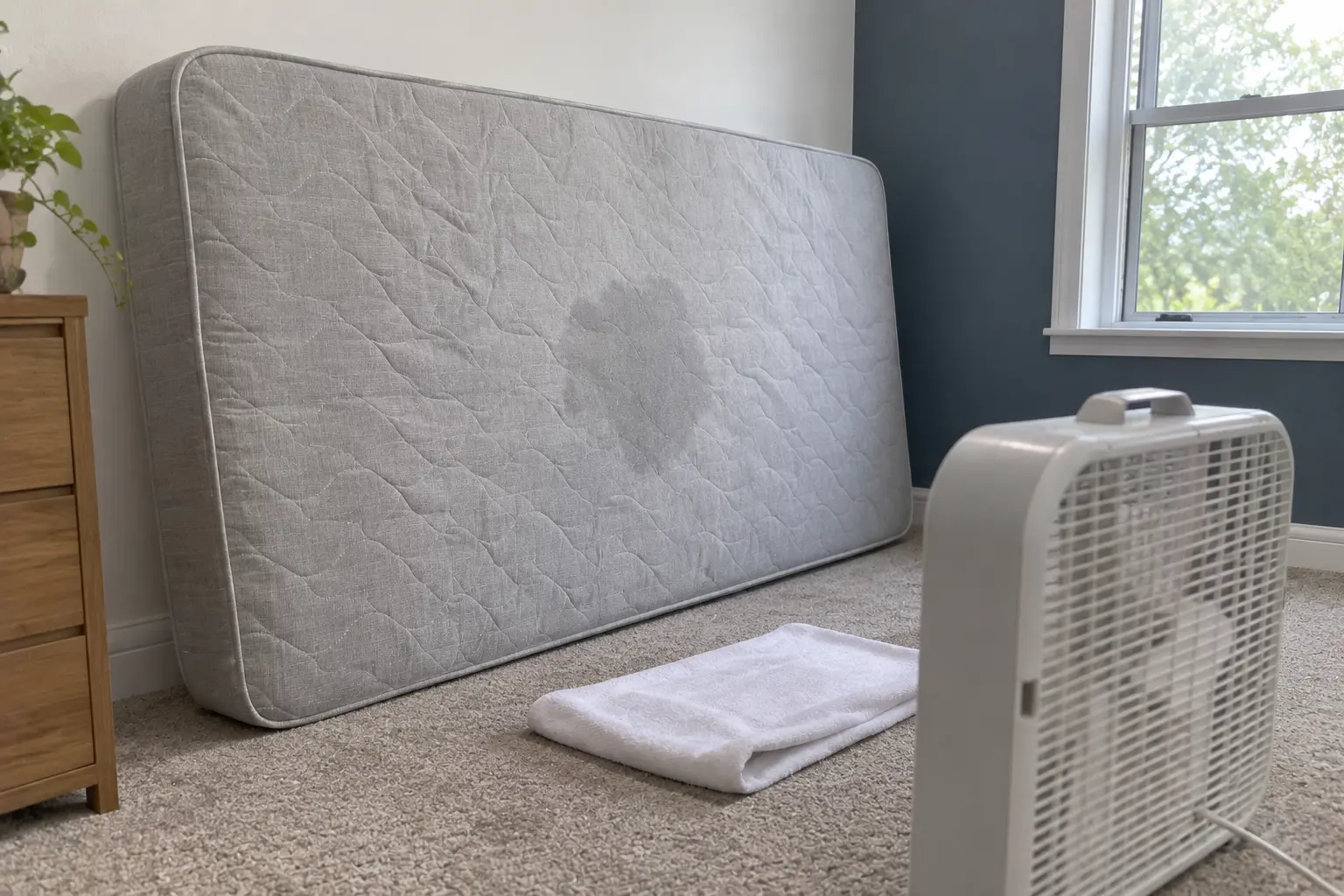
Fresh air and direct sun help a mattress smell fresher. Indoors, though, window glass blocks most UVB rays, so a sunny window is mainly a drying boost. If your bedroom gets strong afternoon sun, our guide to blackout window film explains how to darken the room for sleep afterward.
Memory Foam, Latex, and Hybrid Mattresses
Foam and latex soak up water like a sponge and dry slowly, so spot-clean only, with a barely damp cloth. Never steam clean or soak foam unless the maker allows it. Check your mattress label or warranty page before you start, since many warranties exclude stained mattresses and some list approved cleaners.
How Often to Clean a Mattress
| Task | How often |
|---|---|
| Wash sheets and pillowcases | Weekly |
| Wash mattress protector | Every 1 to 2 months, or after spills |
| Vacuum the mattress | Every 1 to 3 months |
| Deep clean with baking soda | At least twice a year |
| Rotate head to foot | Every 3 to 6 months |
Consumer Reports suggests a deep clean at least twice a year, and more often if you don’t use a protector.
Mattress Protectors: Pros and Cons
| Pros | Cons |
|---|---|
| Stops sweat, spills, and accidents at the surface | Adds a cost up front |
| Machine washable, unlike the mattress | Some waterproof types feel warm or crinkly |
| Full zip encasements help with dust mites | Needs washing on its own schedule |
| Can protect your mattress warranty | Cheap ones can wear out fast |
National Jewish Health recommends a zippered, dust-proof encasement on the mattress and box spring for people with dust mite allergies. The EPA says encasements tested for bed bugs should stay on for a full year if you’re dealing with them (EPA bed bug tips). If you see live bugs, dark spots on seams, or bites, call a pest professional instead of cleaning on your own.
Keep the Whole Bedroom Fresher
Raise the mattress off the floor on a frame or slats so air moves underneath. If you’re replacing the frame, our guide to king size bed dimensions lists common frame and room sizes. National Jewish Health suggests keeping indoor humidity around 30% to 40%, which helps limit dust mites and mildew. Wipe down a wood bed frame and nightstand while the mattress is bare, and our guide on how to remove water stains from wood helps with white cup rings. New curtains are easier to fit while the room is torn apart, and our guide on how to measure for curtains walks you through it. For more bathroom and bedroom guides, see how to use a bidet.
If you manage a vacation rental in Central Oregon, our vacation rental window cleaning service can handle the glass while you turn over bedding between guests.
Frequently Asked Questions
How do you clean a mattress without a vacuum?
Sprinkle baking soda, let it sit, then brush it off with a stiff, clean brush, or tilt the mattress and tap it so the powder falls onto a sheet. A vacuum works better, so borrow one for the final pass if you can.
Can you clean a mattress with vinegar?
Yes, on most fabric covers. A mix of 1 part white vinegar to 2 parts water, sprayed lightly and blotted, helps with odors. Don’t use it on foam unless the maker allows it, and never mix vinegar with bleach.
How long does a mattress take to dry after cleaning?
Small spots usually dry in a few hours with a fan. Larger damp areas can take a day or more. Don’t make the bed until the spot feels dry deep down.
When should you replace a mattress instead of cleaning it?
Replace it if you see mold, smell mildew after drying, find signs of bed bugs that won’t clear, or feel sagging and lumps. Cleaning can’t fix a mattress that’s breaking down.
The Bottom Line
Cleaning a mattress takes basic supplies and a few hours: wash the bedding, vacuum, blot stains with soap, an enzyme cleaner, or peroxide, cover with baking soda, then vacuum and dry it fully. Use as little liquid as you can, never mix cleaners, and finish with a washable protector so the next deep clean is quick.



4 Comments
Comments are closed.