
If the bowl is close to the rim, stop flushing and turn the shutoff valve behind the toilet clockwise so it can’t overflow. Then start with the gentlest fix. Squirt in about a quarter cup of dish soap, add a bucket of hot tap water (never boiling) from waist height, and wait 10 to 15 minutes before flushing. If that doesn’t work, push a toilet brush in and out of the drain opening like a plunger, or feed a toilet auger into the drain to break up the clog. Skip chemical drain cleaners, which toilet makers say can damage the bowl, and call a plumber if several drains back up at once.
Most no-plunger guides are lists of tricks with no warnings, or plumbing company pages that end with a sales pitch. Some even recommend boiling water, which toilet makers warn against. This guide ranks the methods from gentlest to strongest, explains what each one is good for, and uses tips from manufacturers and from a popular Reddit thread on the topic.
Before You Start: Stop the Overflow
- Don’t flush again. If the first flush didn’t go down, a second one is how floors get flooded.
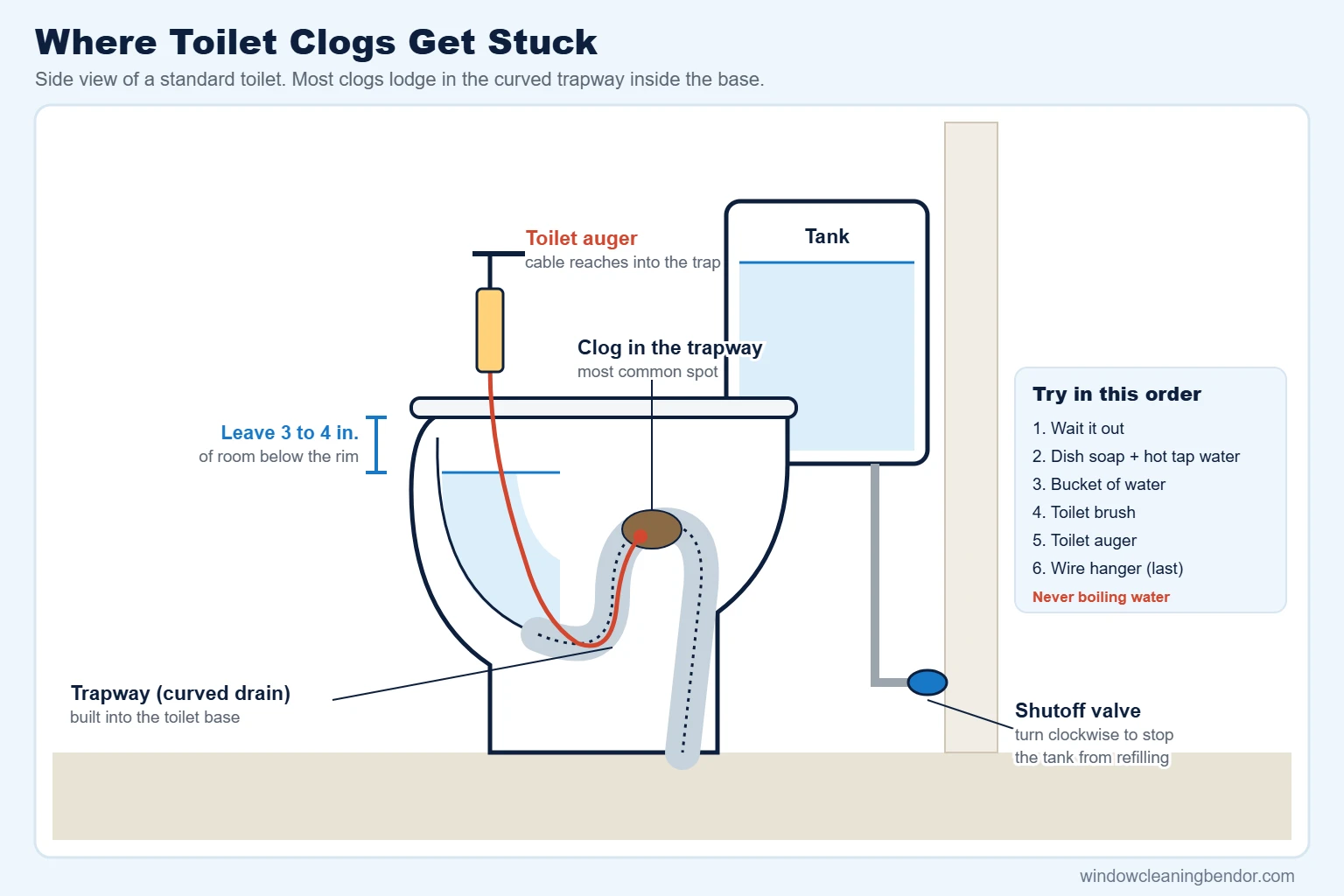
- Turn off the water. Twist the oval valve on the wall behind the toilet clockwise until it stops. If it won’t turn, lift the tank lid and raise the float to stop the tank from refilling.
- Let the level drop. In the Reddit thread, the original poster said to wait until there’s at least 3 to 4 inches of room below the rim before adding anything.
- Protect the floor and your hands. Lay down old towels and wear rubber gloves.
The 6 Methods, From Gentlest to Strongest
| Method | Best for | Time |
|---|---|---|
| Wait it out | Soft waste and toilet paper | 30 minutes to a few hours |
| Dish soap and hot water | Most everyday clogs | 10 to 20 minutes |
| Bucket of water | Clogs that are almost clear | A few minutes |
| Toilet brush | Mild clogs near the drain | A few minutes |
| Toilet auger | Stubborn clogs in the trapway | 5 to 15 minutes |
| Wire hanger | Last resort, shallow clogs | 5 to 10 minutes |
The diagram below shows where most clogs get stuck and how each method reaches them.
1. Wait it out
Toilet paper and waste soften in water. One Reddit commenter said that just letting the clog soak for 30 minutes to 2 hours often clears it with no tools at all. This works best if you have a second bathroom to use in the meantime.
Will a clogged toilet unclog itself?
Sometimes. A clog made of toilet paper and waste often breaks down enough on its own to drain after an hour or two. A clog from wipes, paper towels, or a solid object won’t dissolve, so if the water level hasn’t dropped after a couple of hours, move on to the next method.
2. Dish soap and hot water
This is the method the Reddit thread was about, and Oatey, a plumbing products maker, gives nearly the same steps in its FAQ: add about a quarter cup of dish soap, pour in a bucket of hot (not boiling) water from waist height, wait 10 to 15 minutes, then flush (Oatey guide to unclogging a toilet). The soap coats the clog and helps it slide, and the hot water softens it. Shampoo works if you’re out of dish soap.
Does dish soap and hot water really unclog a toilet?
For soft clogs, often yes. The original Reddit poster said theirs cleared in under 5 minutes, and Duravit, a toilet maker, says dish soap and hot water may be enough for a slightly clogged toilet (Duravit tips for a clogged toilet). It won’t move a toy, a wad of wipes, or anything else that doesn’t soften in water.
Can hot water crack a toilet?
Boiling water can. A commenter who said he came from a family of plumbers warned that he’d seen toilets crack from hot water on cool porcelain, and Duravit says to make sure the water isn’t boiling to avoid damaging the porcelain. Use the hottest water from your tap instead of a kettle.
Scald and crack warning: Never pour boiling water into a toilet. It can crack the bowl and splash back on you. Use hot tap water, pour slowly, and leave room so the bowl doesn’t overflow.
3. A bucket of water
If the clog is almost clear, a gallon or so of water poured quickly from waist height can push it through. One Reddit commenter said this was their go-to. Only try it when the bowl is low, since the extra water has nowhere to go if the clog holds.
4. A toilet brush
Push the brush into the drain opening and pump it in and out about 10 times, as one Reddit commenter described. It works like a small plunger. Duravit says a brush can help in mild cases. Expect some splashing, then clean and disinfect the brush.
5. A toilet auger

A toilet auger, also called a closet auger, is a short drain snake with a bent tube and a rubber sleeve that protects the bowl. Kohler’s support site says to use a toilet auger or snake to free a clog from the trapway, the curved channel inside the toilet (Kohler on toilet water not leaving the bowl). Feed the cable into the drain, crank the handle to break up or hook the clog, then pull it back and flush. It’s the best tool for wipes and objects.
6. A wire hanger (last resort)
A straightened coat hanger can break up a clog near the drain, and one Reddit commenter said it worked “like a charm.” Duravit warns that a hanger can scratch the porcelain, so wrap the end in a rag or duct tape and work gently. Stop if you feel a hard object, since you could push it deeper.
What Not to Put Down a Clogged Toilet
- Chemical drain cleaners. Oatey’s technical team doesn’t recommend them for toilets because they can damage the finish, and the chemicals can splash back on you if you plunge or snake afterward.
- Boiling water. It can crack the porcelain.
- Mixed cleaners. Never combine bleach with other cleaners or drain products. Some combinations release toxic gas.
Baking soda and vinegar is a popular suggestion, and Duravit says it’s often enough for mild clogs. It’s safe to try, but it mostly fizzes, so don’t count on it for a heavy clog.
What to Flush and What to Throw Away
The City of San Diego, citing the EPA, says toilet paper is the only thing that should be flushed (San Diego “Flush Smart” guide).
| Item | Flush it? |
|---|---|
| Toilet paper | Yes |
| Baby wipes and cleaning wipes | No, throw them away |
| Paper towels and facial tissue | No |
| Feminine hygiene products | No |
| Cotton swabs and dental floss | No |
| Medication | No; use a take-back program |
No-Plunger Methods: Pros and Cons
| Pros | Cons |
|---|---|
| Uses things you already have | Slower than a plunger for most clogs |
| Soap and hot water are gentle on pipes | Won’t clear wipes, toys, or solid objects |
| An auger reaches clogs a plunger can’t | Hangers can scratch the porcelain |
| Avoids harsh drain chemicals | Extra water raises the risk of overflow |
What kind of plunger should I buy?
A flange plunger, the kind with a soft rubber sleeve that sticks out of the bottom of the cup. A Reddit commenter said his family struggled for years because they only had a flat sink plunger, which doesn’t seal on a toilet drain. Others recommended the accordion style. Push down slowly first to seal, then use short, firm strokes.
When should I call a plumber?
Call if none of these methods work, if the toilet clogs again and again, or if other drains back up or gurgle when you flush. Clogs in several fixtures at once usually mean the blockage is in the main sewer line, not the toilet. Kohler also notes that a blocked vent pipe can cause weak flushes that look like a clog.
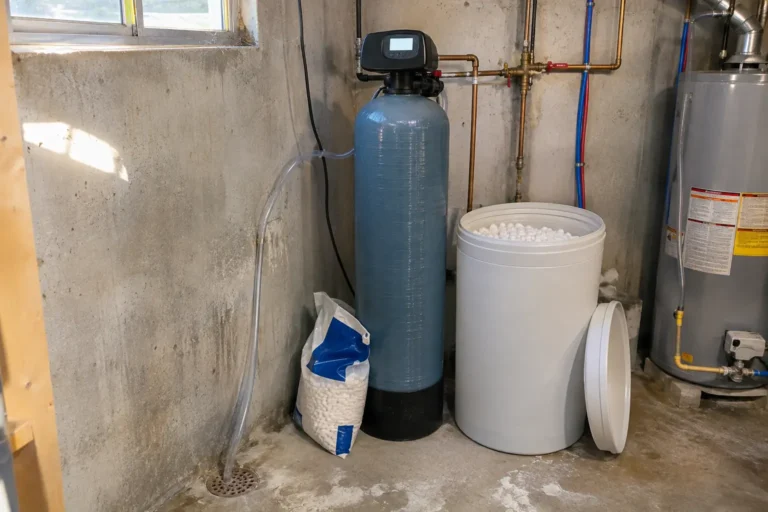
Hard water can leave mineral buildup in the toilet’s rim holes and jets, which weakens the flush over time. Our guide to water softener costs explains how to reduce scale, and our guide on how to replace a shower cartridge covers another common bathroom fix. A bidet can cut down on toilet paper use, as our guide on how to use a bidet explains. In Central Oregon, see whether Bend has hard water, and our hard water stain removal service clears mineral spots from shower doors and bathroom windows.
The Bottom Line
To clear a clogged toilet without a plunger, stop flushing, shut off the water, and start gentle: let it soak, then try a quarter cup of dish soap and a bucket of hot tap water. Move on to a toilet brush or a toilet auger for tougher clogs, and use a wire hanger only as a last resort. Never use boiling water or chemical drain cleaners, keep a flange plunger in every bathroom, and call a plumber if several drains are backing up.


One Comment
Comments are closed.