Door weather stripping is the flexible seal around the sides and top of a door, plus the sweep or threshold seal at the bottom, that blocks drafts, dust, bugs, and water. To replace it, find the leaks first, pull out the old strip, clean and dry the jamb, then fit the right type: push-in kerf seals on most newer exterior doors, V-strip or compression seals on older doors, and a sweep or door shoe at the bottom. Test the seal with a dollar bill or a flashlight when you’re done.
Most pages that rank for this are product listings. They sell strips but don’t explain which type fits your door, how to measure the gap, or how to check that the new seal actually works. This guide covers all three.
Find the Leaks First
The U.S. Department of Energy’s Building America Solution Center suggests a few simple tests (Building America weatherstrip guide):
- Feel for drafts. On a cold or windy day, hold your hand or a tissue near the edges of the closed door. Turning on bathroom and kitchen exhaust fans makes leaks easier to feel.
- Light test. At night, turn on the porch light, turn off the lights inside, and look around the door. Any light you see is a gap.
- Dollar bill test. Close the door on a dollar bill. If it slides out easily, air is leaking there. Check several spots on each side.
Don’t forget the door between the house and an attached garage. Building America recommends sealing it to keep garage fumes out of the house.
Parts of a Door Seal
| Where | What usually goes there |
|---|---|
| Sides and top of the frame | Kerf seal, V-strip, compression, or magnetic strip |
| Bottom of the door | Door sweep or door shoe |
| Floor under the door | Threshold with a vinyl seal |
| Sliding glass door | Pile or fin seal in the track |
| Storm door | Sweep plus side seals on the storm door frame |
Types of Door Weather Stripping
| Type | How it attaches | Best for | Watch out for |
|---|---|---|---|
| Kerf-in foam or bulb seal | Pushes into a slot in the frame | Most newer pre-hung exterior doors | Must match the slot and gap size |
| V-strip (tension seal) | Adhesive or small nails | Top and sides of older doors | Can make the door a bit harder to close |
| Compression (rigid strip with vinyl bulb) | Nails or screws to the stop | Older wood doors without a slot | Visible; needs careful fitting |
| Magnetic | Fits the frame; seals to a steel door | Steel entry doors | Only works with steel doors |
| Adhesive foam tape | Self-stick | Quick fixes, odd gaps, interior doors | Wears out fastest |
| Felt | Adhesive or tacks | Low-cost, dry, low-use spots | Least effective; not for wet areas |
Building America calls tension seals durable and nearly invisible, and it notes that bronze V-strip must be nailed about every 3 inches. It rates felt as the least effective option and says tape durability varies by material.
How to Measure the Gap
Close the door and look at the gap between the door and the stop on the latch side, hinge side, and top. Many seal makers sell kerf seals by “reach,” meaning how big a gap they fill, usually from about 1/8 inch to 3/4 inch. If you see daylight around a closed door, you likely need a higher-reach seal.
Also measure the height and width of the opening. Standard doors are 6 feet 8 inches tall, so many replacement kits come in 81-inch side pieces that you trim to fit.
How to Install Door Weather Stripping
Building America’s steps work for most types:
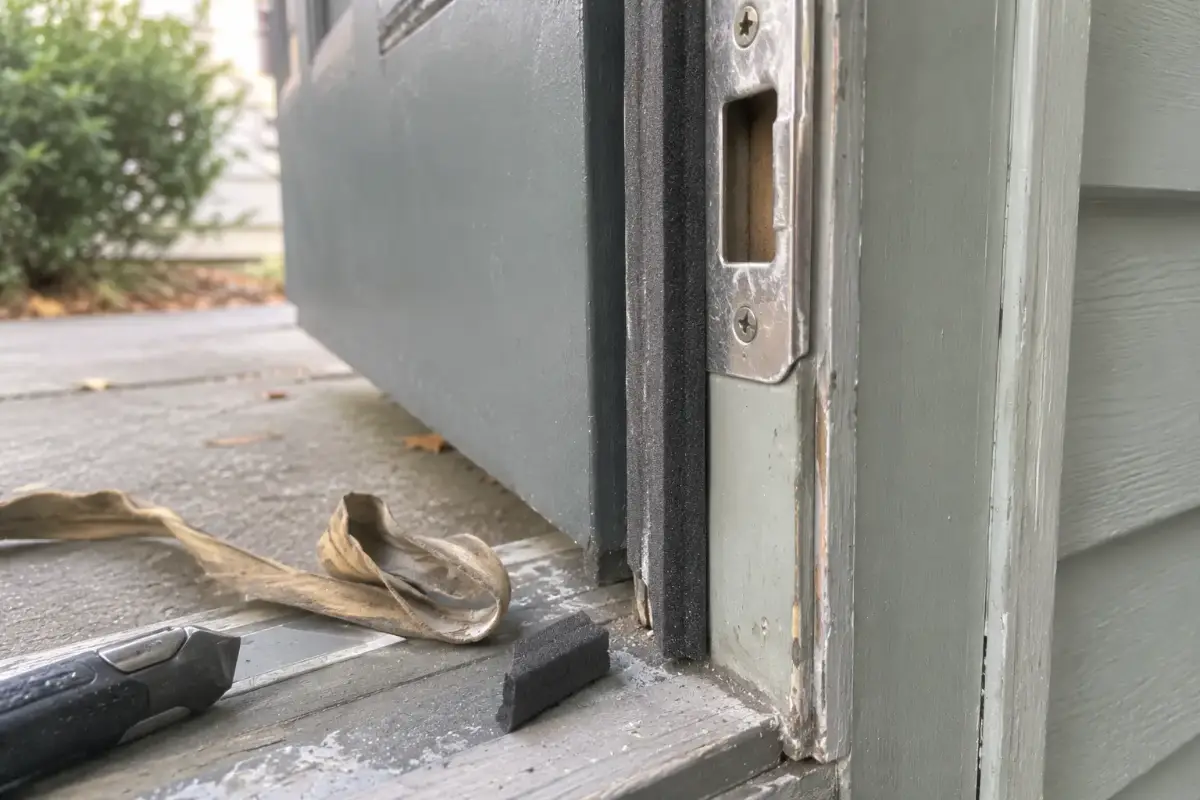
- Remove the old strip. Pull kerf seals straight out of the slot. Scrape off old adhesive foam, and pull small nails on old V-strip.
- Clean the surface. Wash the jamb and stop with dish soap and water.
- Let it dry fully. Adhesive won’t stick to a damp or dusty surface.
- Measure and cut. Measure each side separately and cut with a utility knife, scissors, tin snips, or a hacksaw for metal-backed strips.
- Install it. Press kerf seals firmly into the slot, starting at the top corner. Stick foam or V-strip on the stop where the door closes against it. Nail or screw compression strips so the bulb just touches the closed door.
- Test the door. Open and close it several times. It should latch without forcing, and the seal should touch the door all the way around. Adjust if the door is hard to close.
Check the product label for the right install temperature. Adhesive strips often stick poorly in cold weather, so install them on a mild day or warm the surface first.
Seal the Bottom of the Door
The gap under the door is easy to miss, and it lets in drafts, water, and bugs. Sealing drafts like these first can also let a smaller system do the job if you’re planning a heat pump installation.
- Door sweep. A strip of vinyl, rubber, or brush on a metal or plastic holder. Building America says to put it on the inside of in-swinging doors and the outside of out-swinging doors. Many are adjustable for uneven floors.
- Door shoe. An aluminum channel with a vinyl insert that wraps the bottom of the door. It sheds rain and lasts, but it costs more and the door may need trimming to fit.
- Threshold seal. Many exterior doors have a threshold with a replaceable vinyl insert. Some have screws that raise the threshold to meet the door.
Lowe’s notes that a sweep should just touch the floor, and that sweeps can drag on carpet (Lowe’s door weatherstripping guide). Building America mentions automatic sweeps that lift when the door opens, which avoid carpet drag but cost more.
Pros and Cons of Self-Stick Foam
| Pros | Cons |
|---|---|
| Cheap and easy to find | Wears out faster than vinyl or metal seals |
| Installs with just scissors | Doesn’t stick well in cold or on dirty surfaces |
| Fits odd gaps and corners | Can tear or compress flat with heavy use |
| Good for interior doors and quick fixes | Very visible on painted frames |
Signs It’s Time to Replace
- You can see daylight around the closed door
- The dollar bill slides out easily
- The seal is flat, cracked, torn, or hard
- You feel cold air or see frost near the door in winter
- Water gets in at the bottom during storms
- Bugs or dust come in under the door
Worn weatherstripping can also make a door squeak or rub. Our guide on how to fix a squeaky door covers hinge and alignment fixes. If the knob is wobbly too, see our guide on how to fix a loose doorknob.
Don’t Stop at the Strip
Weatherstripping seals the moving gap between the door and the frame. It doesn’t seal the gap between the frame and the wall. Building America suggests caulking the seams around the door frame and trim too. Our guide on how to reseal windows shows how to caulk, and our guide to exterior window trim covers checking trim for gaps and rot.
ENERGY STAR estimates that sealing air leaks and adding insulation together can save homeowners an average of 15% on heating and cooling costs (ENERGY STAR seal and insulate). Door seals are one of the easiest parts of that work.
For sliding glass doors, the pile seal sits in the track, so a dirty track wears it out faster. Our guide on how to clean window tracks works for sliding doors too. A torn or sagging screen door lets bugs in even when the seals are tight, and our guide on how to repair a screen door shows how to fix it. If you manage an office or storefront in Central Oregon, our commercial window cleaning team also cleans entry door glass and tracks.
Frequently Asked Questions
What is the best door weather stripping?
For most newer exterior doors, a kerf-in foam or vinyl bulb seal that matches the slot in the frame is best. For older doors without a slot, V-strip or compression strips last longer than foam tape. Steel doors can use magnetic seals.
How often should you replace the weatherstripping on a door?
There’s no set schedule. Check it every fall. Replace it when it’s flat, torn, or hard, or when the dollar bill test fails. Foam tape and felt wear out much faster than vinyl, silicone, or metal seals.
Can you put weather stripping on the bottom of a door?
Not the same kind. The bottom needs a door sweep, a door shoe, or a threshold seal, since the bottom edge rubs over the floor every time the door opens.
Does weather stripping go on the door or the frame?
On the sides and top, it goes on the frame, usually on the stop that the door closes against. At the bottom, the sweep or door shoe goes on the door itself.
The Bottom Line
Find the leaks with the light or dollar bill test, then match the seal to your door: kerf seals for slotted frames, V-strip or compression for older doors, and a sweep or door shoe at the bottom. Clean and dry the surface before installing, test the seal when you’re done, and check it again every fall.


4 Comments
Comments are closed.