
To dry flowers, pick them on a dry day just before they fully open, strip the leaves, and choose a method that fits the flower. The easiest is air drying: tie small bunches, hang them upside down in a dark, dry, airy room, and wait about 1 to 3 weeks. Pressing works for flat flowers and leaves. Silica gel keeps the shape and color of roses, peonies, and other full blooms in about 3 to 8 days, and a microwave with silica gel can do it in minutes. Keep finished flowers out of direct sun and humidity so they don’t fade or mold.
Most guides on how to dry flowers come from florists and farms, and many skip timings or mix up methods. This guide uses university extension advice to give clear steps, times, and the best method for each flower.
Before You Start: Pick Flowers the Right Way
How you harvest matters as much as how you dry. University of California master gardeners and University of Missouri Extension give these tips:
- Pick when they’re dry. Avoid dew and rain, since damp flowers can mold. If you must cut wet flowers, blot them first.
- Pick early or late in the day, not at midday when plants are more likely to wilt.
- Cut just before full bloom. Most flowers keep opening a little as they dry. Everlastings like statice and strawflowers can be cut fully open.
- Choose perfect flowers. Missouri Extension notes that flaws and insect damage look worse once dried.
- Cut extra. Some will break or dry poorly.
- Strip the leaves from the stems, since they hold moisture and slow drying.
Drying Methods at a Glance
| Method | Best for | Time | Keeps 3D shape? |
|---|---|---|---|
| Air drying (hanging) | Lavender, statice, strawflower, grasses, roses | About 1 to 3 weeks | Mostly |
| Upright in a vase | Hydrangea, baby’s breath | About 1 to 3 weeks | Yes |
| Pressing | Pansies, violas, ferns, leaves, thin petals | About 2 to 4 weeks | No, flat |
| Silica gel | Roses, peonies, dahlias, zinnias, daffodils | About 3 to 8 days | Yes, best |
| Microwave with silica gel | Small or thin-petaled flowers | Minutes, plus 12 to 24 hours to rest | Yes |
| Glycerin | Leaves and foliage | About 1 to 3 weeks | Stays soft |
Iowa State University Extension gives most of these timings in its harvesting and drying guide (Iowa State Extension PM 1398).
1. Air Drying (Hanging Upside Down)
This is the easiest and cheapest method.
- Strip the leaves and gather 3 to 6 stems into a small bunch.
- Wrap a rubber band tightly around the stems. It shrinks with them as they dry, so the bunch doesn’t fall apart.
- Hang the bunch upside down from a hook, hanger, or string.
- Pick a dark, dry, well-ventilated spot, like a closet, attic, or spare room. UC master gardeners say to keep it above 50°F and out of direct sun, and that a small fan on low helps (UC Master Gardeners on dried flowers).
- Wait until the stems snap and the petals feel papery, usually 1 to 3 weeks.
Hang large flowers like peonies and hydrangeas one at a time, not in bunches, so air can reach the center.
2. Upright in a Vase
Hydrangeas and baby’s breath dry well standing up. UC master gardeners suggest putting them in a vase with a little water and letting it evaporate over about a week. The flowers dry slowly as the water runs out, which helps them hold their shape.
3. Pressing
Pressing makes flat flowers for cards, frames, and bookmarks.
- Place flowers and leaves face down between sheets of absorbent paper, like plain newsprint or blotting paper.
- Put the paper inside a heavy book or a flower press, and stack more weight on top.
- Missouri Extension suggests swapping in fresh, dry paper after the first week and keeping the stack in a warm, dry, airy spot (Missouri Extension on drying flowers).
- Leave them for about 2 to 4 weeks, until fully dry.
Thin, flat flowers press best. Thick, round flowers like roses can be pulled apart and pressed as single petals.
4. Silica Gel
Silica gel is a drying powder sold at craft stores. It pulls water out fast, so flowers keep more of their color and shape. Missouri Extension recommends it for flowers with a lot of moisture or open, flat faces that tend to lose their shape when air dried.
- Pour about 1/2 inch of silica gel into an airtight container.
- Set the flowers in face up, not touching each other.
- Gently spoon more gel around and over them until they’re covered by about 1/2 inch.
- Seal the container. Most flowers dry in about 3 to 8 days.
- Pour off the gel slowly and lift the flowers out. Brush away loose grains with a soft paintbrush.
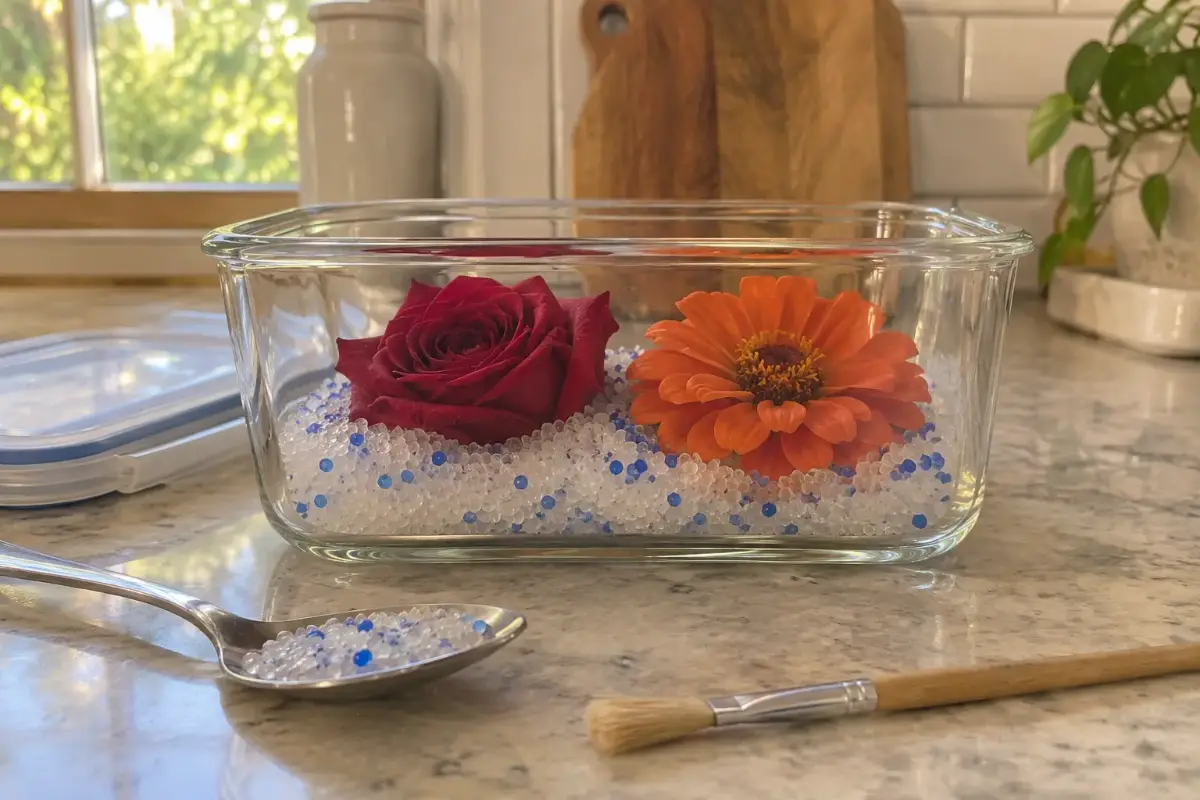
Many silica gels have blue crystals that turn pink when they’ve absorbed all the water they can. Missouri Extension says to dry the gel in a warm oven to reuse it.
Silica gel safety: Avoid breathing the fine dust. Pour gently, work in a ventilated area, and consider a dust mask. Keep it away from kids and pets, and don’t use the same containers for food afterward.
5. Microwave With Silica Gel
This is the fastest method. Missouri Extension describes it:
- Bury the flowers in silica gel in an uncovered, microwave-safe glass dish.
- Put a cup of water in the microwave too, to keep the flowers from over-drying.
- Heat on low power for about 1 minute for small, thin flowers, and up to 3 minutes for dense ones. Check often, since microwaves vary.
- Let the flowers sit in the gel for 12 to 24 hours before taking them out.
Missouri Extension notes that microwave drying doesn’t work well on thick-petaled flowers.
6. Glycerin for Leaves and Foliage
Glycerin doesn’t dry plants. It replaces the water in them, so leaves stay soft and flexible. UC master gardeners suggest mixing 2 parts lukewarm water with 1 part glycerin and standing fresh stems in it for 2 to 3 weeks. It works well for eucalyptus, magnolia, and other foliage. Leaves may darken a little.
Silica Gel vs. Air Drying: Pros and Cons of Silica Gel
| Pros | Cons |
|---|---|
| Keeps shape and color best | Costs more than air drying |
| Dries most flowers in under a week | Dust shouldn’t be breathed in |
| Works on roses, peonies, and dahlias | Only dries a few flowers at a time |
| Reusable for years once dried out | Dried flowers can soak up humidity again |
Best Flowers to Dry
| Flower | Best method |
|---|---|
| Lavender | Air drying |
| Statice and strawflower | Air drying |
| Hydrangea | Upright in a vase |
| Roses | Silica gel or air drying |
| Peonies and dahlias | Silica gel |
| Pansies and violas | Pressing |
| Eucalyptus | Glycerin |
| Chrysanthemums | Silica gel or air drying |
Flowers with lots of water in thick stems and petals, like tulips and daffodils, often wilt or shrivel when air dried. If you want to keep them, silica gel gives the best chance. If you’d like to grow your own, our guide on how to plant tulip bulbs covers fall planting depth and timing. Both are toxic to cats, so our guide on which flowers are toxic to cats can help you pick pet-safe blooms to dry.
How to Store and Display Dried Flowers
- Keep them out of direct sun. Sunlight fades dried flowers fast.
- Keep them dry. Humidity makes them limp and can cause mold, so avoid bathrooms and kitchens.
- Spray for strength. Missouri Extension suggests a light coat of hairspray or lacquer on microwave-dried flowers, since they soak up moisture from the air.
- Store spares in a box. A lidded cardboard box or airtight container in a dry, dark closet works well.
- Dust gently with a hair dryer on cool or a soft brush.
Sunny windows and skylights let in the most UV light, which speeds up fading. Our guide to house window tint explains films that block most UV, and our low-E glass guide covers glass that cuts it too. If you live in Central Oregon, our skylight cleaning service keeps skylights clean and clear. For a seasonal project, our guide to the November birth flower covers chrysanthemums, which dry well in silica gel.
Frequently Asked Questions
How long does it take to dry flowers?
It depends on the method. Air drying and pressing usually take about 1 to 3 weeks or more. Silica gel takes about 3 to 8 days. A microwave with silica gel takes a few minutes, plus 12 to 24 hours of resting time.
What is the best way to keep color in dried flowers?
Silica gel keeps color and shape best, because it dries flowers fast. Air drying in a dark room also helps, since light fades petals. Bright colors like purple, blue, and pink tend to hold up better than white.
Can you dry flowers from a bouquet?
Yes. Take them out of the vase while they still look fresh, not once they start to wilt. Strip the leaves, pat the stems dry, and hang them or use silica gel. Old vase water can also draw fruit flies, and our guide to a fruit fly trap shows how to catch them.
How do you keep dried flowers from falling apart?
Handle them as little as possible, keep them away from humidity and drafts, and spray them lightly with hairspray. Store spares in a box so they don’t get crushed.
The Bottom Line
To dry flowers, pick them dry and just before full bloom, strip the leaves, and match the method to the flower: hang most flowers upside down in a dark, airy room, press flat ones, and use silica gel for roses, peonies, and other full blooms. Expect anywhere from minutes to a few weeks, then keep the finished flowers out of the sun and away from humidity so they last.


4 Comments
Comments are closed.