
Plant tulip bulbs in fall, after the soil cools but before the ground freezes, usually October or November in most of the U.S. Choose a sunny spot with well-drained soil, dig holes about 6 to 8 inches deep for standard tulips, measured from the base of the bulb, and set each bulb pointed end up, 4 to 6 inches apart. Cover the bulbs, firm the soil, and water once to settle it. In mild-winter areas, chill the bulbs in the refrigerator first, and if squirrels are a problem, lay chicken wire or hardware cloth over the bed until spring.
Most tulip guides come from bulb sellers or flower farms, and their numbers don’t always agree. This guide uses university extension research for depth, spacing, and timing, and covers planting in the ground and in pots, protecting bulbs from squirrels, and what to do after the flowers fade.
When to Plant Tulip Bulbs
Tulips need a long, cold period to root and bloom, so they go in the ground in fall. Iowa State University Extension calls October the ideal planting month in Iowa and says bulbs planted in September, before the soil cools, may sprout in fall. It adds that you can still plant into December as long as the ground isn’t frozen (Iowa State on planting spring bulbs).
| Climate | Typical planting window (general guide) |
|---|---|
| Cold winters (northern states, mountains) | Late September to October |
| Moderate winters (much of the Midwest, Mid-Atlantic, Pacific Northwest) | October to November |
| Mild winters (Deep South, coastal California) | December or January, after pre-chilling |
Wicked Tulips, a tulip farm, suggests waiting until the soil drops below about 55°F, which usually comes around your first night frost. In Central Oregon, that usually means planting in early to mid-fall, before the ground freezes hard.
Is it too late to plant tulip bulbs?
Probably not. If you can still dig the soil, you can plant. Iowa State says bulbs can go in through December as long as the ground isn’t frozen. Late-planted tulips may bloom a little later or have shorter stems, but that beats leaving bulbs in the bag, where they’ll dry out and die.
How Deep and Far Apart to Plant Tulips
The usual rule is to plant bulbs two to three times as deep as they are tall, measured from the bottom of the bulb. The diagram below shows the depth and spacing for a standard tulip.

| Tulip type | Depth (base of bulb) | Spacing |
|---|---|---|
| Darwin, Triumph, and most large hybrids | 6 to 8 inches | 4 to 6 inches |
| Species (botanical) tulips | 3 to 5 inches | 3 to 4 inches |
| Tulips in pots | 2 to 3 times the bulb’s height, if the pot is deep enough | Almost touching |
The in-ground numbers come from Iowa State University Extension, and the pot guidance from Two Sisters Flower Farm and Mississippi State University Extension. Planting at the right depth protects bulbs from freezing and thawing, helps hold tall stems upright, and puts them deeper than many squirrels bother to dig.
Planting Tulip Bulbs in the Ground
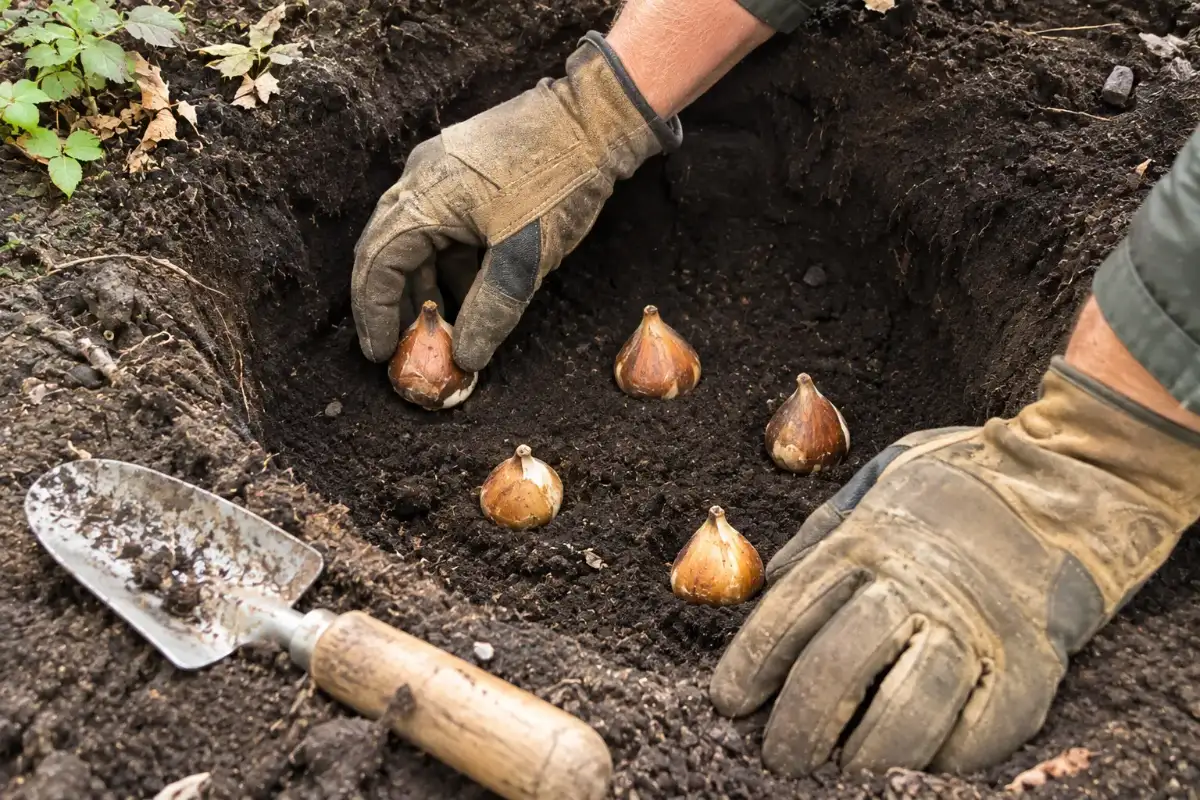
- Pick firm bulbs. Iowa State says to choose firm, solid bulbs and skip any that are soft, moldy, shriveled, or very light. Bigger bulbs produce bigger flowers.
- Choose a sunny, well-drained spot. Tulips rot in soggy soil. Avoid low spots where water sits after rain.
- Loosen and improve the soil. Work compost into heavy or poor soil before you plant.
- Dig the holes or a trench. Dig to 6 to 8 inches for standard tulips. For a fuller look, dig one wide hole and plant an odd-numbered group of bulbs, as the Royal Horticultural Society suggests, rather than lining them up in single rows.
- Add fertilizer below the bulbs if needed. The University of Illinois Extension says phosphorus barely moves in soil, so bonemeal or superphosphate should be mixed into the soil below the bulbs, not sprinkled on top (Illinois Extension on planting bulbs).
- Set the bulbs pointed end up. The flat, rooty end goes down.
- Cover, firm, and water. Refill the hole, press the soil down gently, and water once to settle it. Iowa State warns against overwatering, since most bulbs don’t tolerate wet soil.
- Mulch in cold areas. A few inches of shredded leaves or bark helps even out soil temperatures through winter.
Which end of a tulip bulb goes up?
The pointed end goes up, and the flat end with the dried root plate goes down. If you can’t tell, plant the bulb on its side. The stem will find its way up, though it may take a little longer to appear.
Do you need to soak tulip bulbs before planting?
No. Tulip bulbs don’t need soaking. Plant them dry and water the bed once after planting, unless the soil is already moist.
How to Plant Tulips in Pots
Pots let you grow tulips on a patio or balcony, but the bulbs still need a cold winter. For an easy indoor container plant, see our guide on how to plant succulents.
- Use a large pot with drainage holes. Two Sisters Flower Farm, which grows tulips in containers, says poor drainage caused most of their failures.
- Fill with potting mix, not garden soil. Garden soil packs down and holds too much water in a pot.
- Pack the bulbs in. Set them close together, almost touching, pointed end up. The flat side of each bulb can face the pot’s edge so the first big leaf drapes over the rim.
- Cover and water once. Leave the top of the soil an inch or two below the rim.
- Keep the pot cold but protected. An unheated garage, shed, or sheltered spot works. Shield pots from long hard freezes and soggy winter rain, which can rot the bulbs.
Mississippi State University Extension says tulips need about 14 to 18 weeks of cooling, kept between 35°F and 50°F, before they’re ready to grow and bloom (Mississippi State on forcing bulbs).
If your winters are too mild to chill bulbs naturally, store them in a paper bag in the refrigerator for about 14 weeks before planting. Mississippi State warns to keep bulbs away from ripening fruit and vegetables, which give off ethylene gas that can damage them.
Pots vs. In the Ground: Pros and Cons of Planting in Pots
| Pros | Cons |
|---|---|
| Works on patios and balconies | Pots can freeze solid or stay too wet in winter |
| Easy to move for the best spring display | Bulbs rarely bloom well a second year in pots |
| Fresh potting mix means fewer soil problems | Needs regular watering once leaves appear |
| Easier to protect from squirrels and voles | Large pots and potting mix cost more |
Protect Tulip Bulbs From Squirrels
How do I keep squirrels from digging up tulip bulbs?
Iowa State University Extension recommends planting at the full 6 to 8 inches, firming the soil and watering after planting, and laying chicken wire or hardware cloth over the bed, weighed down with bricks. Take the wire off in early spring before the leaves come up (Iowa State on squirrels and tulips).
Pet safety warning: Tulip bulbs are toxic to cats and dogs, and the bulbs are the most poisonous part. Store bulbs out of reach before planting and keep pets from digging in freshly planted beds. Our guide on what flowers are toxic to cats covers tulips and other common garden flowers.
After the Flowers Fade
- Snip off the spent flowers so the plant doesn’t put energy into seeds.
- Leave the leaves until they turn yellow. The leaves feed the bulb for next year. Illinois Extension says larger bulbs like tulips take several weeks to die back.
- Feed in fall and spring if you want them to return. Illinois Extension suggests fertilizing established beds in fall and again as shoots emerge in spring, then stopping once flowering starts.
Will tulips come back every year?
Sometimes. Many large hybrid tulips bloom best the first year and then fade, so many gardeners treat them as annuals. Species tulips and some Darwin hybrids return more reliably, especially in full sun with dry summers. Planting deep, keeping the leaves until they yellow, and feeding the bed all help.
Cut tulips last longer in a vase if you trim the stems and change the water often. Our guide on how to dry flowers explains how to preserve them, and our November birth flower guide covers peonies, another bloom planted in fall. In Central Oregon, our gutter cleaning service clears fall leaves and pine needles so overflowing gutters don’t flood the beds below.
The Bottom Line
Plant tulip bulbs in fall once the soil cools, 6 to 8 inches deep and 4 to 6 inches apart, pointed end up, in sunny, well-drained soil. Water once, mulch in cold areas, and cover the bed with chicken wire if squirrels are around. In mild climates, chill the bulbs for about 14 weeks first, and after bloom, let the leaves yellow before you cut them back.




One Comment
Comments are closed.