
A cistern is a watertight tank that collects and stores water, usually rainwater from a roof, for use later. Rain runs off the roof into the gutters, through a filter, and into the tank, where it’s held until a pump or gravity sends it to a garden hose, toilets, laundry, or, with proper treatment, a kitchen tap. Some cisterns are filled by water delivery trucks instead of rain. Cisterns can sit above ground or be buried, and they range from a few hundred gallons to tens of thousands. In plumbing, “cistern” can also mean the tank on the back of a toilet.
Most pages that explain what is a cistern either cover ancient history or sell a single product or service. This guide explains how a modern home cistern works, how much water a roof can collect, what the parts do, and the safety steps that matter if anyone will drink the water.
Cistern vs. Well vs. Rain Barrel
| Cistern | Well | Rain barrel | |
|---|---|---|---|
| Water source | Rain or delivered water | Groundwater | Rain |
| Typical size | Hundreds to thousands of gallons | Depends on the aquifer | About 50 to 100 gallons |
| Location | Above ground or buried | Drilled into the ground | Beside a downspout |
| Common use | Irrigation, household, fire reserve | Whole-house supply | Garden watering |
| Needs a pump | Usually | Yes | Rarely |
The key difference: a well draws water from underground, while a cistern stores water collected somewhere else. A rain barrel is simply a very small cistern.
How a Cistern Works
A rainwater cistern system has a few main parts, and water moves through them in order:
- Catchment: Rain lands on the roof, which acts as the collection area.
- Conveyance: Gutters and downspouts carry the water toward the tank. Leaf screens keep out the biggest debris.
- First-flush diverter: The first bit of runoff, which carries the most dust and bird droppings, is sent aside so it doesn’t enter the tank.
- Inlet filter: A screen or basket at the tank opening catches smaller debris.
- Storage: The cistern holds the water. A screened vent lets air in and out, and an access hatch allows cleaning.
- Overflow: When the tank is full, extra water leaves through an overflow pipe, ideally into a rain garden or away from the foundation.
- Distribution: A pump sends the water where it’s needed. For indoor use, it passes through filters and often a UV light first.
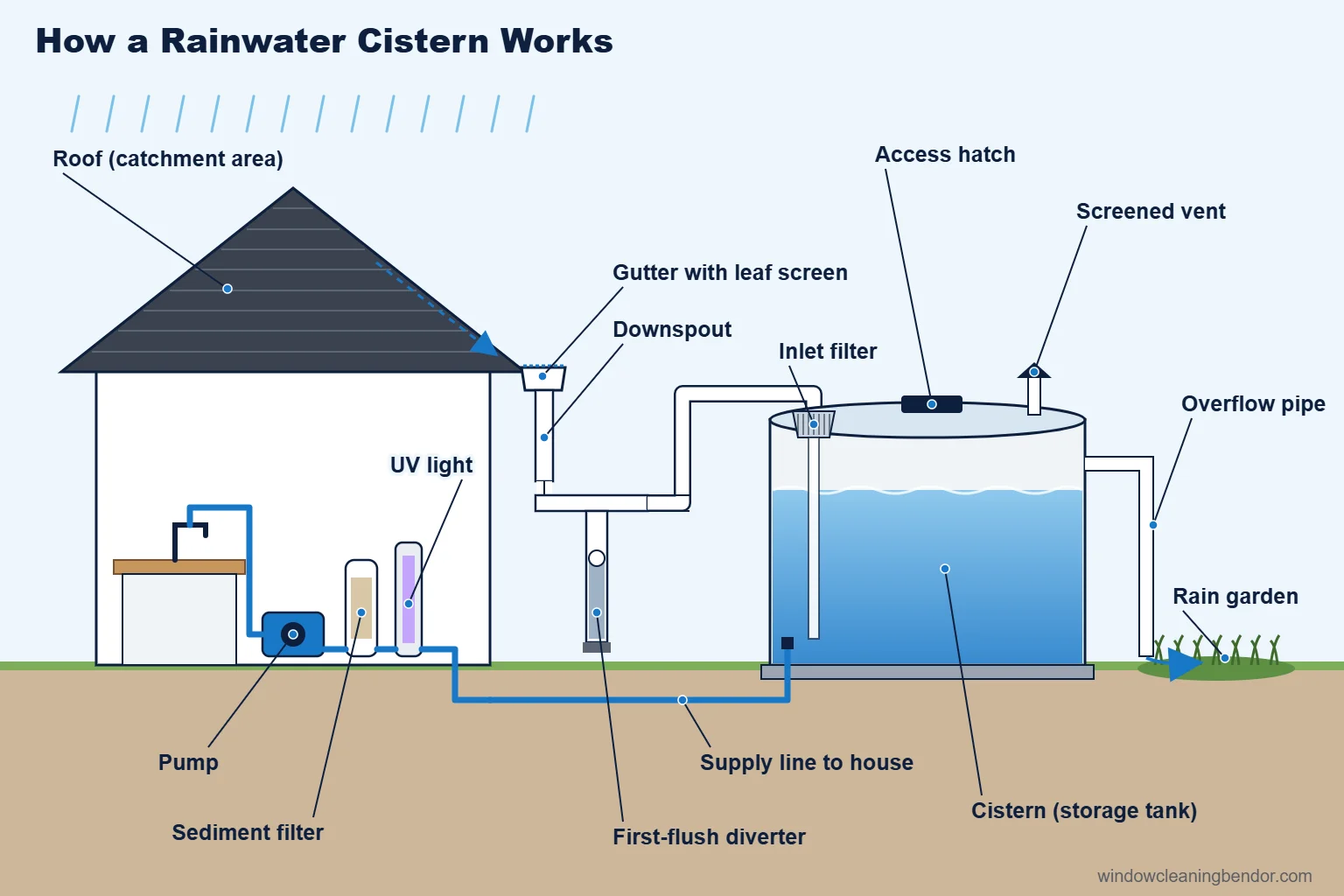
Parts of a rainwater cistern
| Part | What it does |
|---|---|
| Gutter leaf screen | Keeps leaves and needles out of the system |
| First-flush diverter | Sends the dirtiest first runoff away from the tank |
| Inlet filter | Catches smaller debris at the tank opening |
| Screened vent | Lets air move while keeping out mosquitoes |
| Access hatch | Allows inspection and cleaning |
| Overflow pipe | Releases extra water safely when the tank is full |
| Pump | Moves water to the house or garden |
| Sediment filter and UV light | Clean and disinfect water for indoor use |
The State University of New York College of Environmental Science and Forestry notes that cylindrical tanks have a high strength-to-weight ratio when full, and that underground tanks usually need a pump (SUNY ESF on cisterns).
How Much Water Can a Roof Collect?
University of Arizona Cooperative Extension gives a simple rule: every 1,000 square feet of roof collects about 623 gallons from 1 inch of rain (University of Arizona rainwater guide). Some water is always lost to splashing and evaporation, so the guide uses an efficiency factor. At 90%, that’s about 560 gallons per inch.
The formula is:
Gallons = roof area (sq ft) × rainfall (inches) × 0.623 × efficiency
For example, a 1,500-square-foot roof in a place that gets 12 inches of rain a year could collect about 1,500 × 12 × 0.623 × 0.9, or roughly 10,000 gallons a year. Measure the roof’s footprint from above, not the sloped surface.
Types of Cisterns
- Above-ground polyethylene tanks: The most common and least expensive for homes. Dark colors block light and limit algae growth.
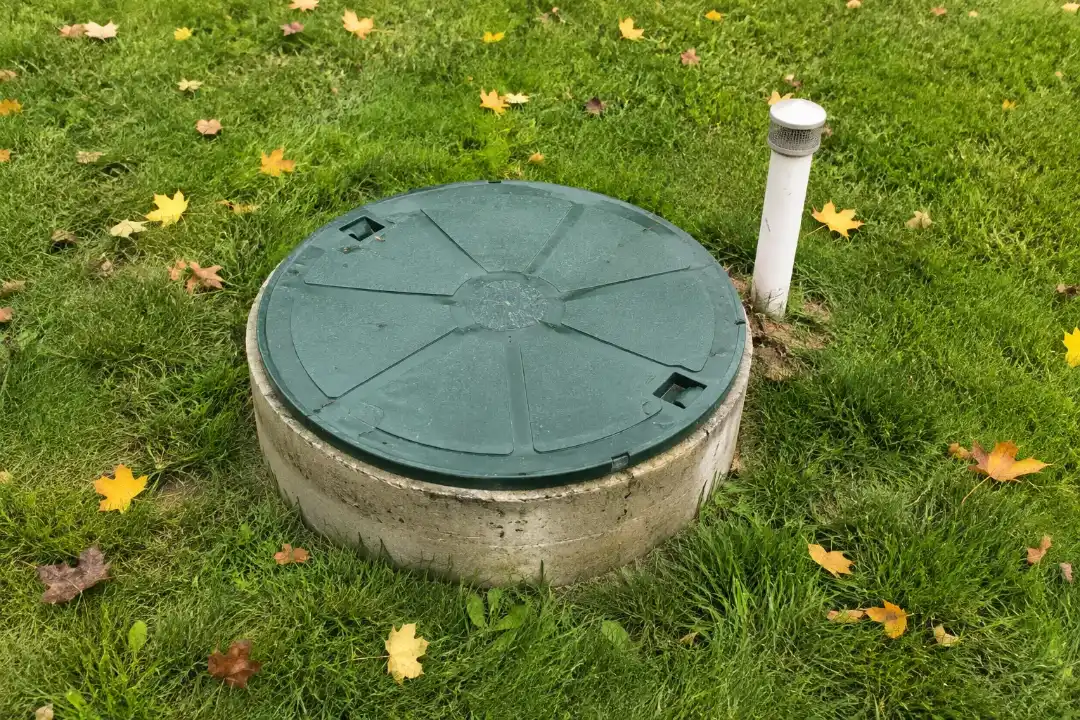
- Concrete cisterns: Strong and long lasting, often buried. Many older farmhouses have them.
- Steel and fiberglass tanks: Durable options for large or buried systems. Steel tanks often use a food-grade liner.
- Underground tanks: Save space and keep water cool, but cost more to install and need a pump.
- Toilet cisterns: The water tank on a toilet, which holds enough water for one flush.
Older homes sometimes have a forgotten cistern buried in the yard. A buried tank that has lost its strength can collapse, so call a professional if you find a sunken spot or an old lid.
Cistern Pros and Cons
| Pros | Cons |
|---|---|
| Provides water where wells or city lines aren’t available | Supply drops in dry seasons and droughts |
| Cuts water bills for irrigation and toilets | Needs pumps, filters, and regular cleaning |
| Rainwater is soft, with few minerals | Drinking water requires treatment and testing |
| Reduces stormwater runoff | Large or buried tanks are costly to install |
Is Cistern Water Safe to Drink?
Drinking water warning: The CDC says rainwater is not necessarily safe to drink without first removing germs and chemicals (CDC on collecting rainwater). Bird droppings, dust, and roofing or gutter materials can add bacteria, lead, copper, or other contaminants. If you drink, cook, or bathe with cistern water, use a treatment system made for the contaminants in your water and test it regularly. Your local health department can tell you what to test for.
For non-drinking uses like watering lawns and ornamental plants, flushing toilets, or washing cars, simple filtering is usually enough. The University of Arizona guide says a drinking water system needs food-grade materials and proper treatment, and that local rules may apply.
Cistern Maintenance
- Clean the gutters and leaf screens each season, especially after leaves and needles drop.
- Empty the first-flush diverter after storms so it’s ready for the next one.
- Check the screens and vents for holes. The University of Arizona guide calls for mosquito- and animal-proof openings.
- Keep light out. Covered, dark tanks limit algae.
- Inspect for cracks and leaks, and make sure the lid is secure.
- Disinfect after floods or contamination. The CDC’s cistern guidance gives bleach amounts and contact times, and says to ask your health department whether to drain and clean a cistern after a disaster (CDC cistern safety).
Clean gutters are the first step to clean cistern water. Our guide to the parts of a roof explains gutters, drip edges, and downspouts, and our guide to window well covers covers keeping stormwater away from basement windows. If you live in Central Oregon, our hard water stain removal service removes mineral spots on glass, and you can learn more in our page on whether Bend has hard water.
Rules and Water Rights
Rainwater collection laws vary by state. Most states allow it, and some encourage it, but a few western states limit how much you can store or require a permit for larger systems. Plumbing codes may also require backflow protection if a cistern connects to a home that also has city water. Check with your state water agency and local building department before you install a large system.
Frequently Asked Questions
What is the difference between a cistern and a well?
A well draws groundwater from below the surface. A cistern stores water collected from somewhere else, usually rain from a roof or water delivered by truck.
How long does water last in a cistern?
It depends on the tank size, how much you use, and how often it rains. Clean, covered water stored in the dark stays usable much longer than water exposed to light, debris, or warmth.
How much does a cistern cost?
Prices vary widely with size, material, and whether the tank is buried. Small above-ground tanks cost far less than large underground systems that need excavation, pumps, and treatment, so get a few local quotes.
Why is a toilet tank called a cistern?
A cistern is any tank that stores water, so the tank that holds water for each flush is also called a cistern, especially in British English.
The Bottom Line
A cistern is a tank that stores rainwater or delivered water for later use. A home system collects rain from the roof, filters it, stores it in an above-ground or buried tank, and pumps it where it’s needed. It’s a great fit for gardens, toilets, and homes without a well or city water, but drinking cistern water requires the right treatment and regular testing, so check with your health department first.


3 Comments
Comments are closed.